2027 Summer Internships: Complete U.S. Student Guide
When to apply for 2027 summer internships in the U.S., build a SuperInterns workflow, track with Gmail, get referrals, and prep for interviews.
If you are searching for 2027 summer internships, the best move is to start earlier than feels necessary. Many competitive U.S. internship programs begin posting roles in late summer or early fall of 2026, interview through the fall and winter, and continue hiring into spring 2027. That does not mean you are late if you start later, but it does mean you need a clear system.
This guide is built for students who want a practical plan: where to look, when to apply, how to organize applications, how to use Gmail-based tracking, how to ask for referrals, and how to prepare for interviews without feeling scattered. SuperInterns can be the central workflow for the entire process: browse internships, track applications from Gmail, verify student status when needed, and practice interviews before employers reach out.
Quick answer: when should you apply for 2027 summer internships?
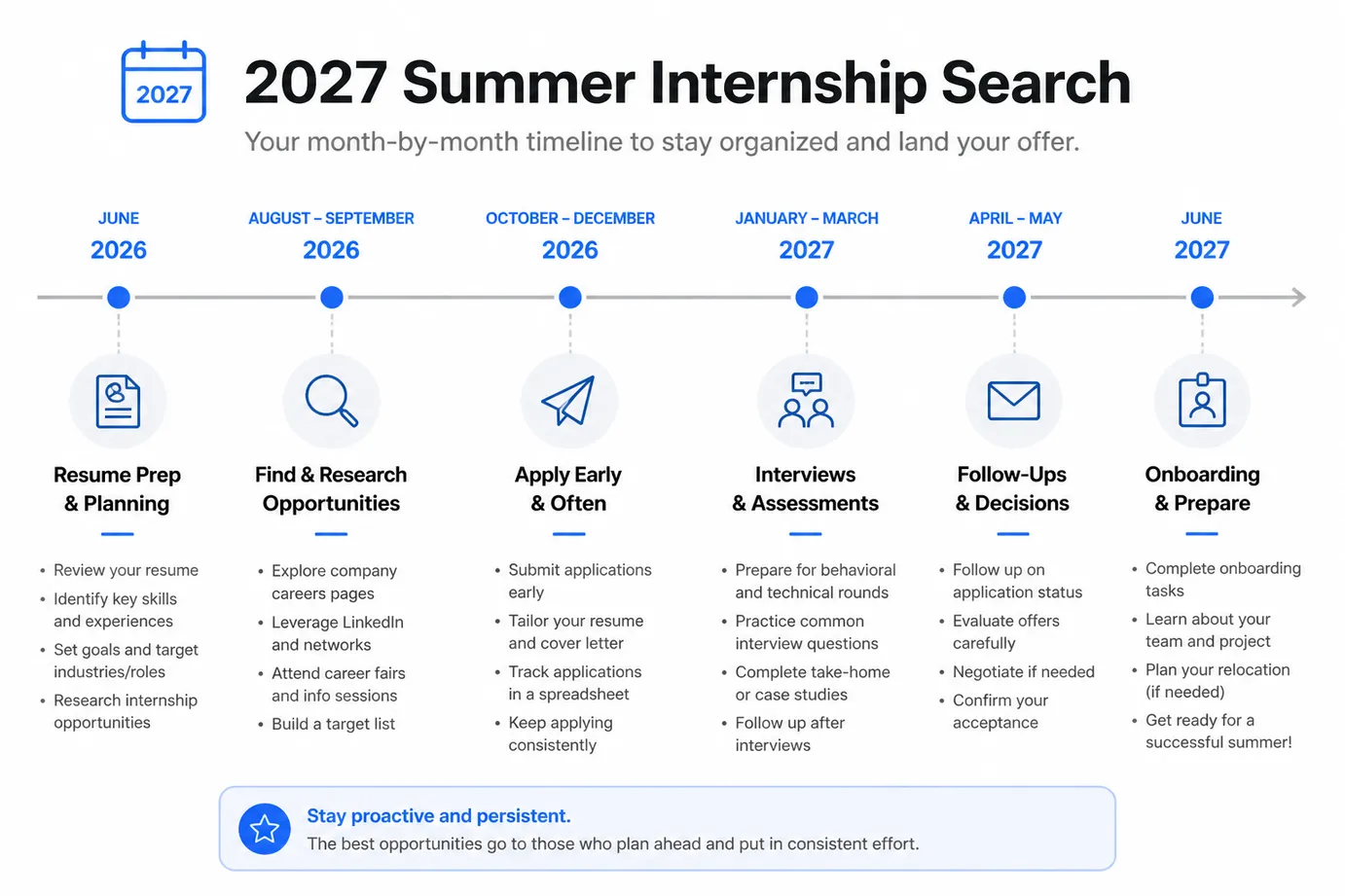
For most students, the best time to start looking for 2027 summer internships is August to October 2026. This is especially important for large employers, finance, consulting, software engineering, product management, data science, government programs, and highly structured corporate internships.
A simple timeline:
- June to August 2026: Build your resume, update LinkedIn, create a target company list, and set up your application tracking system.
- August to October 2026: Apply to early postings, attend career fairs, ask for referrals, and schedule informational chats.
- November 2026 to January 2027: Continue applying, follow up, interview, and expand into mid-size employers.
- February to April 2027: Apply to late-cycle roles, local internships, startups, nonprofits, research labs, and smaller companies.
- May to June 2027: Confirm details, complete onboarding, and prepare for your first week.
The biggest mistake students make is treating internship search like a one-week task. It is a semester-long project. The students who stay organized usually have more options.
What counts as a strong 2027 summer internship?
A strong internship is not only a famous company name. The best internship for you should help you build skills, get mentorship, add measurable work to your resume, and clarify your career direction.
Look for internships that offer at least three of the following:
- Real projects, not only administrative work
- A manager or mentor who gives feedback
- Clear start and end dates
- Skill development related to your major or target career
- A reasonable hourly wage or stipend
- A structured application and interview process
- Potential return offer, extension, or strong reference
- Work samples you can discuss in future interviews
If you are early in college, your first internship may not be perfect. That is okay. A local nonprofit marketing internship, campus research role, small business operations internship, or startup customer success role can help you build experience that leads to more competitive opportunities later.
The 2027 internship search strategy that works
A good search has four parts: targets, applications, relationships, and preparation. If you only submit applications, you are depending on applicant tracking systems. If you only network, you may miss posted roles. The strongest approach combines both.
Step 1: Choose your internship categories
Start by choosing two or three categories instead of applying randomly. Examples:
- Software engineering, data analytics, cybersecurity
- Finance, accounting, business operations
- Marketing, communications, social media, content
- Product management, UX research, design
- Public policy, government, nonprofit programs
- Biology, lab research, healthcare administration
- Supply chain, manufacturing, engineering
Then write a one-sentence target statement:
Example: I am looking for a summer 2027 data analytics internship in the U.S. where I can use SQL, Python, Excel, or dashboard tools to solve business problems.
This statement keeps your search focused and makes outreach easier.
Step 2: Build a target company list
Create a list of 30 to 80 employers. Mix competitive companies with realistic and local options.
Include:
- Large companies with formal internship programs
- Mid-size companies in your target industry
- Startups hiring interns or junior talent
- University research centers and labs
- Local employers near your school or home
- Government agencies and public programs
- Nonprofits and mission-driven organizations
Use SuperInterns to browse internships and build your working list. The goal is not to find every internship on the internet. The goal is to create a high-quality pipeline you can manage.
Step 3: Set weekly application goals
A realistic student schedule matters. You do not need to apply to 50 roles in one night. You need consistency.
Try this weekly rhythm:
- Apply to 5 to 8 internships
- Send 3 referral or informational outreach messages
- Follow up on 2 older applications
- Practice 2 interview questions
- Update your tracker every Friday
If you are targeting highly competitive fields, increase the number. If you have a heavy class schedule, reduce the number but stay consistent.
Where to find 2027 summer internships
Use multiple sources. No single platform has every opportunity.
1. SuperInterns
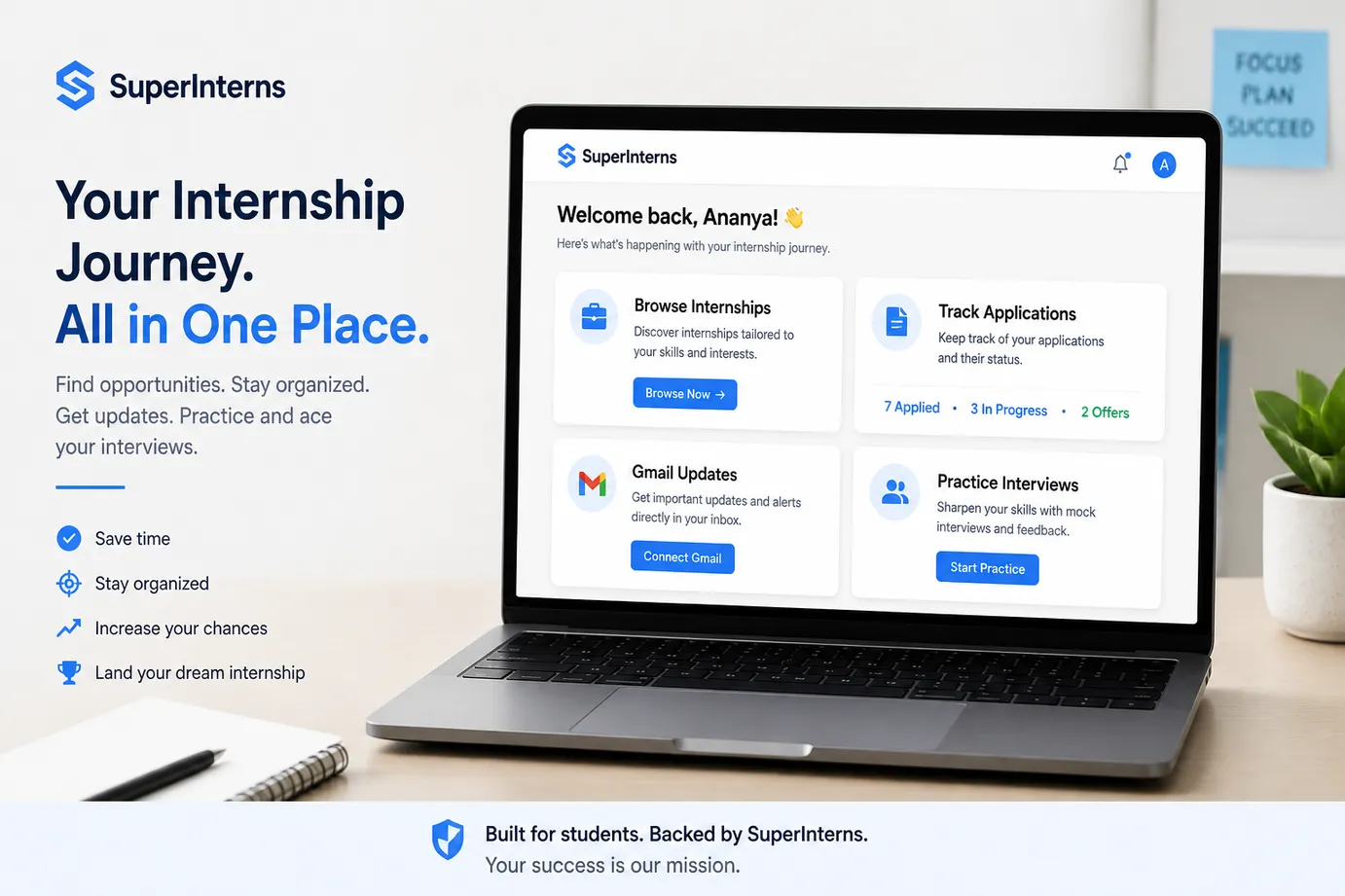
Start with a workflow that keeps the search organized from the beginning. SuperInterns can help students browse internships, manage applications, connect email activity, and prepare for interviews in one place. This is useful because internship searches often become messy across job boards, employer portals, email threads, spreadsheets, and calendar invites.
Use SuperInterns to:
- Browse U.S. internship opportunities
- Save internships you want to apply to
- Track application stages
- Connect Gmail-based updates when available
- Start interview practice before you receive interview invitations
- Verify student status if required for student-only features or opportunities
The central benefit is focus. Instead of asking where did I apply again, you can spend more time improving your applications and preparing for conversations.
2. Company career pages
Many employers post internships directly on their websites before they appear elsewhere. Search for:
- Company name internships 2027
- Company name university programs
- Company name early careers
- Company name summer analyst 2027
- Company name software engineer intern 2027
For large employers, check weekly during peak recruiting season.
3. University career centers
Your college career center may have employer partnerships, alumni contacts, resume reviews, mock interviews, and exclusive job boards. Even if the interface is not perfect, the opportunities can be valuable because the applicant pool may be smaller.
4. LinkedIn and alumni networks
LinkedIn is useful for finding people, not just job posts. Search for alumni who work in your target roles. You can ask short, respectful questions about their path or the internship program.
5. Professional associations and niche communities
For technical or specialized fields, use niche sources:
- Engineering societies
- Accounting and finance associations
- Public policy fellowship lists
- Design communities
- Research lab pages
- GitHub, Kaggle, or open-source communities
- Local startup newsletters
The more specific your source, the easier it is to find roles that match your background.
How to organize applications without losing track
Students often lose momentum because every application lives in a different place. One role is in Gmail. Another is in a company portal. Another is in a spreadsheet. Another is a saved LinkedIn post. By week three, it is hard to know what needs follow-up.
A simple tracker should include:
- Company name
- Role title
- Location or remote status
- Application link
- Date applied
- Status
- Referral contact
- Resume version used
- Next step
- Follow-up date
- Interview notes
SuperInterns can act as the main hub, especially if you want Gmail-based tracking tied to your actual application communications.
Gmail-based tracking: a practical setup
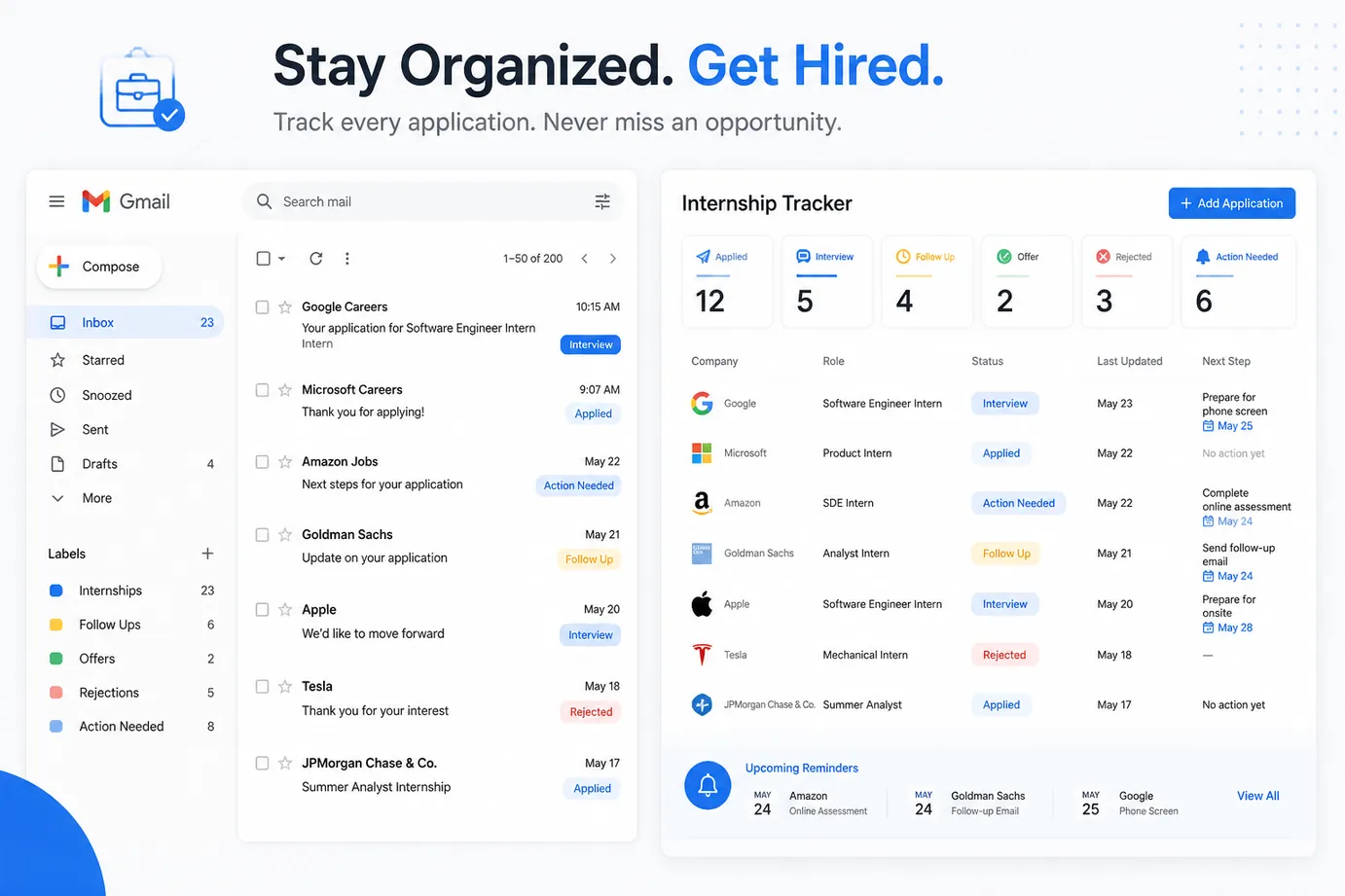
If your internship search runs through Gmail, use labels and filters to reduce clutter.
Create labels such as:
- Internships - Applied
- Internships - Interview
- Internships - Follow Up
- Internships - Offer
- Internships - Rejected
- Internships - Action Needed
Then build a habit:
- When you apply, save the confirmation email.
- Label it based on status.
- Add the role to SuperInterns or your tracker.
- Set a follow-up reminder for 7 to 14 days later.
- Move interview invitations immediately to Action Needed.
This matters because employers may reply weeks after you apply. If you miss one email, you can lose the interview slot.
Privacy note for students
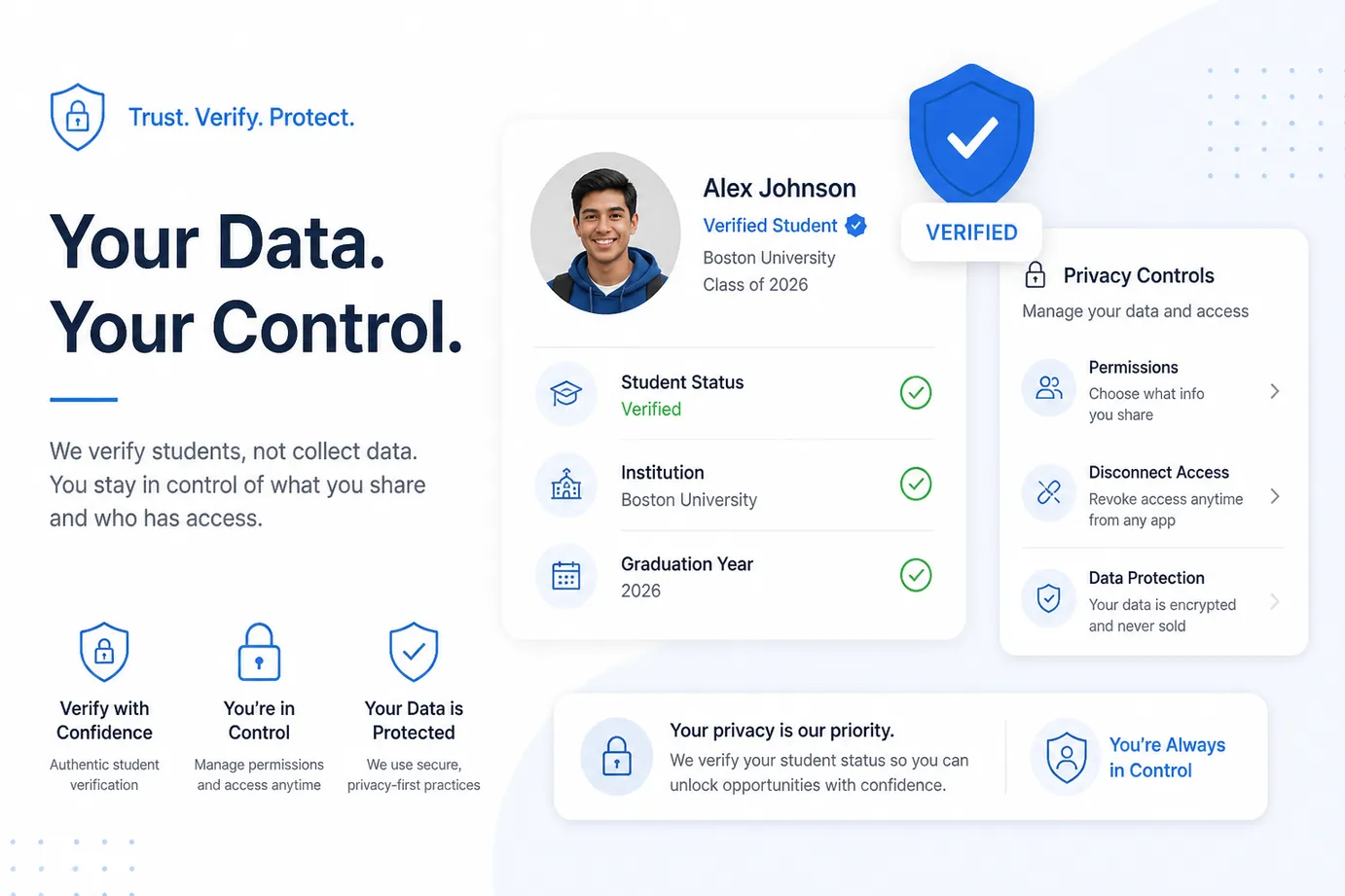
If you connect Gmail or use any email-based tracking tool, understand what access is being requested and why. A student-first workflow should make the value clear: helping you identify application updates, organize next steps, and reduce missed opportunities. You should be able to understand permissions, disconnect access when needed, and use the tool in a way that supports your search without giving up unnecessary control.
Before connecting any account, check:
- What data is accessed
- Whether the tool reads only relevant internship-related messages
- How permissions can be revoked
- Whether your data is sold or shared
- How the product explains student value
A good internship tool should make organization easier while respecting student trust.
How early should different industries apply?
Some industries recruit extremely early. Others hire closer to summer. Use this as a general guide for U.S. internships.
Finance and consulting
Start very early. Some 2027 summer analyst and consulting internship roles may open in 2026, with networking beginning even earlier. Prioritize referrals, coffee chats, technical prep, and application deadlines.
Software engineering and tech
Begin in late summer 2026. Large tech companies, banks, defense contractors, and major retailers often hire technical interns early. Practice coding, prepare projects, and apply as soon as roles open.
Marketing, communications, and media
Recruiting may be more spread out. Large companies post early, but agencies, nonprofits, and smaller companies often hire in winter or spring. Build a portfolio with writing samples, campaigns, social content, analytics, or class projects.
Healthcare, research, and life sciences
Timelines vary. Formal programs may open in fall, while labs and hospitals may hire later. Reach out to professors, research coordinators, and local organizations.
Government, policy, and nonprofits
Many programs have strict deadlines and eligibility requirements. Start early, especially for federal programs, security checks, or fellowship-style internships.
Startups and small businesses
These often hire later and move faster. If you are still searching in spring 2027, startups and local companies can be strong options.
Build a resume that passes the first screen
Your resume should be clear, specific, and tailored. Most students do not need a flashy design. They need evidence.
What to include
- Education, graduation date, major, GPA if strong or required
- Relevant coursework
- Projects, research, leadership, jobs, or volunteer work
- Technical skills and tools
- Work experience, even if not directly related
- Measurable outcomes wherever possible
Better bullet examples
- Weak: Helped with social media for club. Stronger: Created 18 Instagram posts and 4 email announcements for a student event campaign that increased registrations from 60 to 115.
- Weak: Worked on Python project. Stronger: Built a Python script to clean 12,000 rows of survey data and generate summary charts for a class research project.
- Weak: Assisted customers at retail job. Stronger: Supported 40 to 70 customers per shift, resolved product questions, and trained 2 new team members on checkout procedures.
The stronger examples show action, tools, and results. Even if your experience is not from a formal internship, you can demonstrate responsibility and skills.
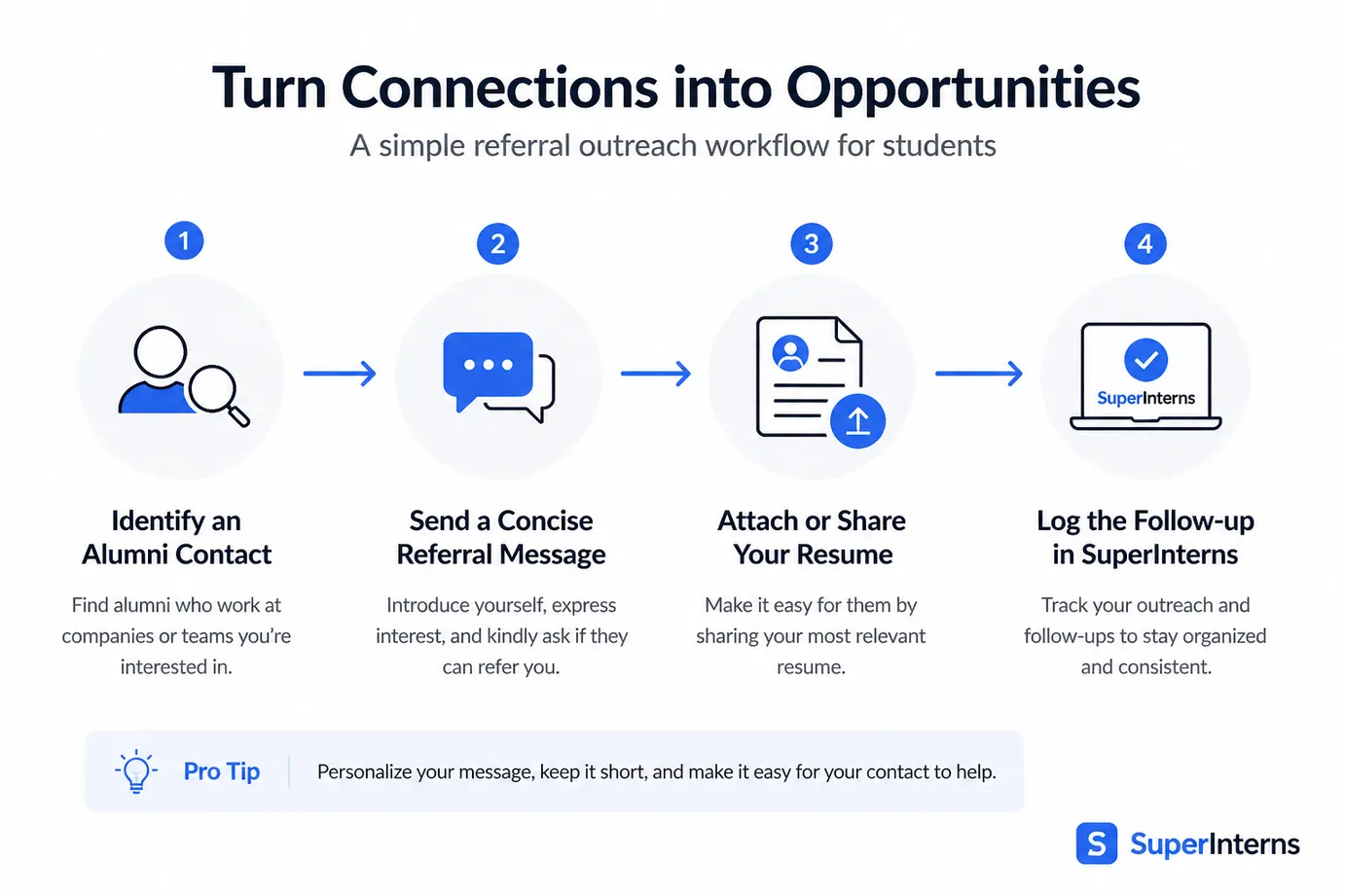
How to get referrals without being awkward
Referrals are helpful because they can move your application from invisible to visible. They do not guarantee an interview, but they can improve your odds.
The best referral approach is respectful and specific.
Who to ask
Start with people who have a real connection to you:
- Alumni from your school
- Former classmates
- Club members
- Professors or teaching assistants
- Family friends in relevant industries
- People you met at career fairs
- Employees who have posted about internships publicly
A simple referral message
Subject: Student interested in summer 2027 internship
Hi [Name],
I am a [year] at [school] studying [major]. I saw that you work at [company], and I am interested in the [role name] internship for summer 2027. I have experience with [skill or project], and I would be grateful for any advice on applying.
If you feel comfortable after reviewing my resume, would you be open to referring me? Either way, I appreciate your time.
Best,
[Your Name]
Keep it short. Attach your resume only if the platform or relationship makes that appropriate. Never pressure someone. If they do not respond, follow up once after a week and then move on.
Interview preparation for 2027 internships
Do not wait until you have an interview to start preparing. Many students lose opportunities because they begin practice after the invitation arrives.
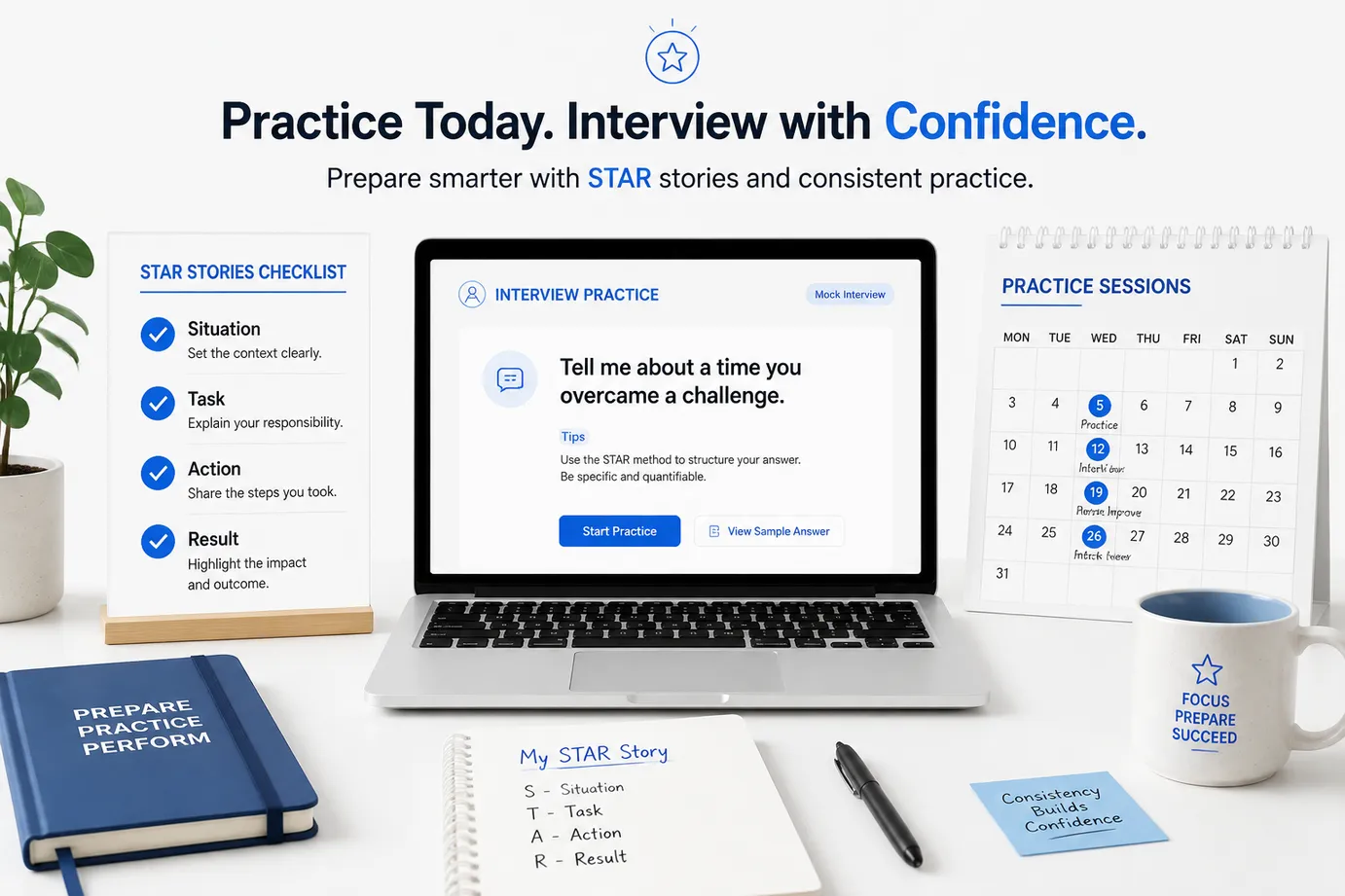
Use SuperInterns to start interview practice early, especially for common behavioral questions and role-specific prompts.
Prepare your core stories
Most interviews include behavioral questions. Prepare 6 to 8 stories that show different strengths.
Good story categories:
- Leadership
- Teamwork
- Conflict or disagreement
- Problem solving
- Learning something quickly
- Handling pressure
- Taking initiative
- Failure or mistake
Use the STAR structure:
- Situation: What was happening?
- Task: What were you responsible for?
- Action: What did you do?
- Result: What changed?
Common internship interview questions
Practice answers to:
- Tell me about yourself.
- Why are you interested in this internship?
- Why this company?
- Describe a time you worked on a team.
- Tell me about a challenge you faced.
- What are your strengths and weaknesses?
- What project are you proud of?
- How do you manage deadlines?
- What do you want to learn this summer?
For technical roles, add role-specific preparation. Software engineering students should practice coding problems and explain projects. Finance students should review accounting, valuation, markets, and case-style questions. Marketing students should be ready to discuss campaigns, audience insights, and metrics.
What to ask employers
Strong questions show maturity. Ask:
- What would success look like for this intern by the end of the summer?
- How are interns mentored or evaluated?
- What kinds of projects have past interns worked on?
- How does the team communicate and give feedback?
- What skills should I build before the internship starts?
Avoid asking only about perks. Focus on learning, contribution, and fit.
Student verification: why it may matter
Some internship platforms, employers, or student-focused features may require student status verification. This can help keep opportunities relevant and reduce spam or misuse.
On SuperInterns, verifying student status can support a more student-centered experience. The value is simple: students get access to workflows and opportunities designed for them, while the platform can better protect the quality of the environment.
Before verifying anywhere, understand:
- What information is required
- How verification is used
- Whether it affects your access to features
- How your data is protected
- Whether you can update or remove information later
How to follow up after applying
Follow-up is useful when done professionally. It should not sound impatient or demanding.
When to follow up
Follow up 7 to 14 days after applying if:
- You have a contact at the company
- You met a recruiter at an event
- The role is still open
- You have a meaningful update to share
Do not send daily messages. One thoughtful follow-up is enough in most cases.
Follow-up message example
Subject: Follow-up on summer 2027 internship application
Hi [Name],
I hope you are doing well. I recently applied for the [role name] internship and wanted to follow up because I remain very interested in the opportunity. My background in [skill, project, or coursework] seems closely aligned with the role.
Thank you for your time, and I would be grateful for any update you are able to share.
Best,
[Your Name]
Add the follow-up date to your tracker so you do not forget.
What to do if you are not getting interviews
If you have applied to 30 or more internships and received no interviews, pause and diagnose the issue.
Check these areas:
- Are you applying early enough?
- Are the roles realistic for your current experience?
- Is your resume tailored to the job description?
- Are your bullets specific and measurable?
- Are you applying only to famous companies?
- Are you using referrals or only cold applications?
- Are you including projects that prove relevant skills?
- Are you making errors in forms or missing required fields?
Then adjust. Add smaller companies. Improve your resume. Build one relevant project. Ask your career center or mentor for feedback. Use SuperInterns to keep the revised process organized.
If you are starting late for summer 2027
Starting late is not ideal, but it is not hopeless. Many employers hire in spring, especially smaller teams, local businesses, nonprofits, labs, and startups.
Your late-start plan:
- Apply to 10 to 15 roles per week for three weeks.
- Focus on recently posted internships.
- Contact alumni and local employers directly.
- Ask professors about research or department opportunities.
- Consider part-time, project-based, or remote internships.
- Prepare for interviews immediately.
- Keep your tracker updated daily.
If you cannot find a formal internship, create a summer experience that builds proof: freelance project, research assistant role, open-source contribution, campus job with leadership, volunteer analytics project, or small business consulting project. Future employers care about what you did and what you learned.
A simple weekly workflow using SuperInterns
Here is a practical student-first workflow you can repeat each week.
Monday: Browse and save roles
Open SuperInterns and browse internships that match your target categories. Save roles that fit your skills, location needs, and timeline.
Tuesday: Tailor and apply
Apply to your strongest matches. Tailor your resume summary, skills, and top bullets to the job description. Save confirmation emails and make sure Gmail labels are working.
Wednesday: Referral outreach
Send short messages to alumni, recruiters, or contacts connected to your target companies. Keep notes in your tracker.
Thursday: Interview practice
Practice behavioral and role-specific questions. Record yourself if possible. Improve clarity, not memorization.
Friday: Review and follow up
Update statuses, move Gmail messages to the right labels, set follow-up reminders, and review next week priorities.
This workflow keeps the search manageable during classes. You do not need to be perfect. You need to keep moving.
Final checklist for 2027 summer internships
Use this checklist before peak recruiting begins:
- ✓Resume updated and reviewed
- ✓LinkedIn profile aligned with resume
- ✓Target roles and industries selected
- ✓SuperInterns account or workflow set up
- ✓Gmail labels created for internship tracking
- ✓Target company list started
- ✓5 to 8 applications planned per week
- ✓Referral message template ready
- ✓Interview stories drafted using STAR
- ✓Student status verification completed if needed
- ✓Follow-up reminders scheduled
Start your 2027 internship search now
The 2027 summer internship search rewards students who start early, stay organized, and prepare before opportunities appear. You do not need to know everything on day one. You need a repeatable workflow.
Start by browsing internships, saving roles that match your goals, and setting up tracking before your inbox becomes crowded. Then practice interviews, ask for referrals respectfully, and keep improving your resume based on the roles you want.
SuperInterns can help you bring the process together: browse internships, track applications through your Gmail-based workflow, verify student status when needed, and start interview practice early. Your next internship is not just an application. It is a system you can build one week at a time.
Next steps: Browse 2027 summer internships, start interview practice, verify your student status, and read related guides on resumes, referrals, and internship interviews.