
2027 Summer Internships: A Practical Student Guide to Getting Ahead
When to apply for 2027 summer internships, where to find U.S. roles, build a resume, track applications with Gmail, get referrals, and prep for interviews.
If you are searching for 2027 summer internships, you are already thinking like a strong candidate. The best internships often go to students who start early, stay organized, and keep applying even when recruiting feels chaotic.
This guide is built for students who want a clear plan. You will learn when to apply, where to find U.S. internships, how to use Gmail to manage your search, how to track applications, how to ask for referrals, and how to prepare for interviews without burning out.
Whether you are a first-year student, sophomore, junior, community college student, graduate student, international student, or career changer, the same basic rule applies: start before you feel ready.
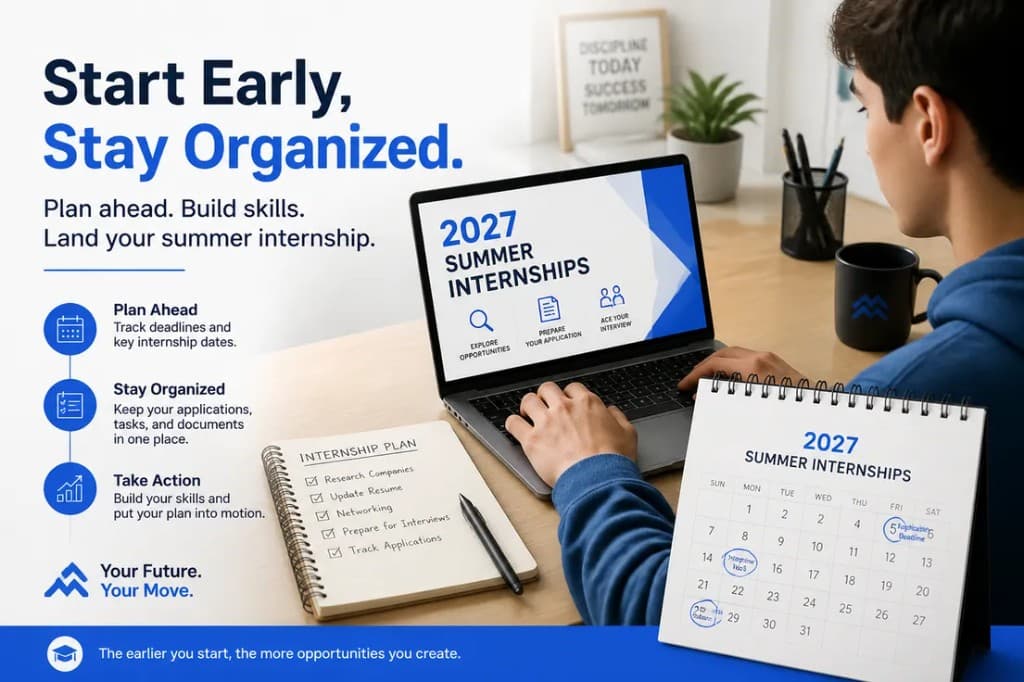
Quick answer: when should you apply for 2027 summer internships?
For many competitive U.S. internship programs, you should start preparing in spring or summer 2026 and begin applying as soon as roles open in late summer and fall 2026. Some industries recruit very early, while others post roles closer to winter or spring.
| Timeframe | What to do |
|---|---|
| Spring 2026 | Update your resume, LinkedIn, portfolio, and target company list |
| Summer 2026 | Browse internships, create job alerts, practice interview basics, contact mentors |
| August–November 2026 | Apply heavily to early recruiting industries like tech, finance, consulting, engineering, and large corporate programs |
| December 2026–February 2027 | Keep applying, follow up, interview, and expand your company list |
| March–May 2027 | Apply to smaller companies, startups, local employers, nonprofits, research labs, and late-posting roles |
| Summer 2027 | Start your internship, build relationships, and document wins for your resume |
The earlier you start, the more options you create. But if you are reading this later, do not panic. Many companies hire interns in waves, and smaller organizations often post closer to the start date.
Why 2027 summer internships are worth planning for now
Summer internships are not just resume fillers. A good internship can help you:
- Test a career path before committing to it
- Build real-world skills outside the classroom
- Earn money or academic credit
- Meet mentors and future references
- Turn an internship into a return offer or full-time job
- Strengthen graduate school or scholarship applications
- Learn what kind of workplace you actually like
The 2027 internship market will likely be competitive, especially for roles at well-known companies. But competition does not mean you need perfect grades, elite connections, or a flawless resume. You need a repeatable system.
Think of your search as a project with four parts:
- Find the right opportunities.
- Apply with strong materials.
- Track every application and follow-up.
- Prepare for interviews and networking conversations.
That system matters more than sending one perfect application and waiting.
Step 1: Choose your internship targets
Before you start applying, get specific about what you want. You do not need your entire career figured out, but you should know what kinds of roles are worth your time.
Start with role categories
Search by job function, not just by major. Many students miss great internships because they only search for their major title.
Examples:
- Computer science: software engineering intern, data science intern, product intern, cybersecurity intern, QA intern
- Business: marketing intern, finance intern, operations intern, business analyst intern, sales intern
- Design: UX intern, graphic design intern, product design intern, content design intern
- Science: research intern, lab assistant, biotech intern, environmental intern
- Humanities and social science: policy intern, communications intern, editorial intern, nonprofit program intern, legal intern
- Engineering: mechanical engineering intern, electrical engineering intern, manufacturing intern, civil engineering intern
Build a target list of companies
Create a list of 30–100 organizations. Include:
- Big-name employers in your field
- Mid-size companies with structured internship programs
- Local businesses near your school or hometown
- Startups
- Government agencies
- Nonprofits
- Research labs
- Hospitals or clinics, if relevant
- University departments and campus offices
Do not only chase famous companies. A smaller internship with real responsibility can teach you more than a brand-name internship where you do basic admin work.
Consider location and work style
For U.S. internships, decide what you can realistically accept:
- Remote, hybrid, or in-person near campus or home
- Relocation required
- Paid housing or relocation stipend
- Public transit accessible
- Part-time during school year leading into summer
If money is a factor, look closely at pay, housing, transportation, and cost of living. A paid internship in a lower-cost city may be better than a higher hourly rate in an expensive location with no housing support.
Step 2: Know where to find 2027 summer internships
Do not rely on one job board. The best search uses several sources because companies post in different places.
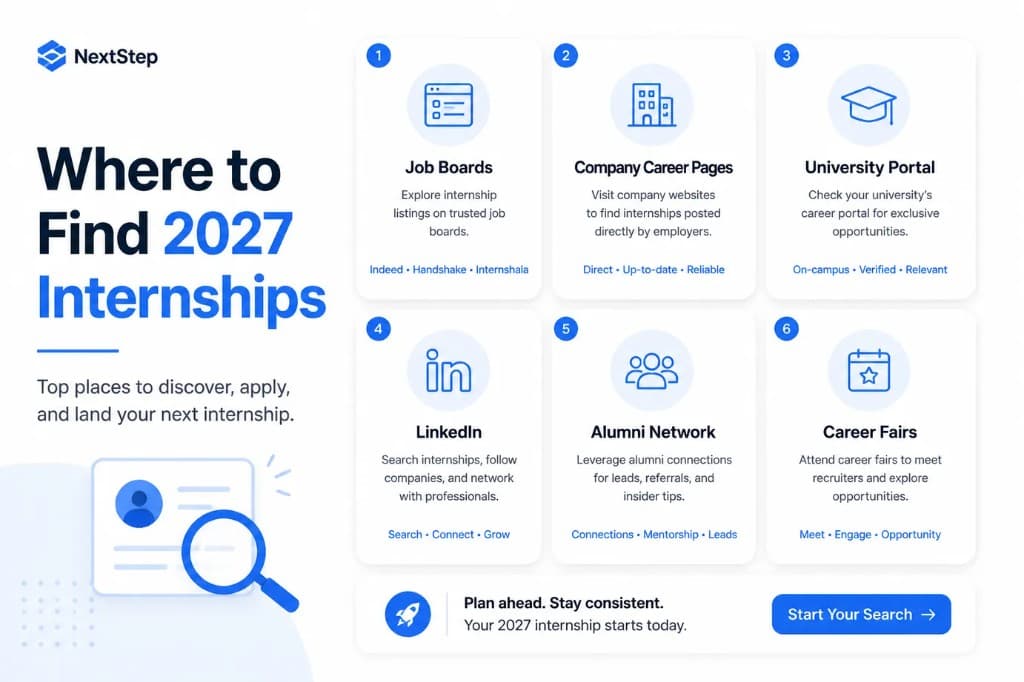
Best places to search
Use a mix of these:
- Internship search platforms , browse USA internships synced from company career pages on SuperInterns
- Your university career portal
- Company career pages
- LinkedIn job search
- Alumni networks
- Professional associations
- GitHub, design communities, or industry-specific boards
- Government job portals for public sector internships
- Research program databases
- Campus newsletters and department emails
- Career fairs and employer info sessions
Search terms to try
Use different versions of the same search. Companies title internships differently.
- 2027 summer internship
- summer 2027 intern
- 2027 intern program
- undergraduate intern summer 2027
- software engineering intern 2027
- finance intern summer 2027
- marketing internship 2027
- remote summer internship 2027
- sophomore internship 2027
- freshman internship 2027
Set alerts for your strongest searches so you are not manually checking every day.
Browse early, apply when ready enough
It is smart to browse internships before your resume feels perfect. Browsing helps you understand common requirements, tools, skills, and keywords.
As you read postings, save details like required skills, preferred majors, application deadlines, resume keywords, interview format, work location, pay range, and sponsorship or work authorization notes. Then use that information to improve your resume and decide which skills to practice.
Step 3: Make a resume that passes the first scan
Your resume does not need to be fancy. It needs to be easy to read and relevant.
What to include
For most students, a one-page resume works best. Include:
- Name, email, phone, location, LinkedIn, portfolio or GitHub if relevant
- Education, graduation date, major, minor, GPA if strong or required
- Work experience, internships, campus jobs, or part-time roles
- Projects, research, leadership, volunteering, or coursework
- Skills, tools, languages, certifications, or technical abilities
Use accomplishment bullets
A weak bullet says what you were assigned. A strong bullet shows what you did and why it mattered.
Instead of “Helped with social media posts,” try:
Created 20+ social media posts for a student organization, increasing event sign-ups by 35% over one semester.
Instead of “Worked on Python project,” try:
Built a Python script to clean 5,000+ survey responses, reducing manual formatting time for a class research project.
Match the role without copying the posting
If a posting mentions Excel, SQL, customer research, or Figma, and you have used those skills, make sure they appear naturally on your resume. Do not lie, but do make your experience easy to find.
Create a base resume plus versions
You do not need 50 resumes. Create one strong base resume, then make 2–4 versions for your main role types: software engineering, data analyst, product or business, marketing or communications.
Step 4: Build a Gmail-based workflow that keeps you organized
Internship searches get messy fast. You will receive application confirmations, recruiter emails, interview invites, rejections, assessment links, and follow-up reminders. A simple Gmail workflow can save you.
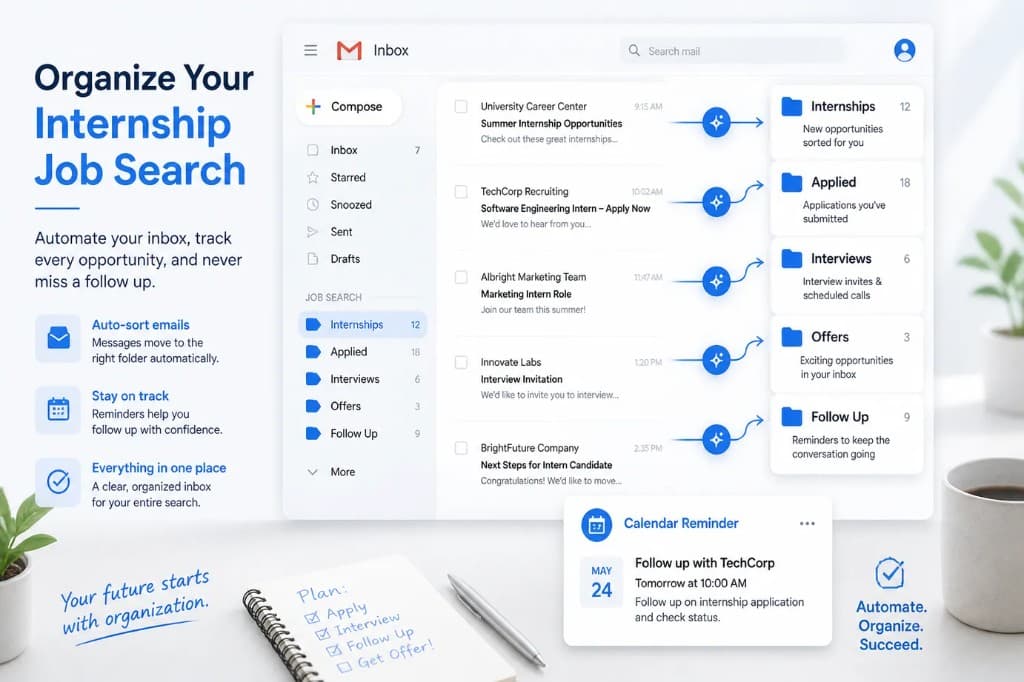
Create Gmail labels
Set up labels like:
- Internships – Applied
- Internships – Interviewing
- Internships – Assessment
- Internships – Follow Up
- Internships – Offers
- Internships – Rejections
- Internships – Networking
Use filters for common emails
Create filters for phrases like thank you for applying, your application has been received, interview invitation, complete your assessment, schedule a call, and internship application.
Star urgent messages
Use stars for anything that needs action within 48 hours: interview scheduling links, take-home assignments, recruiter questions, offer deadlines, and referral follow-ups.
Keep a professional email setup
Use a clean email address based on your name. Check your spam folder at least twice a week during recruiting season. Make sure your Gmail display name is professional, recruiters should see your actual name, not an old nickname.
Step 5: Track every internship application
You will not remember where you applied, what version of your resume you used, or when to follow up. Use a tracker from day one , SuperInterns Track Applications builds your pipeline from Gmail automatically.
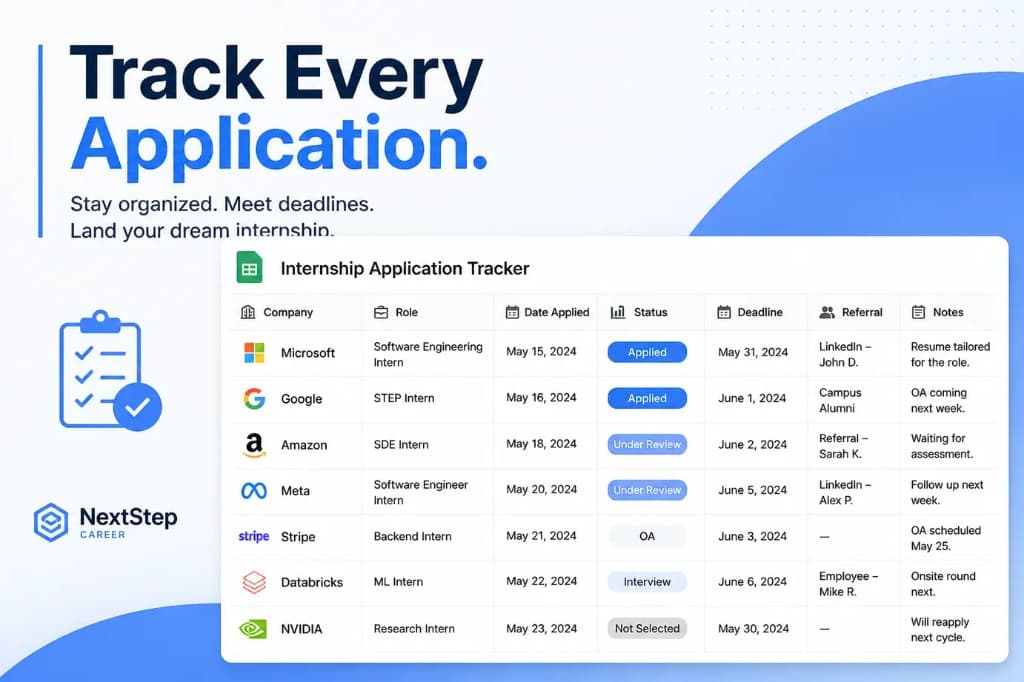
What to track
Create columns for company, role title, location, remote/hybrid/in-person, application link, date applied, deadline, status, resume version, contact person, referral source, follow-up date, interview date, notes, and outcome.
Suggested status labels
Saved, Applied, Referred, Assessment, Interview 1, Interview 2, Final, Offer, Rejected, Withdrawn, No response.
Weekly tracker routine
Once a week, spend 30 minutes updating your tracker:
- Move stale applications to no response.
- Add follow-up reminders.
- Record interview notes.
- Save new roles to apply to.
- Check deadlines.
- Review your response rate.
If you apply to 40 internships and get no interviews, change your resume strategy. If you get interviews but no offers, focus on interview practice. Your tracker shows where the problem is.
Step 6: Apply early, but do not apply randomly
Yes, applying early helps. But sending rushed applications to roles you barely understand is not the goal.
The 20-minute application method
For each role:
- Read the posting carefully.
- Confirm you meet enough requirements to be credible.
- Save the role in your tracker.
- Adjust your resume headline, skills, or project bullets if needed.
- Submit the application.
- Save the confirmation email with your Gmail label.
- Add a follow-up date if you have a contact.
How many internships should you apply to?
Competitive fields may require 50–150 applications. A good goal during peak season is 5–10 quality applications per week if you are busy with classes, 10–20 per week during breaks, 2–3 networking messages per week, and 1–2 interview practice sessions per week.
Consistency beats one huge application sprint followed by three weeks of silence.
Step 7: Get referrals without feeling awkward
A referral can help your application get noticed. It does not guarantee an interview, but it can move you out of the giant pile. Ask respectfully and make it easy for the other person to help.
Who to ask
Start with alumni from your school, former interns, friends of friends, professors, club alumni, family friends, mentors, and people you met at career fairs.
Referral message template
Hi [Name],
I am a [year] studying [major] at [school], and I saw the [role title] internship at [company]. I noticed your experience in [team/field] and would really appreciate any advice on applying. If you feel comfortable after reviewing my resume, would you be open to referring me?
I attached my resume and the role link. Thank you either way.
Best,
[Your Name]
Important referral rules
- Do not ask strangers for a referral in the first sentence without context.
- Always include the exact role link.
- Attach or link your resume.
- Give them a graceful way to say no.
- Thank them even if they cannot help.
- Update them if you get an interview or offer.
Step 8: Contact mentors and recruiters the smart way
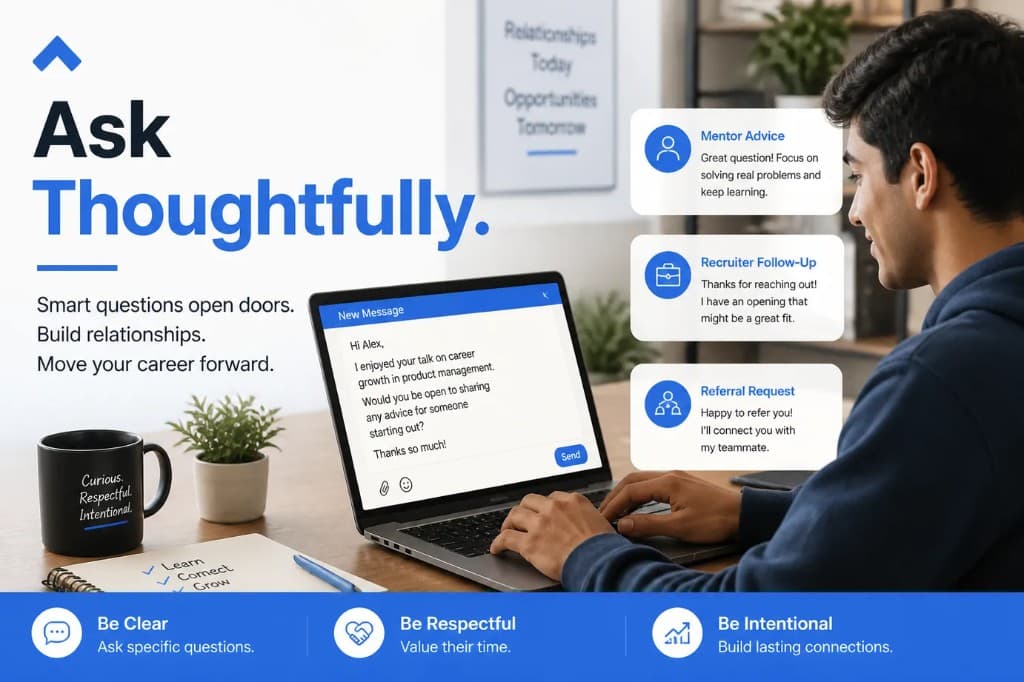
Networking is not begging for a job. It is starting career conversations before you need something urgently.
What to ask mentors
- What skills should I build before applying to this type of internship?
- What made your resume stronger when you were a student?
- Are there companies students often overlook?
- How should I prepare for interviews in this field?
- Would you be willing to review my resume for 10 minutes?
Find Mentors on SuperInterns surfaces recruiters and campus hiring contacts at any company.
What to say to recruiters
Hi [Name], I am a [year] at [school] interested in [role type]. I applied for the [internship name] role and wanted to share my interest because my experience with [specific project/skill] matches the posting. Thank you for your time, and I would be grateful for any next steps or advice.
Best,
[Your Name]
Follow-up timing
If you had a real conversation or interview, follow up within 24 hours with a thank-you note. If you applied and have a contact, wait 7–10 business days before following up.
Step 9: Prepare for interviews before you get one
Many students wait until an interview is scheduled to practice. Start early, even if you only practice 20 minutes a week. Practice interviews with AI mock sessions tailored to the company and role you want.
Common internship interview questions
Prepare answers for tell me about yourself, why this internship, why this company, teamwork and challenge stories, strengths and learning areas, resume walkthrough, a project you are proud of, and questions for the interviewer.
Use the STAR method
For behavioral questions: Situation, Task, Action, Result. Keep answers focused, usually 60–90 seconds.
Practice role-specific skills
Depending on your field, practice coding problems, case interviews, Excel exercises, portfolio walkthroughs, writing samples, data analysis questions, design critiques, lab explanations, or sales role plays.
Record yourself
Record a practice answer and check whether you rambled, gave a clear result, sounded interested, used too many filler words, and matched your example to the question.
Step 10: Use student discounts and free career resources
Internship searching can get expensive if you pay for every tool, course, and resume review. Start with free or discounted resources.
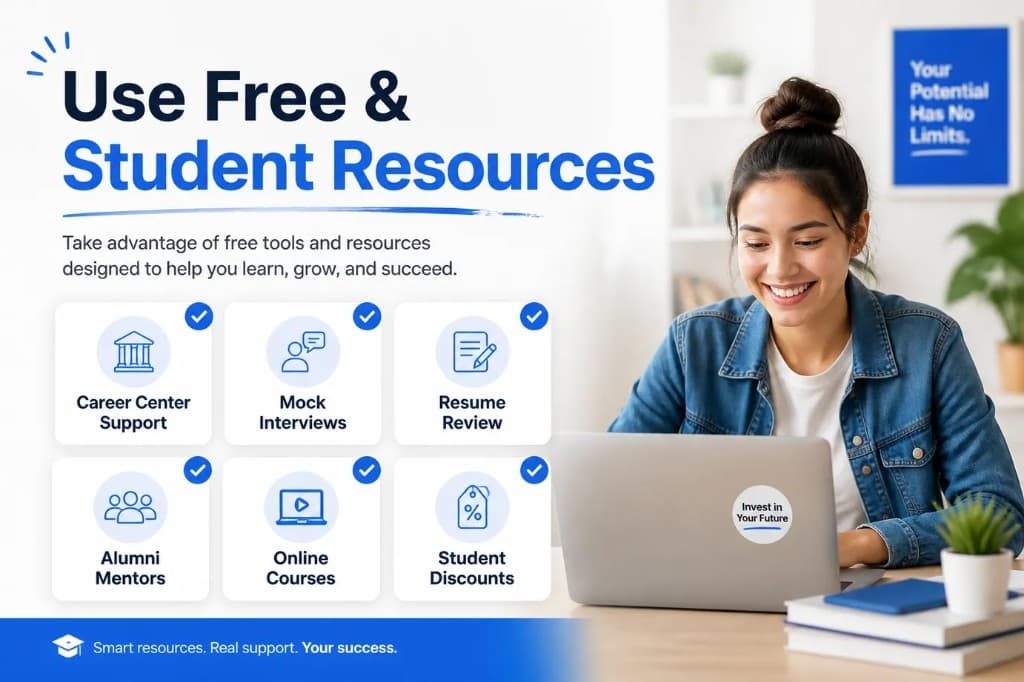
Check your campus career center, resume review events, mock interview programs, alumni mentoring platforms, library databases, professor office hours, student clubs, employer info sessions, and student discounts on SuperInterns.
Do not buy tools just because you are stressed. Pay for something only if it directly helps you apply, practice, organize, or build a required skill.
Industry-specific tips for 2027 internships
- Tech: Apply early. Build projects that show your skills. Keep GitHub or portfolio clean. Practice coding interviews consistently.
- Finance: Many programs recruit very early. Networking and campus events matter. Practice technical finance questions for banking and analyst roles.
- Consulting: Expect case interviews and behavioral questions. Practice cases with peers and structure ambiguous problems clearly.
- Marketing and communications: Create proof of work, social content, writing samples, campaign ideas, analytics screenshots, or newsletters.
- Engineering: Highlight hands-on projects, lab work, CAD tools, research, or competition teams. Apply to both big programs and local companies.
- Healthcare, policy, nonprofit, and research: Deadlines vary widely. Professors, department newsletters, local organizations, and government agencies can be especially helpful.
Common mistakes to avoid
- Waiting until spring 2027 to start looking
- Applying only to famous companies
- Using one generic resume for every role
- Forgetting to track applications
- Ignoring Gmail and missing interview emails
- Not practicing interviews until the night before
- Asking for referrals with no role link or resume
- Skipping smaller companies and local opportunities
- Applying without checking work authorization requirements
- Letting rejection stop your entire search
A simple weekly internship search schedule
During the semester
Try this 3-hour weekly plan:
- 45 minutes: browse internships and save roles
- 60 minutes: submit 3–5 applications
- 30 minutes: update tracker and Gmail labels
- 30 minutes: send networking or referral messages
- 15 minutes: practice one interview answer
During winter or summer break
Try this 6-hour weekly plan:
- 90 minutes: research companies and roles
- 2 hours: submit applications
- 60 minutes: interview practice
- 45 minutes: networking and follow-ups
- 45 minutes: resume, portfolio, or project improvements
Small weekly actions add up quickly. Ten weeks of steady work can produce dozens of applications, multiple conversations, and much better interview confidence.
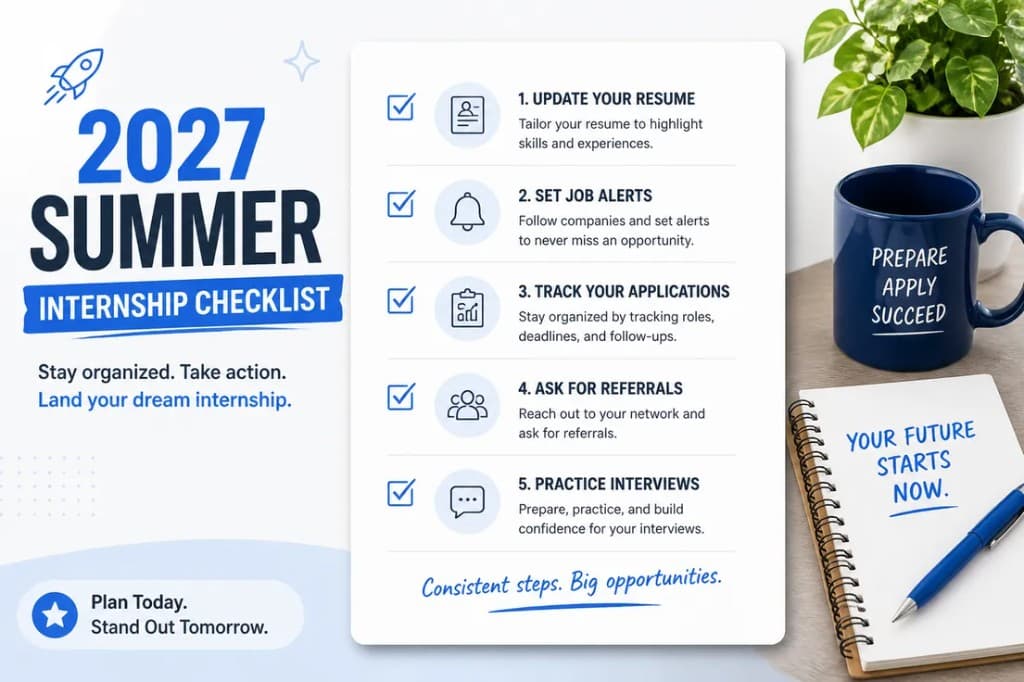
Your 2027 summer internship checklist
- ✓Create a target role list
- ✓Build a company list
- ✓Update your resume
- ✓Create role-specific resume versions
- ✓Update LinkedIn, portfolio, GitHub, or writing samples
- ✓Set up Gmail labels and filters
- ✓Create or activate an internship tracker
- ✓Browse internships weekly
- ✓Set job alerts for 2027 summer internships
- ✓Apply early to competitive programs
- ✓Contact mentors or alumni
- ✓Ask for referrals respectfully
- ✓Practice behavioral interview answers
- ✓Practice technical or field-specific interviews
- ✓Use free campus career resources
- ✓Review student discounts before paying for tools
- ✓Follow up after interviews
- ✓Keep going after rejections
Final advice: build a system, then keep moving
Getting a 2027 summer internship is not about being perfect. It is about being prepared, organized, and persistent.
Start by browsing internships and saving roles that interest you. Create a free account on SuperInterns, set up your tracker, label your Gmail inbox, and apply before deadlines sneak up on you. Reach out to mentors, ask thoughtful questions, practice interviews early, and keep improving your materials as you learn what employers want.
Your first application does not have to be your best one. Your first interview does not have to be flawless. The goal is progress. Open your tracker, find three internships you would be excited to apply for, and take the next step today.