
2027 Summer Internships USA: Student Search Guide
When to apply for 2027 summer internships in the USA, where to find roles on company career pages, track applications with Gmail, get referrals, and prep for interviews.
Searching for 2027 summer internships in the USA can feel early, but the best opportunities often move faster than students expect. Large employers may open applications 9 to 12 months before the internship starts, while smaller companies, research labs, nonprofits, startups, and local employers may hire closer to spring 2027.
The good news: you do not need to be perfect. You need a clear plan, a simple tracking system, and steady weekly action. This guide walks you through when to apply, where to find openings, how to use company career pages, how to organize applications with Gmail, how to get referrals, and how to prepare for interviews without burning out.
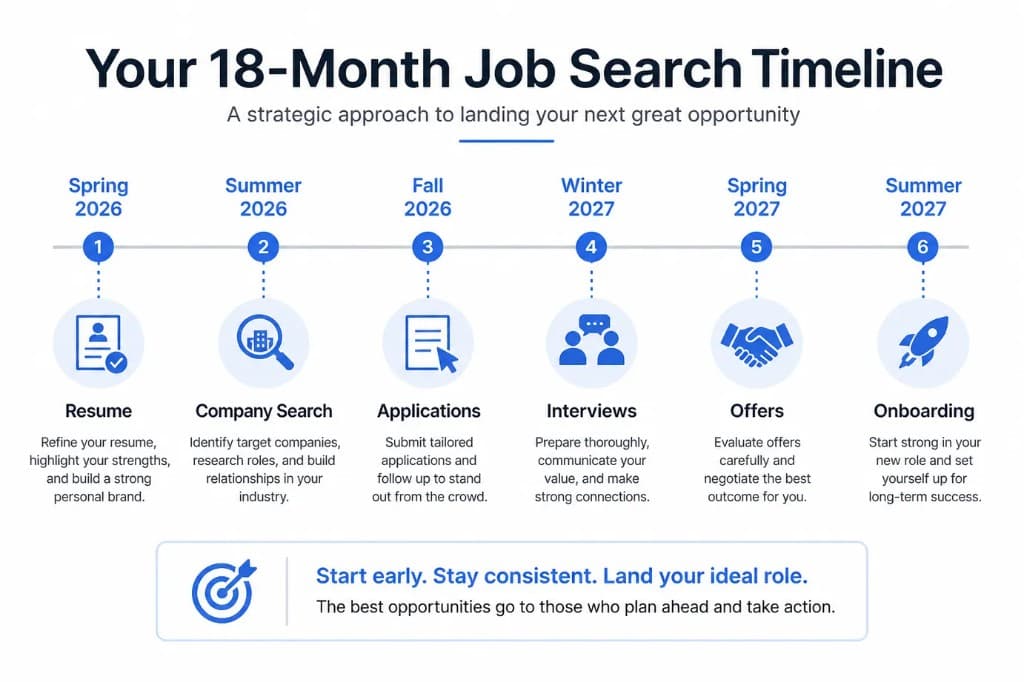
Quick answer: when should you apply for 2027 summer internships?
For most competitive U.S. internships, start preparing in spring and summer 2026 and begin applying as soon as roles open in late summer or early fall 2026.
Use this simple timeline:
- March-July 2026: Build your resume, portfolio, target company list, and LinkedIn profile.
- August-October 2026: Apply heavily to large companies, finance, consulting, tech, engineering, and rotational programs.
- November 2026-January 2027: Continue applications, complete interviews, follow up, and apply to second-wave roles.
- February-April 2027: Focus on startups, local employers, nonprofits, research roles, government programs, and smaller teams.
- May-June 2027: Finish paperwork, housing, relocation, onboarding, and pre-internship prep.
If you are reading this early, you have an advantage. If you are reading this later, you still have options. Many students land excellent internships in spring through referrals, campus connections, and smaller employers. For roles already live, see our running list of Summer 2027 programs open now.
Why 2027 internship recruiting starts earlier than you think
U.S. internship recruiting is uneven. Some employers post summer roles almost a year ahead, while others wait until they know team budgets and project needs. That creates confusion for students, but it also creates opportunity.
Big companies recruit early because they have structured internship classes, standardized interviews, relocation planning, and return-offer pipelines. Smaller employers recruit later because they hire based on immediate project needs.
Here is what that means for you:
- Apply early to structured programs, but do not stop after October.
- Keep a rolling list of employers because new roles appear every week.
- Use company career pages, not only job boards. Browse USA internships synced from employer sites.
- Track every application so you can follow up and avoid duplicate submissions. Track Applications builds your pipeline from Gmail.
- Build relationships before you need a referral.
Your goal is not to apply randomly to 200 roles. Your goal is to create a focused system that helps you find, apply, follow up, and interview consistently.
Step 1: Decide what kind of internship you want
Before you open job boards, define your search. A focused search saves time and helps you write stronger applications.
Choose 2-3 target role families
Examples:
- Software engineering intern
- Data analyst intern
- Product management intern
- Marketing intern
- Finance intern
- Mechanical engineering intern
- UX design intern
- Cybersecurity intern
- Public policy intern
- Research assistant
- Operations intern
- Human resources intern
You can explore, but do not make every possible role your main target. Pick a primary direction and one or two backups.
Choose your location strategy
For 2027 summer internships in the USA, decide whether you are open to:
- Fully in-person roles
- Hybrid roles
- Remote roles
- Relocation with housing support
- Local internships near campus or home
- Major internship hubs such as New York, San Francisco Bay Area, Seattle, Boston, Chicago, Austin, Los Angeles, Atlanta, Dallas, Washington DC, and Raleigh-Durham
Be honest about housing, transportation, and cost. A high hourly wage may not go far if housing is expensive and relocation support is limited.
Create a target employer list
Start with 30-50 employers. Include a mix of reach, realistic, and backup options.
Your list can include:
- Major companies in your industry
- Companies that recruit at your university
- Alumni employers
- Local businesses
- Startups backed by reputable investors
- Government agencies
- National labs
- Hospitals or research centers
- Nonprofits and foundations
- University departments and faculty labs
This list becomes your search map.
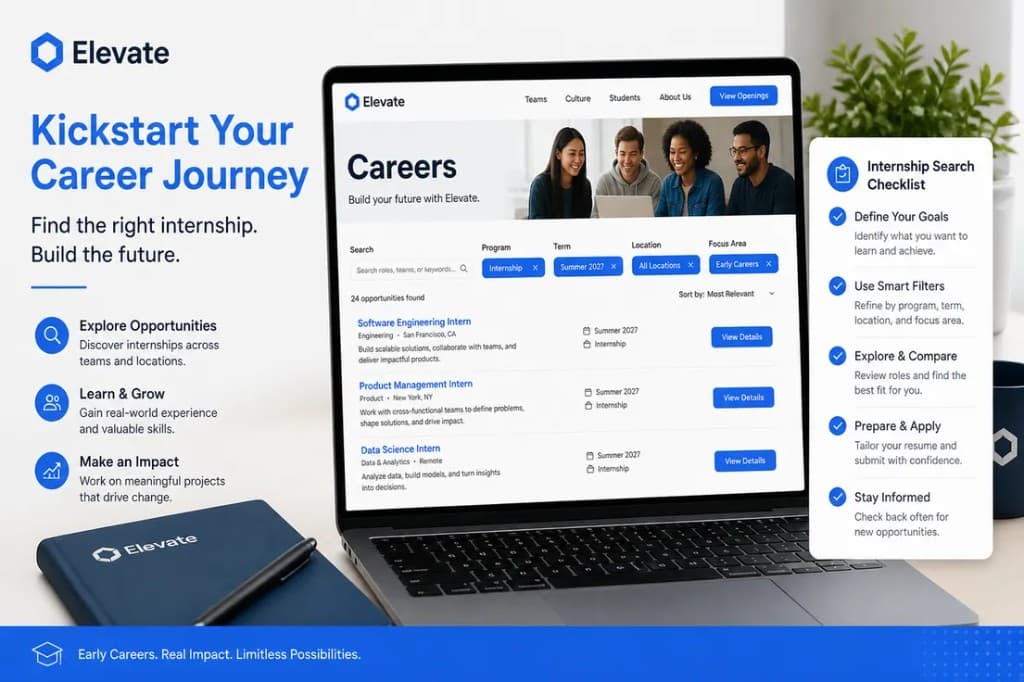
Step 2: Search company career pages the right way
Job boards are useful, but company career pages are often the most reliable source. Some internships appear on the employer site before they appear anywhere else. Others never appear on large boards at all.
Use the best search terms
Try combinations like:
- 2027 summer intern
- summer 2027 internship
- internship 2027
- university intern
- college intern
- early careers
- campus internship
- undergraduate intern
- graduate intern
- co-op
- Pathways intern
Role-specific examples:
- software engineering intern 2027
- finance analyst intern summer 2027
- mechanical engineering internship summer 2027
- marketing intern 2027
- data science intern summer 2027
Check both early-career and regular job pages
Many employers separate internships into a campus or early-careers section. Others list internships in the same system as full-time jobs. Search both.
Look for navigation labels like:
- Students
- University recruiting
- Early careers
- Campus programs
- Internships
- New grads
- Emerging talent
Set alerts where possible
If a company career site allows alerts, create them. Use a dedicated Gmail label for internship alerts so you do not miss them.
Apply early, but do not rush low-quality applications
For competitive roles, apply within the first few days if possible. But do not submit a generic resume if the posting clearly asks for specific skills. Take 20-30 minutes to tailor your resume bullets and keywords. A strong tailored application usually beats a rushed generic one.
Step 3: Build an application tracker you will actually use
If you apply to more than 10 internships, you need a tracker. It can be a spreadsheet, Notion board, Airtable, Trello board, or an internship search tool. The best tracker is the one you update consistently.
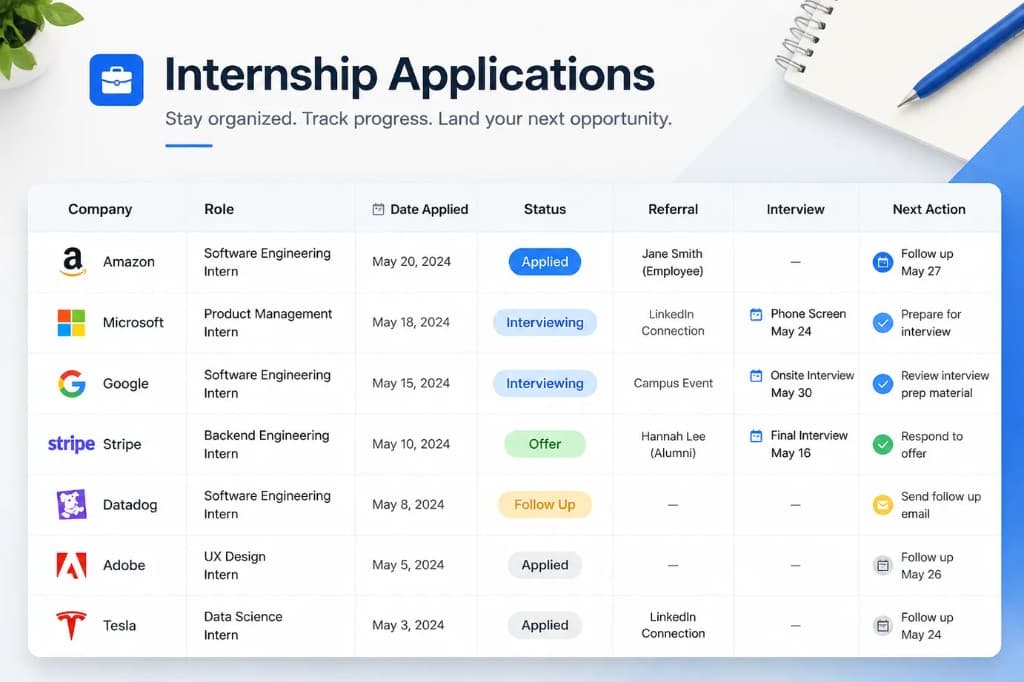
Use these tracker columns
- Company
- Role title
- Location
- Remote, hybrid, or in-person
- Application link
- Date posted
- Date applied
- Status
- Deadline
- Referral contact
- Recruiter contact
- Next action
- Follow-up date
- Interview stage
- Notes
Use simple status labels
Saved, Applied, Referred, Online assessment, Recruiter screen, Interviewing, Final round, Offer, Rejected, Withdrawn.
Add a next-action column
This is the most important column. Every application should have a next action, such as tailor resume, ask alum for referral, submit application, complete assessment, send thank-you note, follow up Friday, or practice behavioral questions. A tracker is not just a record. It is your command center.
Step 4: Set up a Gmail workflow for internship applications
Your inbox can become chaotic fast. A basic Gmail workflow helps you catch interview invitations, deadlines, assessment links, and recruiter messages.
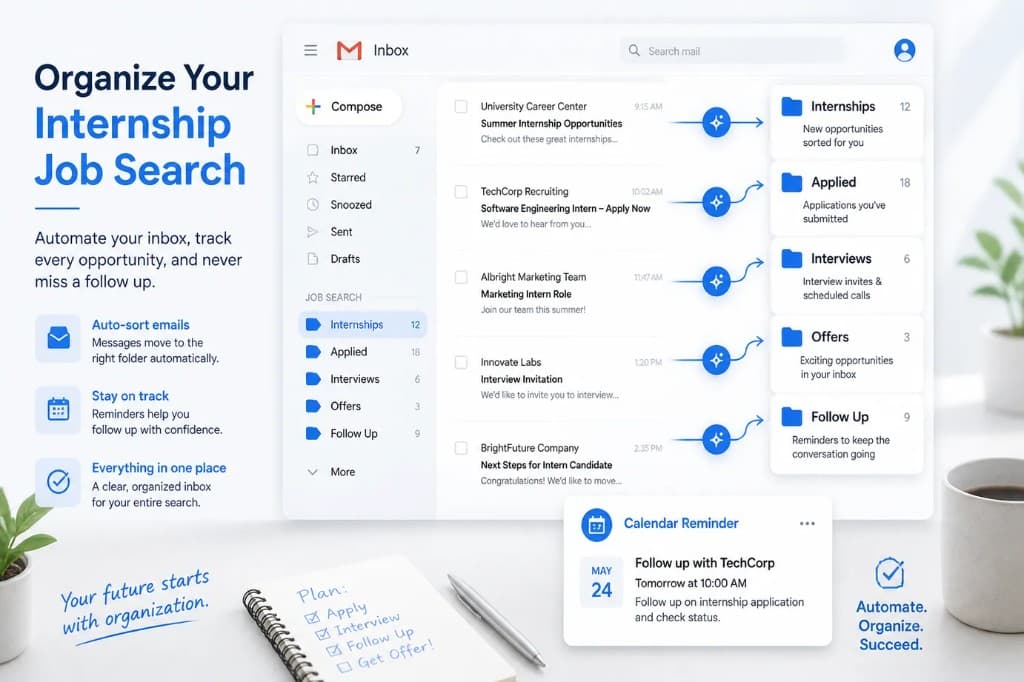
Create internship labels
In Gmail, create labels like Internships, Internships - To Apply, Internships - Applied, Internships - Interviews, Internships - Offers, Internships - Rejections, and Internships - Follow Up. Use colors so important messages stand out.
Use filters to sort messages automatically
Create filters for common words in sender names or subject lines: careers, recruiting, talent acquisition, application received, interview, assessment, coding challenge, hirevue, offer, rejection.
Use a dedicated internship email strategy
If your main inbox is messy, consider using a dedicated Gmail account for internship applications. You can also use Gmail plus addressing, such as yourname+internships@gmail.com, to filter messages by application category.
Turn emails into calendar reminders
When you receive an interview invite or assessment deadline, add it to your calendar immediately with company name, role title, interview link, recruiter name, prep notes, and deadline. Set reminders for 24 hours and 1 hour before the event.
Step 5: Write a resume that passes the 10-second test
Recruiters and hiring managers skim quickly. Your resume should make your fit obvious.
Most undergraduate students should use one page with name, education, skills, experience, projects, leadership, and relevant awards. Avoid heavy graphics and tiny fonts that may break in applicant tracking systems.
Tailor your top skills and most relevant bullets to each internship. A strong bullet includes what you did, tools or methods used, and a measurable result when possible.
Projects count, especially for students. Include class projects, personal projects, hackathons, lab work, design portfolios, and volunteer work with goal, your role, tools used, result, and link if public.
Step 6: Use referrals without being awkward
A referral will not guarantee an internship, but it can help your application get noticed. The key is to be respectful and specific.
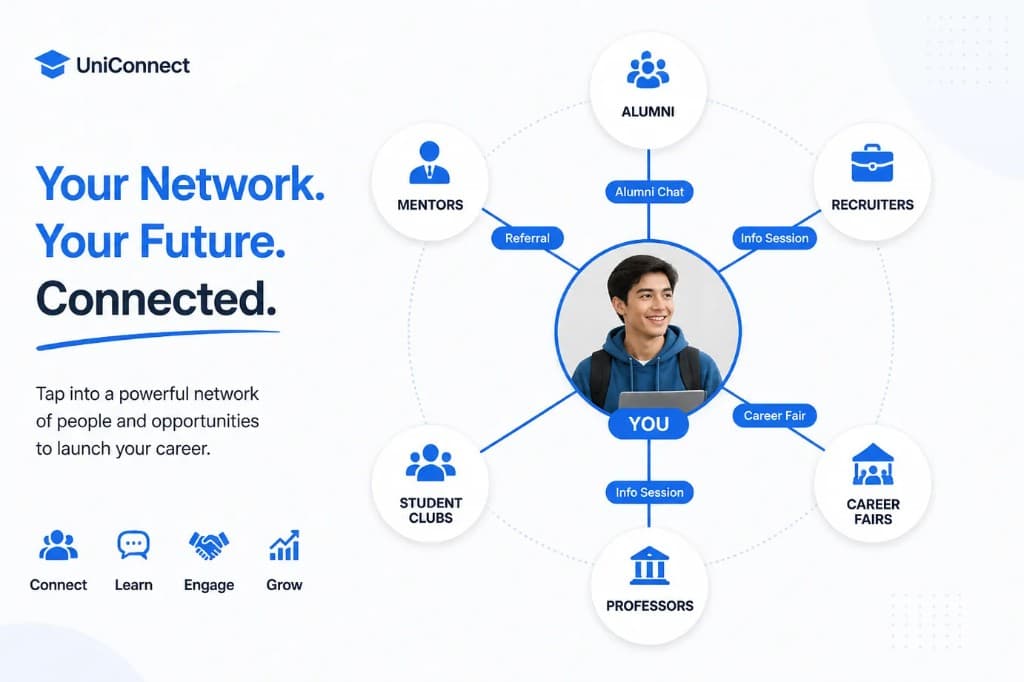
Start with warm or semi-warm connections: alumni, former interns, professors, career fair contacts, and mentors. Send a short message asking for a 15-minute chat about their experience before asking for a referral. Do not lead with a referral request before building context. Find mentors and alumni contacts at target companies.
Step 7: Make campus recruiting work for you
Campus recruiting can be one of the fastest ways to connect with employers. Check your campus recruiting calendar for fall career fairs, employer info sessions, resume reviews, alumni panels, and mock interview days.
For summer 2027 internships, the busiest campus recruiting period will likely be September and October 2026. Prepare a 30-second introduction with your name, year, major, target role, one relevant project, and why you are interested in the company.
Step 8: Prepare for interviews before you get one
Do not wait until you receive an interview invite to start practicing. You may only get a few days of notice.
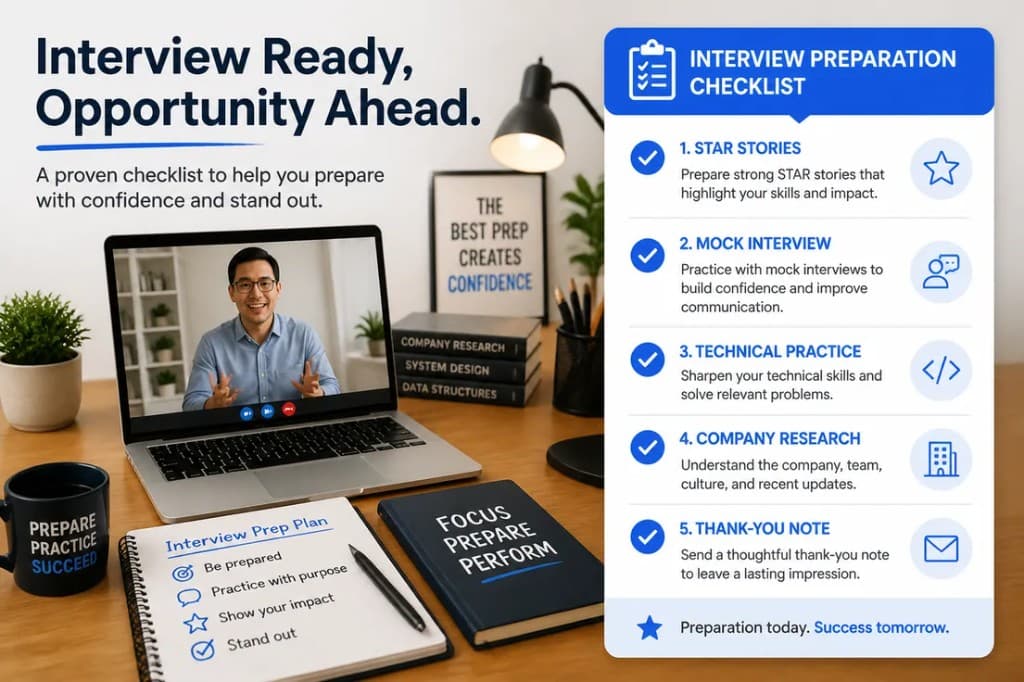
Prepare 6-8 STAR stories for leadership, teamwork, conflict, problem-solving, learning quickly, failure, technical projects, and working under pressure. Practice role-specific skills: coding for software, SQL and dashboards for data, cases for consulting, portfolios for design.
Use mock interviews with career counselors, alumni, and AI interview practice tailored to real companies. The more you practice out loud, the less stressful real interviews feel.
Step 9: Know the rules for international students
If you are an international student in the U.S., do not guess about work authorization. Talk to your Designated School Official early about CPT eligibility, OPT timing, course enrollment requirements, remote work restrictions, and approval timelines. Do not begin paid or unpaid work until your authorization is approved.
Step 10: Use student discounts and verification to lower costs
Internship searches can cost money: resume tools, interview prep, software, travel, clothing, transit, and housing deposits. Use student discounts whenever possible.
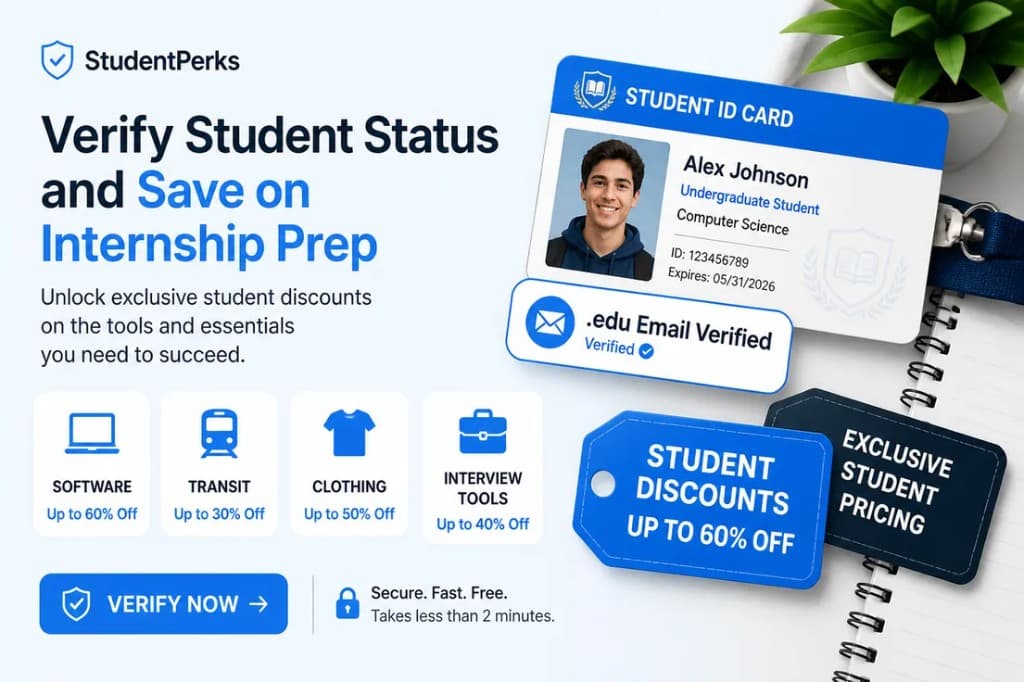
Look for discounts on productivity software, design tools, coding tools, interview prep, transit passes, career clothing, and professional memberships. Student resources and student verification can unlock savings before you need a tool quickly.
Best places to find 2027 summer internships in the USA
- Company career pages: Best for official postings and direct applications.
- University career platforms: Many employers post roles for specific schools.
- LinkedIn: Useful for discovering roles and finding alumni.
- Handshake: Strong for campus recruiting and career fairs.
- USAJOBS and Pathways: For federal internships; read requirements carefully.
- Professional associations: Engineering societies, accounting groups, and computing associations often list internships.
- Faculty, labs, and research centers: Ask professors and lab managers directly.
- Local employers and startups: May hire later and move faster.
A weekly internship search routine that works
- Monday: Search company career pages, review alerts, save matches, add deadlines.
- Tuesday: Tailor resume bullets and submit 3-5 high-quality applications.
- Wednesday: Message alumni, attend info sessions, follow up with contacts.
- Thursday: Practice behavioral stories and role-specific drills.
- Friday: Update statuses, send thank-you notes, archive rejections, plan next week.
During peak season, aim for 8-15 quality applications per week if your schedule allows. If you are balancing classes and work, choose a smaller number and stay consistent.
Common mistakes to avoid
- Waiting until spring 2027 to start when structured programs may already be full.
- Applying only through job boards instead of employer career pages.
- Using the same resume for every role without tailoring top bullets.
- Ignoring follow-up after networking chats and career fair conversations.
- Missing assessment deadlines because they were buried in your inbox.
- Falling for scams: verify roles on official company career pages before sharing sensitive information.
30-day action plan for your 2027 internship search
- Days 1-3: Choose target roles, update resume, create tracker, set up Gmail labels, build a list of 30 employers.
- Days 4-10: Add projects to resume or portfolio, update LinkedIn, draft cover letter template, get resume feedback.
- Days 11-17: Search career pages, apply to first 10 roles, set alerts, track every application.
- Days 18-24: Message alumni, attend one career event, request referrals after real conversations.
- Days 25-30: Write 6 STAR stories, practice one mock interview, review common questions, organize notes for top companies.
At the end of 30 days, you should have a working system, not just a pile of applications.
Final checklist: what to do next
If you want a 2027 summer internship in the USA, start with the basics and build momentum.
- Browse internships on company career pages and student job platforms.
- Track every application in one place.
- Set up Gmail filters so you never miss an interview or assessment.
- Practice interviews before invitations arrive.
- Find mentors, alumni, and former interns who can give honest advice.
- Verify student status to unlock discounts and useful tools.
- Start for free with the resources you already have through your school.
You do not need to complete everything today. Pick one action: update your resume, create your tracker, or save 10 target companies. Then keep going. A strong internship search is built one focused step at a time.