Remote Summer 2027 Internships: A Practical Student Search Guide
Find remote summer 2027 internships in the USA, track applications with Gmail, get referrals, prep for video interviews, and follow a 30-day search plan.
If you are looking for remote summer 2027 internships, the smartest move is to start earlier than feels necessary. Remote roles are popular because they offer flexibility, save commuting costs, and open up opportunities beyond your campus city. The tradeoff: competition can be intense, application windows can open months in advance, and it is easy to lose track of where you applied.
This guide gives you a clear, student-friendly plan for finding U.S.-based remote internships for summer 2027, applying on time, staying organized with Gmail-based workflows, preparing for interviews, asking for referrals, and using campus and student resources without burning out.
Quick takeaways
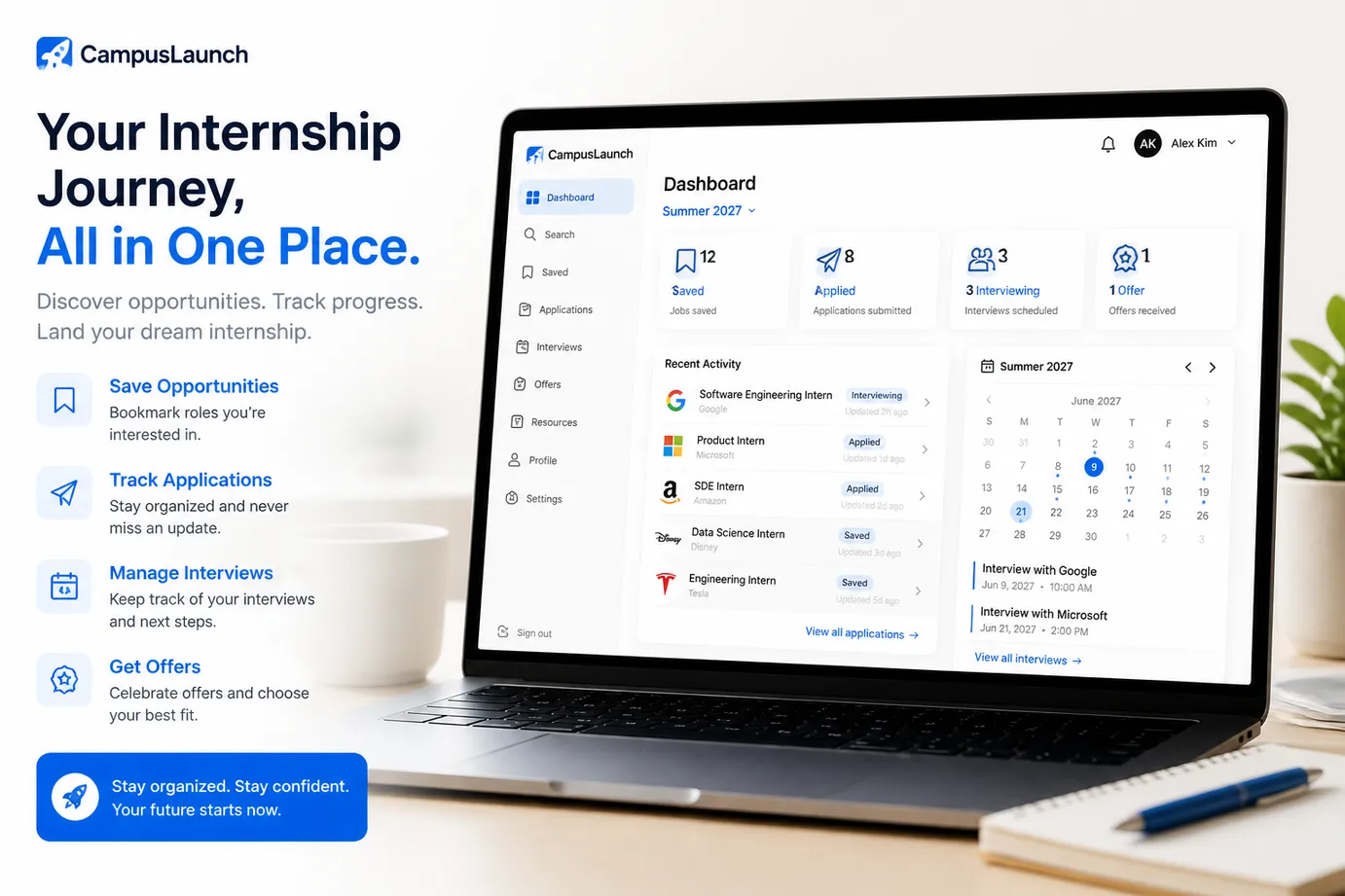
- Start researching roles in summer or early fall 2026 for summer 2027 internships.
- Build a simple tracking system before you apply to your first role.
- Search beyond big-name companies. Remote internships also exist at startups, nonprofits, agencies, research labs, media companies, and local businesses hiring nationally.
- Use Gmail labels, filters, and templates to keep recruiting emails from getting buried.
- Referrals, mentor conversations, and recruiter outreach can help you stand out.
- Practice remote interviews early, especially video setup, behavioral answers, and role-specific skills.
When do remote summer 2027 internships open?
For U.S. internships, timelines vary by industry. Some companies recruit nearly a year in advance, while others hire closer to the summer. Remote internships can appear in every wave, but they often fill quickly because students from many locations can apply.
Common summer 2027 recruiting timeline
| Time period | What to do |
|---|---|
| May–August 2026 | Build your resume, create a target list, set up your tracker, browse early postings |
| August–October 2026 | Apply to large companies, finance, consulting, tech, engineering, and competitive programs |
| November–December 2026 | Follow up, interview, keep applying, use winter break for projects and networking |
| January–March 2027 | Apply to mid-size companies, startups, nonprofits, agencies, and remote-first teams |
| April–May 2027 | Watch for last-minute openings, unpaid-to-paid changes, cancellations, and short-term projects |
| June 2027 | Confirm onboarding, equipment, time zone expectations, and schedule |
Why early applications matter
Many students wait until spring and then discover that the best-known summer roles closed months earlier. Applying early gives you more chances, but it also gives you time to improve. Your first few applications may not be perfect. That is normal. The goal is to start, learn, and refine your approach.
A good rule: by the time September 2026 starts, you should already have a resume draft, a target role list, and a way to track every application.
What counts as a remote internship?
A remote internship means you can complete most or all work online. But the details matter. Read every posting carefully because companies use different labels.
Remote terms you may see
- Remote: Work from anywhere, usually within the U.S. or approved states.
- Remote U.S.: You must be physically located in the United States.
- Hybrid: You work partly online and partly in an office.
- Flexible location: The company may allow remote work, but location rules can vary.
- Distributed team: Team members work across multiple locations and time zones.
- Virtual internship: Often used for structured student programs, sometimes part-time.
Questions to confirm before accepting
Ask these questions before you sign an offer:
- Is the internship fully remote for the entire summer?
- Do I need to live in a specific state or time zone?
- What are the expected working hours?
- Will I receive a company laptop or software access?
- Is the internship paid? If yes, what is the hourly rate or stipend?
- Will there be mentorship, manager check-ins, or final presentations?
- Are international students eligible if they have proper work authorization?
Best places to find remote summer 2027 internships
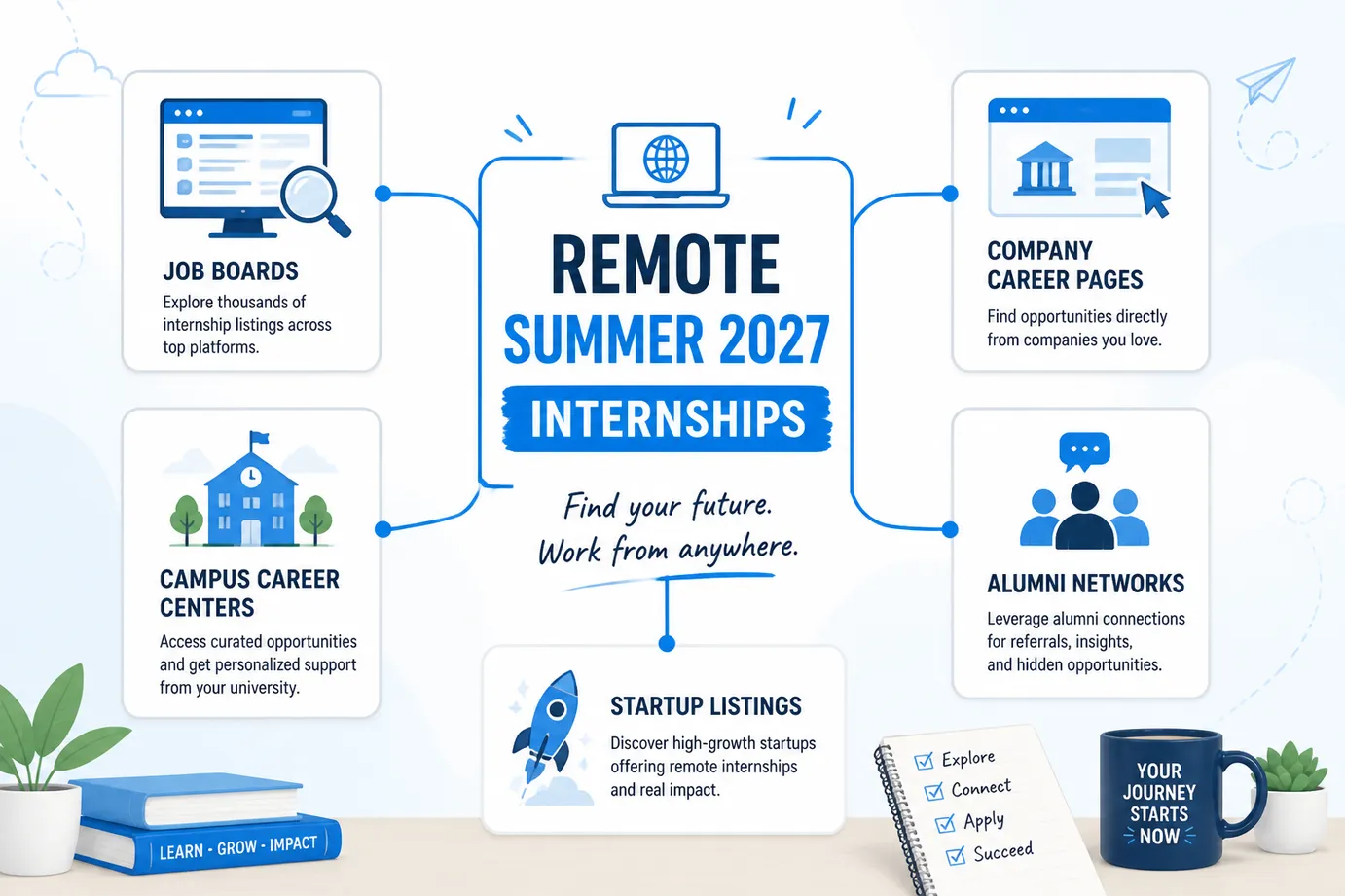
Finding remote roles is partly about using the right platforms and partly about searching with the right keywords. Do not rely on one job board. Build a repeatable search routine.
1. Internship databases and student job boards
Start with internship-focused platforms where you can browse openings, save roles, create a free account, and track your progress. Use filters for remote, summer 2027, paid, industry, and skill level. If the platform has an application tracker, use it from day one so you can see what is pending, submitted, interviewing, or closed.
Search phrases to try:
- remote summer 2027 internships
- virtual summer 2027 internship
- remote software engineering intern summer 2027
- remote marketing intern summer 2027
- remote data analyst intern summer 2027
- summer 2027 internship United States remote
- paid remote internship summer 2027
Browse live listings on SuperInterns and filter by location or keywords like "remote" to see roles synced from company career pages.
2. Company career pages
Some internships appear on company websites before they show up elsewhere. Make a list of 30–50 target companies and check their student careers pages weekly during peak recruiting.
Look for sections like:
- Students and graduates
- Early careers
- University recruiting
- Internships
- Remote jobs
- Emerging talent programs
3. LinkedIn and alumni networks
LinkedIn is useful for finding postings, but it is even better for finding people. Search for employees who are alumni from your school, past interns, recruiters, or hiring managers. A polite message can lead to advice, a referral, or a clearer understanding of the role.
Example search:
- School name + company + intern
- Company + university recruiter
- Remote intern + role title
- Summer intern + 2026 + company, to find past interns who may share timeline clues
4. Campus career centers
Even if you are applying to remote roles, your career center can help. Many schools have exclusive employer relationships, resume reviews, mock interviews, alumni databases, and career fairs that include remote-friendly employers.
Use your school resources for:
- Resume review
- Cover letter feedback
- Interview practice
- Salary and offer guidance
- Career fair prep
- Alumni introductions
- Internship funding or grants
5. Startups, nonprofits, and smaller organizations
Large companies are not the only path. Smaller teams may hire remote interns for content, operations, design, product research, data cleanup, customer success, community management, or software projects. These roles can be excellent if you want more responsibility.
Where to look:
- Startup job boards
- Nonprofit career pages
- Remote-first company lists
- Local businesses with online teams
- University incubators
- Founder communities
Roles that often offer remote summer internships
Remote internships are easier to find in roles where the work can be done with a laptop, online tools, and regular check-ins. Here are common categories.
Tech and data
- Software engineering intern
- Web development intern
- QA testing intern
- Data analyst intern
- Machine learning research intern
- Cybersecurity intern
- Product management intern
What helps: GitHub projects, class projects, hackathons, technical interview practice, and clear examples of what you built.
Business and operations
- Business operations intern
- Strategy intern
- Sales operations intern
- Customer success intern
- Recruiting intern
- Project management intern
What helps: spreadsheets, communication skills, research examples, process improvement projects, and comfort with tools like Google Sheets, Notion, Airtable, or CRM platforms.
Marketing, media, and communications
- Digital marketing intern
- Social media intern
- Content marketing intern
- SEO intern
- Email marketing intern
- Communications intern
- Public relations intern
What helps: writing samples, campaign examples, analytics screenshots, social content, newsletters, portfolio links, and proof you can meet deadlines.
Design and creative
- Graphic design intern
- UX research intern
- Product design intern
- Video editing intern
- Motion graphics intern
- Brand design intern
What helps: portfolio, case studies, before-and-after examples, Figma files, and a simple explanation of your design process.
How to prepare before applications open
You do not need everything perfect before you start, but you do need the basics ready.
Build a one-page resume
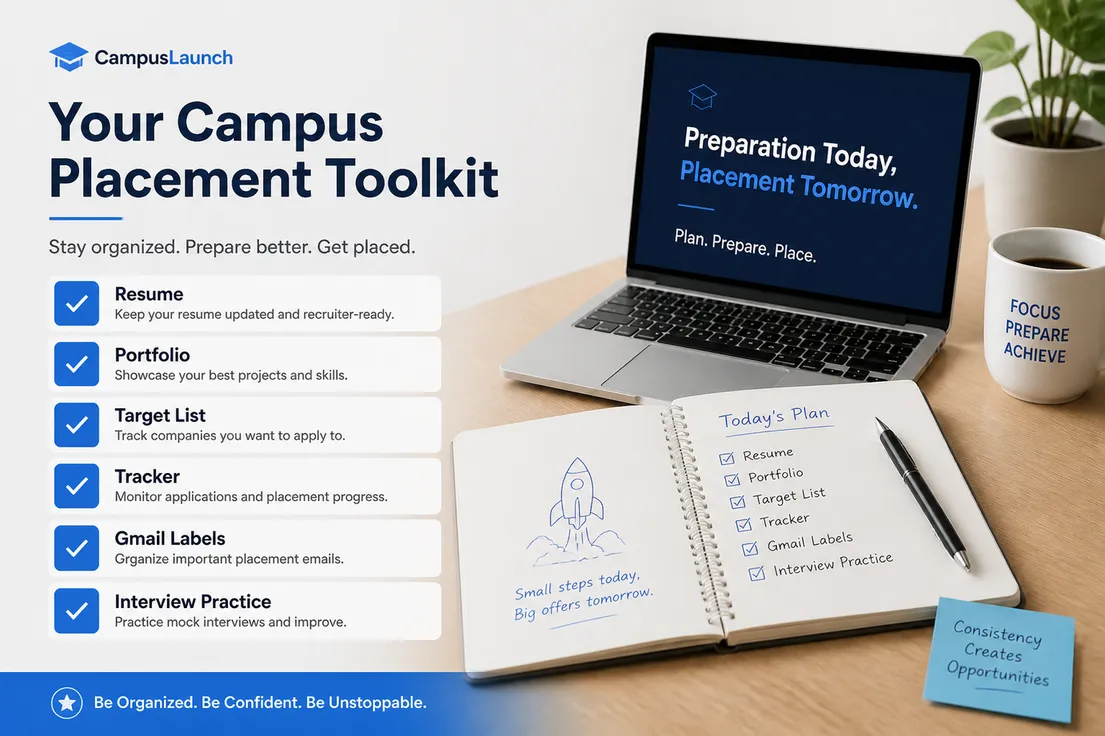
Your resume should be easy to scan and tailored to the roles you want. Use bullets that show action and results.
Instead of:
- Helped with social media for club
Try:
- Created 20 Instagram posts for a student organization, increasing average post engagement by 35 percent over one semester
Resume checklist:
- One page unless you have a strong reason for more
- Education, expected graduation date, and relevant coursework
- Experience, projects, leadership, and skills
- Metrics where possible
- Strong action verbs
- No typos
- PDF file name like Firstname-Lastname-Resume.pdf
Create role-specific resume versions
If you are applying to different roles, create different versions. A data resume should highlight analytics projects. A marketing resume should show writing, campaigns, and audience growth. A software resume should emphasize coding languages, projects, and technical experience.
Keep versions organized with file names like:
- Firstname-Lastname-Resume-Data.pdf
- Firstname-Lastname-Resume-Marketing.pdf
- Firstname-Lastname-Resume-SWE.pdf
Build a simple portfolio or project page
A portfolio is not just for designers. It can help students in many fields prove their skills.
Include:
- 2–4 projects
- Short descriptions of the problem, your work, and the result
- Tools used
- Links to GitHub, writing samples, dashboards, Figma, videos, or slides
- A contact email
If you do not have professional experience yet, use class projects, student organization work, personal projects, volunteer work, or case studies.
How to track internship applications without getting overwhelmed
Remote recruiting gets messy fast. You might apply to 40 roles and receive emails from job boards, company portals, recruiters, calendar tools, and automated systems. A tracker prevents missed deadlines and repeated applications.
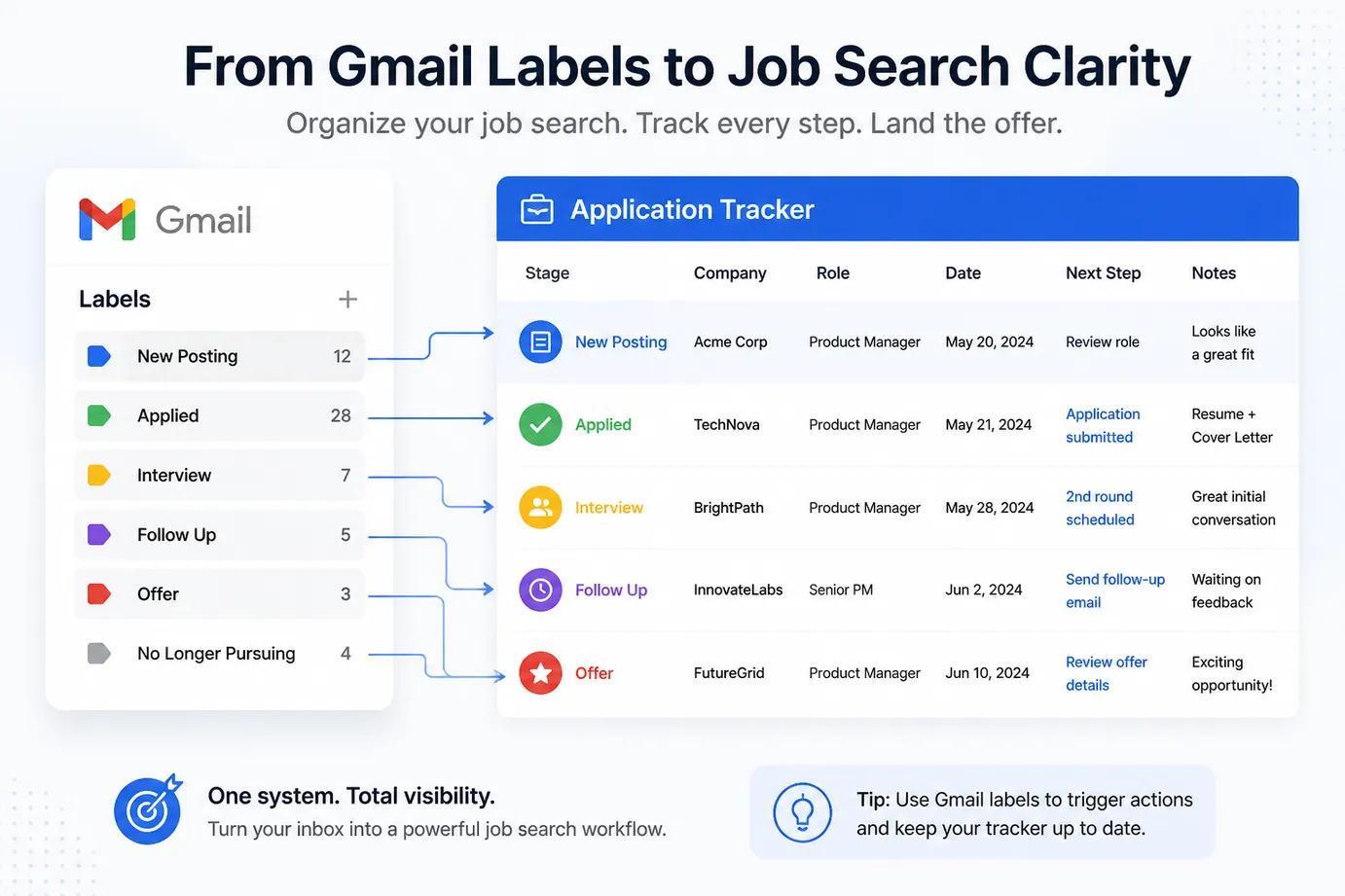
What to track
At minimum, track:
- Company
- Role title
- Location or remote status
- Application link
- Date applied
- Deadline
- Status
- Recruiter or contact name
- Next step
- Follow-up date
- Notes
Statuses can be simple:
- Saved
- Applied
- Assessment
- Interviewing
- Offer
- Rejected
- Closed
Use a Gmail-based workflow
If Gmail is where your recruiting emails land, turn it into your command center.
Step 1: Create labels
Create labels like:
- Internships - To Apply
- Internships - Applied
- Internships - Interviews
- Internships - Follow Up
- Internships - Offers
- Internships - Rejections
Step 2: Use filters
Set filters for common recruiting words:
- internship
- application received
- interview
- assessment
- coding challenge
- recruiter
- schedule
- offer
Have Gmail automatically apply labels or star messages that need action.
Step 3: Create email templates
Save templates for common messages:
- Thank-you email after interview
- Follow-up after applying
- Referral request
- Recruiter introduction
- Scheduling response
Step 4: Connect Gmail to your tracker
After you apply, immediately add the role to your tracker. When an email comes in, update the status. SuperInterns syncs read-only Gmail to build a pipeline from recruiting emails, so you can keep everything in one place.
A simple weekly tracking routine
Every Friday or Sunday:
- Review all open applications.
- Move stale roles to closed if postings disappeared.
- Add follow-up dates for promising roles.
- Save 5–10 new internships.
- Apply to your top matches first.
- Check Gmail labels for anything you missed.
This routine keeps your search active without making it your whole life.
How many internships should you apply to?
There is no perfect number, but remote roles are competitive. A realistic target is 5–10 quality applications per week during peak recruiting. Quality matters more than mass applying, but you still need enough volume to create opportunities.
A balanced application strategy
Use a mix:
- 40 percent roles that match your background well
- 40 percent roles where you meet most requirements
- 20 percent stretch roles at competitive companies
Do not self-reject too much. If you meet around 60–70 percent of the listed qualifications and can explain your interest, apply.
How to tailor your application quickly
Tailoring does not mean rewriting your resume from scratch each time. It means making small, smart edits so the employer can see the match.
The 10-minute tailoring method
- Read the job description.
- Highlight 5–7 repeated skills or responsibilities.
- Move the most relevant resume bullets higher.
- Add keywords naturally where true.
- Adjust your project descriptions to match the role.
- Write a short cover letter only if it adds something useful.
- Save the exact resume version used in your tracker.
Example: tailoring for a remote marketing internship
If the posting mentions SEO, email campaigns, content calendars, and analytics, your resume should feature bullets about writing, research, traffic, engagement, newsletters, or Google Analytics. Your cover letter can briefly explain why you like remote content work and how you stay organized without in-person supervision.
How to get referrals for remote internships
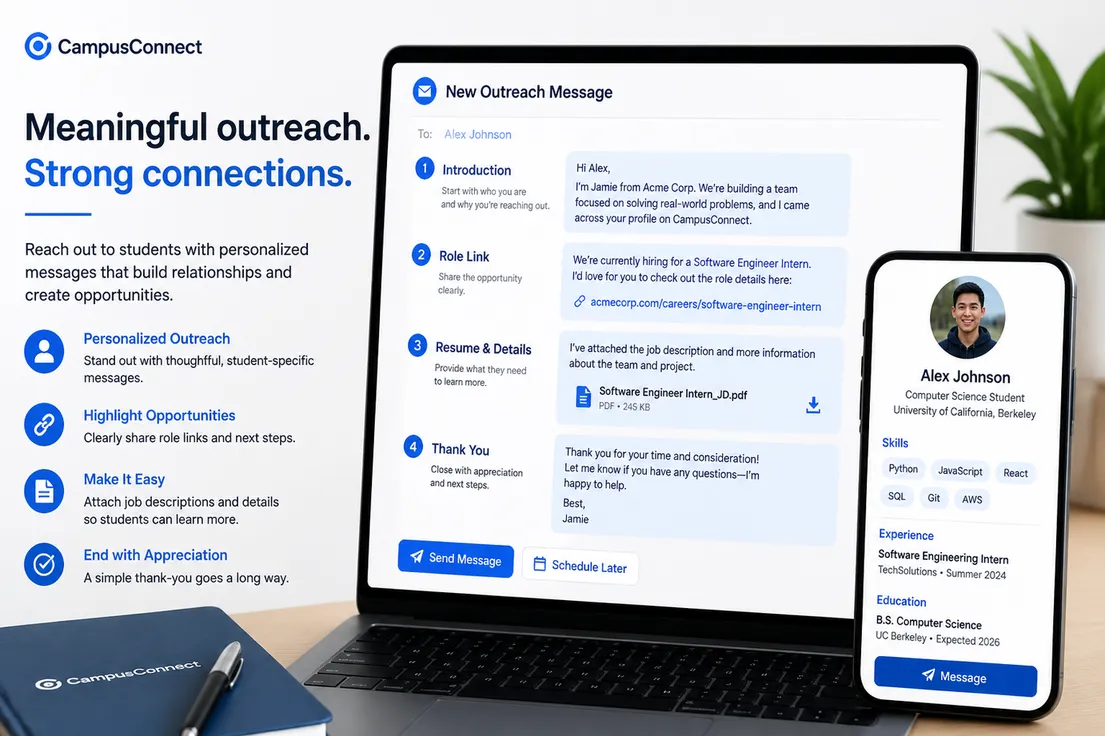
Referrals are not magic, but they can help your application get noticed. The best referral requests are specific, respectful, and easy to answer.
Who to ask
- Alumni from your school
- Former interns
- Professors with industry connections
- Club leaders or older students
- Family friends in relevant fields
- People you met at career fairs or info sessions
- Mentors from programs, bootcamps, or communities
Referral request template
Subject: Quick question about Company Name internship
Hi Name,
I am a student at School studying Major, and I saw the Role Name internship at Company Name for summer 2027. I noticed your experience with Team or Field and would love to ask one or two quick questions about the role and company.
If you think my background could be a fit, I would also be grateful for any advice on applying or whether referrals are possible. Here is my resume and the job link for context.
Thank you for your time,
Name
Referral etiquette
- Do not ask a stranger for a referral in the first sentence.
- Make it easy by including the role link and resume.
- Give them time to respond.
- Say thank you, even if they cannot help.
- Update them if you get an interview or offer.
How to contact recruiters and mentors
Recruiters and mentors can help you understand timelines, role fit, and interview expectations. Keep messages short and clear.
Recruiter message template
Hi Name,
I am interested in the Remote Role Name internship for summer 2027. I recently applied and wanted to introduce myself. I am studying Major at School and have experience with Skill, Project, or Tool. I am excited about Company because Specific Reason.
Thank you for your time, and I would appreciate any guidance on the recruiting timeline.
Best,
Name
Mentor message template
Hi Name,
I am preparing for remote summer 2027 internships in Field and noticed your background in Specific Area. Would you be open to a 15-minute chat sometime in the next two weeks? I would love advice on skills to build, applications, and interviews.
Thank you,
Name
What to ask in a mentor chat
- What skills matter most for entry-level interns in this field?
- What would make a student resume stand out?
- How should I prepare for interviews?
- Are there companies or programs I should know about?
- What mistakes should I avoid?
- Is there anyone else you recommend I talk to?
How to prepare for remote internship interviews
Remote interviews test your skills and your ability to communicate online. Practicing ahead of time makes a huge difference.
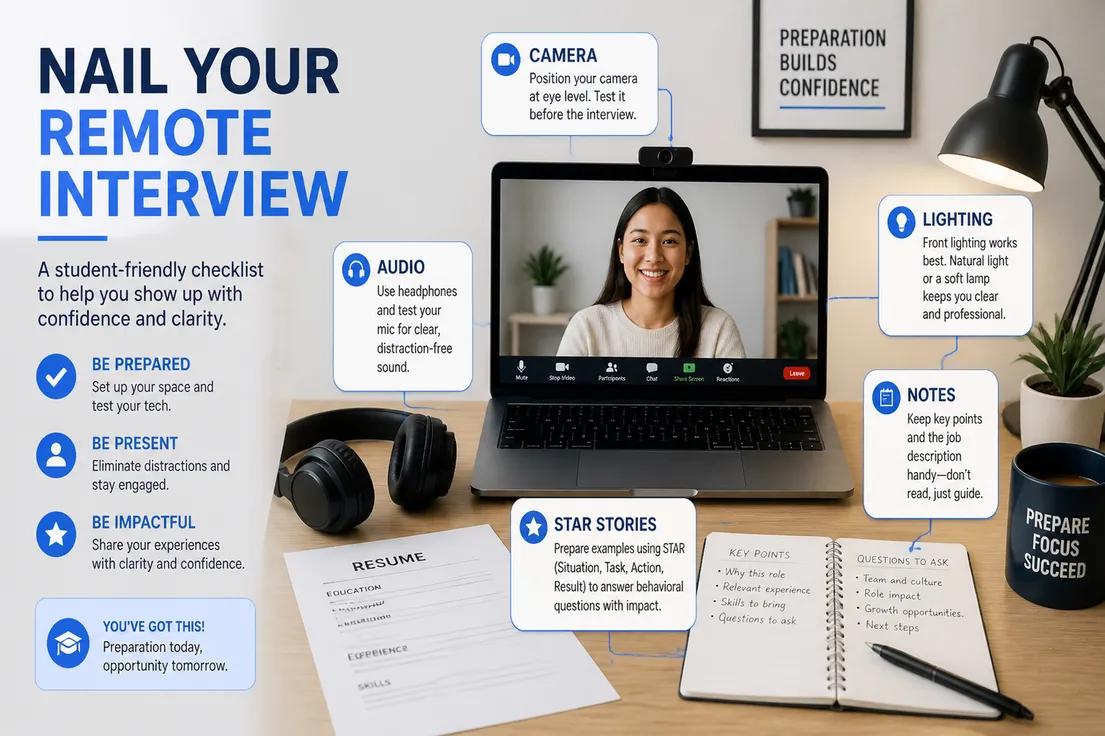
Set up your interview space
Before your first interview:
- Test your camera and microphone.
- Use headphones if your environment is noisy.
- Sit facing light, not with a bright window behind you.
- Clean your background or use a simple virtual background.
- Close extra tabs and notifications.
- Keep your resume, job description, and notes nearby.
- Join 3–5 minutes early.
Prepare behavioral stories
Use the STAR method:
- Situation: What was happening?
- Task: What was your responsibility?
- Action: What did you do?
- Result: What changed?
Prepare stories for:
- Teamwork
- Leadership
- Conflict
- Learning something new
- Handling feedback
- Managing deadlines
- Solving a problem independently
- Working remotely or asynchronously
Practice role-specific interviews
Different roles require different preparation.
- Software: coding problems, data structures, projects, debugging
- Data: SQL, spreadsheets, statistics, dashboards, business questions
- Marketing: writing samples, campaign ideas, analytics, audience research
- Design: portfolio walkthroughs, design decisions, user feedback
- Product: user problems, prioritization, product sense, communication
- Operations: process thinking, organization, spreadsheets, examples of ownership
Use mock interviews, campus career services, peer practice, or AI mock interviews. Record yourself once if you can. It may feel awkward, but you will notice filler words, unclear answers, or lighting issues quickly.
Questions to ask the interviewer
Ask questions that show you care about doing the job well:
- What would a successful intern accomplish by the end of the summer?
- How does the team support remote interns?
- How often would I meet with my manager or mentor?
- What tools does the team use to collaborate?
- Are interns assigned one main project or multiple smaller tasks?
- How is feedback shared during the internship?
How to evaluate remote internship offers
An offer is exciting, but remote internships can differ a lot in quality. Compare more than the company name.
Offer evaluation checklist
- Pay rate or stipend
- Expected weekly hours
- Start and end dates
- Remote location restrictions
- Time zone requirements
- Equipment or software provided
- Manager and mentor support
- Project clarity
- Learning opportunities
- Return offer potential
- Company reputation
- Fit with your academic schedule
Red flags to watch for
Be careful if a posting or offer has:
- No clear company information
- Requests for payment to participate
- Vague unpaid work with full-time expectations
- No manager or learning plan
- Pressure to accept immediately
- Communication only through personal messaging apps
- Tasks that seem unrelated to the role
If something feels off, ask your career center, a mentor, or a trusted adult to review it.
Student discounts and resources that can help
Internship searching can involve resume tools, interview prep, project hosting, transportation for occasional events, and professional clothing for video interviews. Use student discounts and free resources wherever possible.
Free or discounted resources to check
- Campus career center services
- University alumni database
- Student LinkedIn Learning access
- Free GitHub Student Developer Pack if eligible
- Notion, Figma, Canva, or design tool education plans
- Library access to business databases
- Student discounts on software and productivity tools
- Career grants or internship funding from your school
- Department newsletters and professor referrals
Browse curated perks on SuperInterns student resources.
Build a low-cost internship search kit
You do not need fancy tools. Start with:
- A resume PDF
- A basic portfolio or project page
- A Gmail workflow
- A free internship tracker
- A calendar for deadlines and interviews
- A spreadsheet or notes app for networking contacts
- A short list of mentors, alumni, and recruiters
A 30-day plan to start your remote summer 2027 internship search
If you are not sure where to begin, follow this plan.
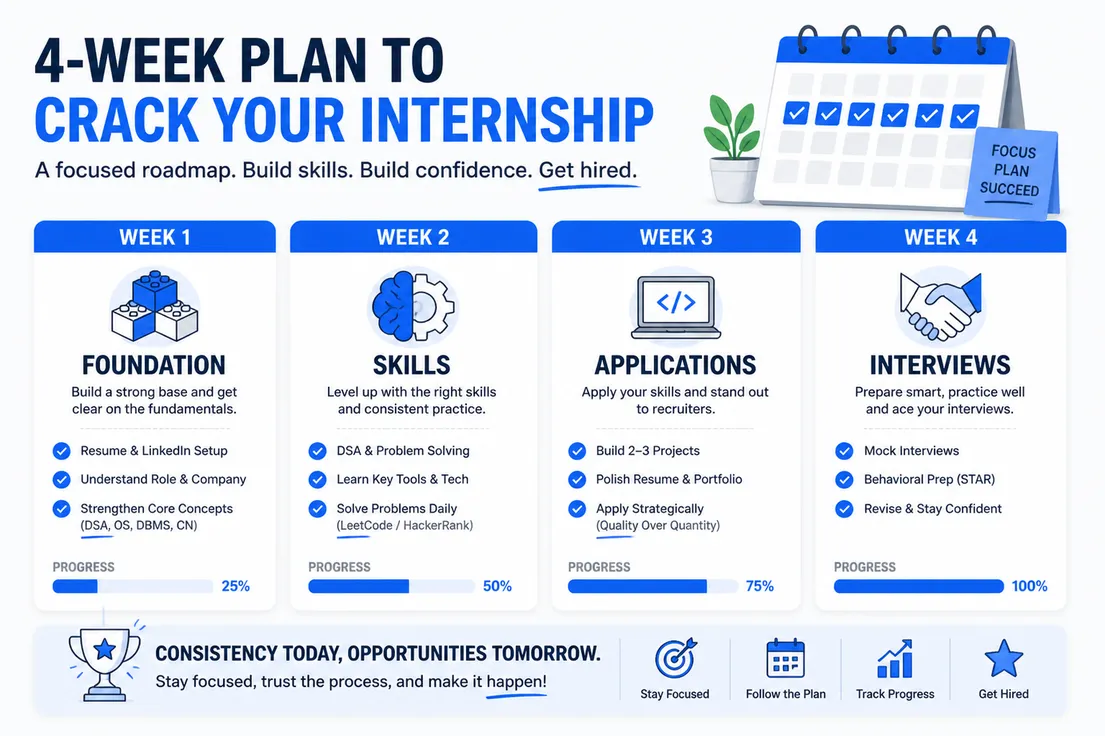
Week 1: Set up your foundation
- Draft or update your resume.
- Create a free account on your preferred internship platform.
- Set up your application tracker.
- Create Gmail labels and filters.
- Write a basic outreach message.
- List 20 target companies.
Week 2: Build proof of skills
- Choose 1–2 projects to polish.
- Add project descriptions to your resume or portfolio.
- Ask a career center advisor or mentor to review your resume.
- Save 15 remote internship postings, even if some are not open yet.
Week 3: Start applying and networking
- Apply to 5–10 roles.
- Message 5 alumni, past interns, or mentors.
- Attend one career event, webinar, or info session.
- Update your tracker after every application.
Week 4: Practice interviews and improve
- Prepare 6 STAR stories.
- Practice one mock interview.
- Review common role-specific questions.
- Follow up on promising applications.
- Adjust your resume based on what postings keep asking for.
Repeat this cycle monthly, increasing application volume during peak recruiting.
Common mistakes to avoid
Waiting until spring 2027
Some roles will still open in spring, but you will miss many structured programs if you wait. Start early and keep checking.
Applying without tracking
You may forget deadlines, miss interview emails, or apply twice to the same role. Track everything.
Using the same resume for every role
A generic resume makes recruiters do the matching work. Make the match obvious.
Ignoring smaller companies
Remote internships at smaller teams can offer hands-on experience, mentorship, and real portfolio projects.
Not practicing video interviews
Strong answers can fall flat if your audio is poor, your environment is distracting, or your examples are unclear.
Forgetting to follow up
A short thank-you note after interviews and polite follow-ups after networking chats can help people remember you.
Final checklist for remote summer 2027 internships
- ✓A polished one-page resume
- ✓Role-specific resume versions
- ✓A basic portfolio or project page
- ✓A list of target companies and roles
- ✓A free account on an internship search platform
- ✓An application tracker
- ✓Gmail labels, filters, and templates
- ✓5–10 outreach contacts
- ✓Interview stories and practice plan
- ✓A weekly search routine
Your next step
The best way to reduce internship stress is to make the search visible and organized. Browse remote summer 2027 internships, save roles that match your goals, create a free account, and start tracking applications before deadlines pile up.
You do not need to have everything figured out today. Start with one resume update, one saved role, and one tracker entry. Then keep going. Small, consistent actions now can turn into interviews, referrals, and a remote internship offer for summer 2027.