
Summer 2027 Internship Search Guide
When to apply for Summer 2027 internships, where to find US roles, track applications from Gmail, get referrals, and prep for interviews.
If you are searching for summer 2027 internships, the smartest move is to start earlier than you think. Many competitive internship programs recruit 9 to 15 months in advance, especially in tech, finance, consulting, engineering, accounting, government, and large corporate rotational programs. That does not mean you need every answer today. It means you need a simple plan, a clean application system, and steady weekly action.
This guide walks you through when to apply, where to find roles, how to track applications, how to use Gmail to stay organized, how to get referrals, how to prepare for interviews, and how to take advantage of student discounts and campus recruiting.
Use it as your summer 2027 internship playbook.
Quick answer: When should you apply for summer 2027 internships?
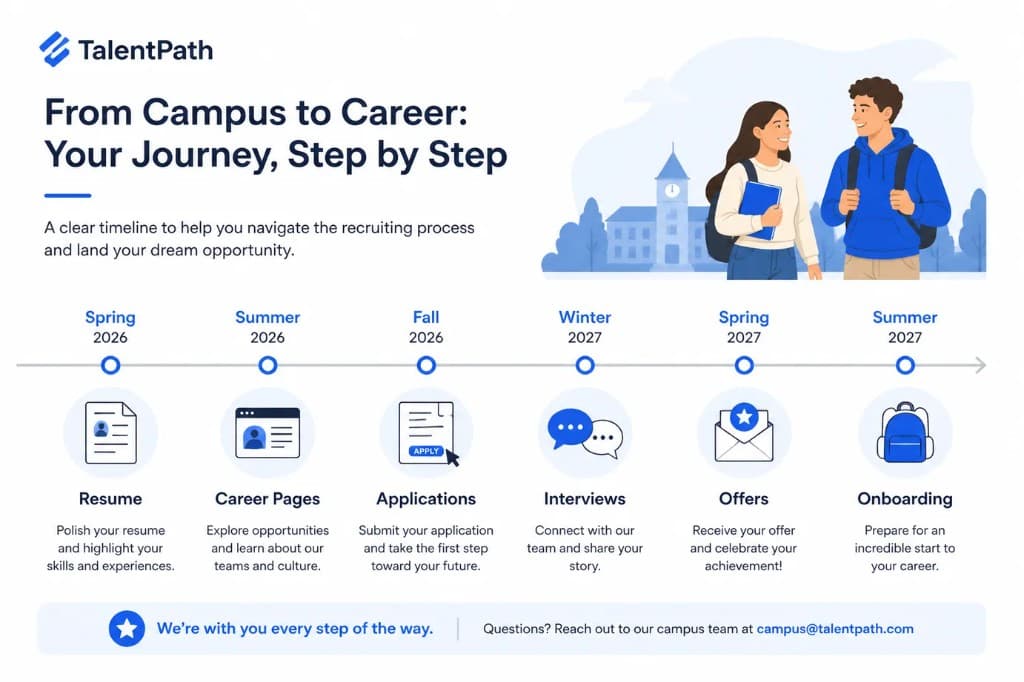
For many U.S. internship programs, you should begin preparing in spring or summer 2026 and start applying as soon as postings open in late summer or fall 2026. Some large employers open applications as early as July or August 2026 for summer 2027 roles. Other companies hire in winter and spring 2027, especially smaller businesses, startups, nonprofits, local employers, research labs, and campus departments.
A simple timeline:
- Spring 2026: Build your resume, LinkedIn, project portfolio, and target company list.
- Summer 2026: Research roles, attend early events, network with alumni, and set up application tracking.
- August to October 2026: Apply early to major companies, banks, consulting firms, engineering programs, tech companies, and Fortune 500 internships.
- November 2026 to January 2027: Continue applications, follow up, interview, and expand your search.
- February to April 2027: Apply to smaller companies, local employers, startups, labs, nonprofits, and late-posting programs.
- May to June 2027: Finalize offers, onboarding paperwork, housing, transportation, and start dates.
The key is not to wait until spring 2027 if you want the widest range of options. For roles already live, see our running list of Summer 2027 programs open now.
Why summer 2027 internship recruiting starts so early
Employers recruit early because internship programs require planning. They need headcount approval, interview schedules, campus events, background checks, relocation logistics, manager matching, and onboarding. For highly structured programs, especially at large employers, summer 2027 hiring may begin before the 2026 fall semester is fully underway.
Early recruiting is common for:
- Software engineering and product internships
- Investment banking, asset management, and corporate finance internships
- Consulting internships
- Accounting internships
- Engineering, aerospace, manufacturing, and energy internships
- Data science, analytics, and AI internships
- Supply chain and operations internships
- Government fellowships and security-clearance roles
- Leadership development programs
But do not panic if you are starting later. Plenty of internships open after January 2027. Your strategy should match your industry, school year, experience level, and target employers.
Step 1: Decide what kind of internship you want
Before you apply to 100 roles, narrow your direction. You do not need a perfect career plan, but you do need a target. A focused search helps you write better resumes, find better keywords, and prepare stronger interview answers.
Ask yourself:
- What majors, classes, or projects have I enjoyed most?
- Do I want a technical, analytical, creative, business, research, or people-focused role?
- Am I open to relocating, or do I need remote or local options?
- Do I want a big company, startup, nonprofit, government office, lab, hospital, agency, or campus role?
- What skills do I want to build by the end of summer 2027?
Common summer 2027 internship categories
- Technology: software engineering, data science, cybersecurity, product management, UX design, IT support
- Business: marketing, sales, finance, accounting, operations, HR, business analytics
- Engineering: mechanical, electrical, civil, chemical, industrial, aerospace, environmental
- Healthcare and science: research assistant, lab intern, public health, biotech, clinical operations
- Media and communications: social media, journalism, PR, content, video production, graphic design
- Public service: policy, government, legal support, education, nonprofit programs
- Creative fields: design, photography, animation, game development, brand strategy
Once you choose 1 to 3 target categories, your applications become much easier to manage.
Step 2: Build a target company list
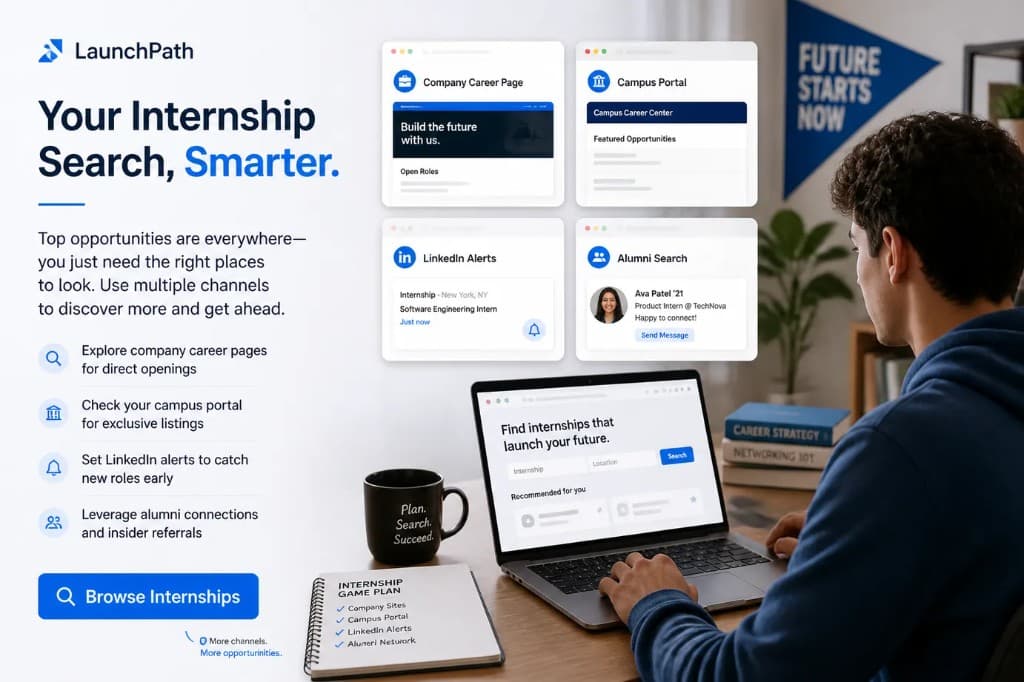
Do not rely only on job boards. The best internship searches combine job boards, company career pages, campus recruiting platforms, referrals, and direct outreach.
Create a list with at least 40 to 80 target organizations. Include dream companies, realistic options, local employers, and backup choices.
Where to find companies hiring summer 2027 interns
- Company career pages
Search directly on employer websites. Many roles appear there before they show up elsewhere. Browse live listings on SuperInterns. - Campus career platform
Check Handshake or your school career portal for employer events, resume drops, and school-specific postings. - LinkedIn job search
Use alerts for summer 2027 intern, 2027 internship, sophomore internship, junior internship, and your role title. - Industry job boards
Examples include engineering society boards, nonprofit job boards, media internship boards, government pages, and startup boards. - Alumni search
Use LinkedIn alumni filters to find graduates from your school working at target companies. You can also use Find Mentors on SuperInterns. - Professor and department emails
Research labs, campus centers, and local organizations often share opportunities through departments. - Career fairs and employer info sessions
These events help you learn what roles exist before applications close.
Target list template
| Company | Role | Location | Deadline | Source | Status |
|---|---|---|---|---|---|
| Example Tech Co. | Software Engineering Intern | Seattle, WA | Sept. 15, 2026 | Career page | Resume drafted |
| Local Nonprofit | Program Intern | Chicago, IL | March 1, 2027 | School portal | Saved |
Your goal is to avoid random searching. A target list turns the internship hunt into a weekly process. Track everything on SuperInterns instead of scattered spreadsheets.
Step 3: Prepare your resume before roles open
For summer 2027 internships, your resume should be ready before the biggest application wave starts. You will still customize it, but the foundation should be strong.
What to include on a student internship resume
- Name, email, phone, city and state, LinkedIn, portfolio or GitHub if relevant
- Education, school, degree, major, graduation month and year, GPA if strong or required
- Relevant coursework if it helps explain your skills
- Projects, research, campus leadership, volunteer work, jobs, freelance work, or clubs
- Skills section with tools, languages, software, lab methods, or certifications
- Work experience, including part-time jobs, tutoring, customer service, campus jobs, or family business work
Resume bullet formula
Action verb + task + tool or method + result or purpose
- Analyzed 500 survey responses in Excel to identify three student engagement trends for a campus research project.
- Built a Python script to clean CSV files and reduce manual data formatting time by 40 percent.
- Managed social media calendar for a student organization, increasing event attendance from 35 to 70 students.
- Trained 6 new cashiers and handled customer issues during weekend shifts in a high-volume retail store.
You do not need a famous employer to write strong bullets. You need clear evidence that you can learn, communicate, solve problems, and follow through.
Step 4: Set up an application tracking system
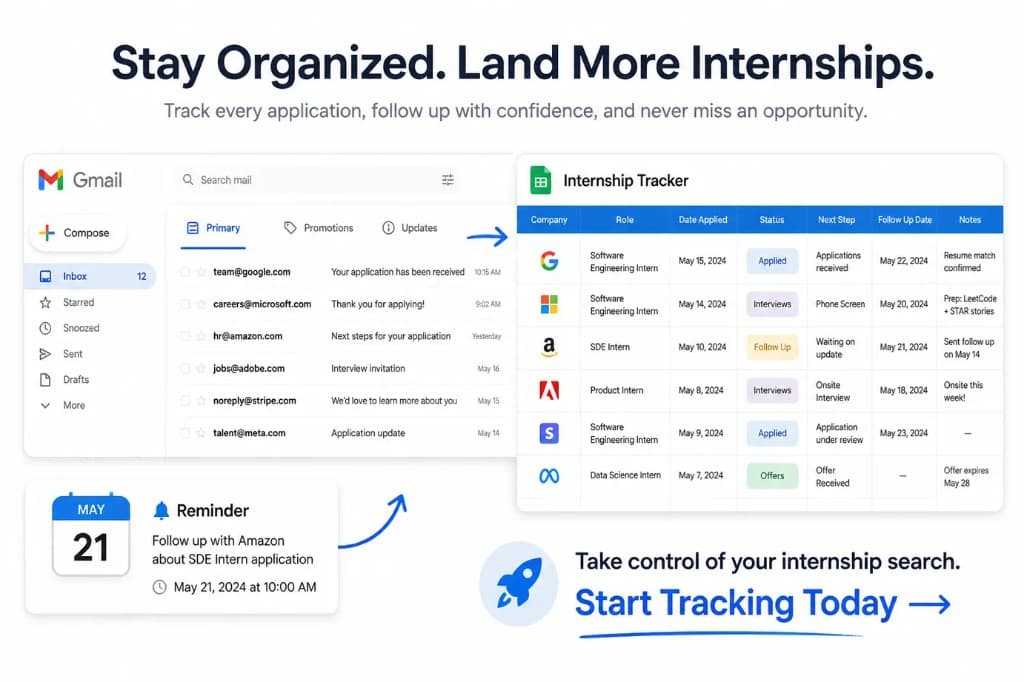
The easiest way to lose internship momentum is to apply without tracking anything. You need a system that tells you what you applied to, what is due next, who you contacted, and when to follow up.
What to track
At minimum, track company name, internship title, posting link, location, date found, deadline, date applied, resume version, referral status, interview dates, follow-up date, current status, and notes.
Simple status labels
- Saved
- Applying
- Applied
- Referral requested
- Interviewing
- Follow-up needed
- Offer
- Rejected
- Closed
If your tracker gets too complicated, you will stop using it. Keep it simple enough to update in under two minutes.
Step 5: Use Gmail to automate your internship search
If you use Gmail, you can create a lightweight internship command center without buying anything. This is especially useful when applications, recruiter emails, career fair reminders, and interview confirmations start piling up. SuperInterns can also sync applications from Gmail so your tracker stays current.
Create Gmail labels
Internships - Applied, Internships - Interviews, Internships - Follow Up, Internships - Offers, Internships - Rejections, Internships - Career Events.
Use filters to sort messages automatically
Filter messages that include terms like internship, intern, application received, interview, recruiter, career fair, Handshake, or offer. Apply a label, star it, or mark as important.
Create canned email templates
Referral request template
Subject: Quick question about internships at [Company]

Hi [Name],

I am a [year] at [School] studying [major], and I saw that [Company] may be hiring summer 2027 interns in [role area]. I noticed your experience there and would appreciate any advice on applying.

If you feel comfortable after reviewing my background, I would also be grateful for a referral. I attached my resume and included the role link here: [link].

Thank you for your time,
[Your name]
Follow-up after applying
Subject: Following up on [Role] application

Hi [Name],

I hope you are doing well. I recently applied for the [Summer 2027 Internship Role] at [Company] and wanted to express my continued interest. My background in [skill or project] aligns with the role, and I would be excited to contribute to [team or company area].

Thank you for your consideration,
[Your name]
Add calendar reminders for deadlines, follow-ups, coffee chats, interview prep, and offer response dates.
Step 6: Apply early, but customize every application
For competitive summer 2027 internships, applying early matters. Some companies review applications on a rolling basis. But early does not mean careless. A customized application usually performs better than a generic one.
How to customize your resume in 10 minutes
- Copy the job description into a document.
- Highlight required skills, tools, and responsibilities.
- Match your resume bullets to the most important keywords honestly.
- Move the most relevant projects or experience higher.
- Adjust your skills section to reflect the role.
- Save the file with a clear name, such as Firstname-Lastname-Company-Internship-Resume.
Should you write a cover letter?
Write one when required, when you have a strong reason for that company, when changing fields, for nonprofits or government roles, or when you have a referral to mention. Three to four paragraphs is enough.
Step 7: Get referrals the right way
A referral is not magic, but it can help your application get noticed. The best referrals come from people who understand your interests and can confidently share your resume.

Start with alumni, former interns, professors, career fair contacts, and LinkedIn connections.
Good opening message:
Hi Maya, I am a sophomore at Ohio State studying information systems. I saw that you interned at [Company] last summer, and I am interested in the summer 2027 business analyst internship. Would you be open to a 15-minute chat about your experience and any advice for applying?
Step 8: Prepare for interviews before you get them
Do not wait for an interview invite to start practicing. Many summer 2027 internship interviews will move quickly once a recruiter contacts you.
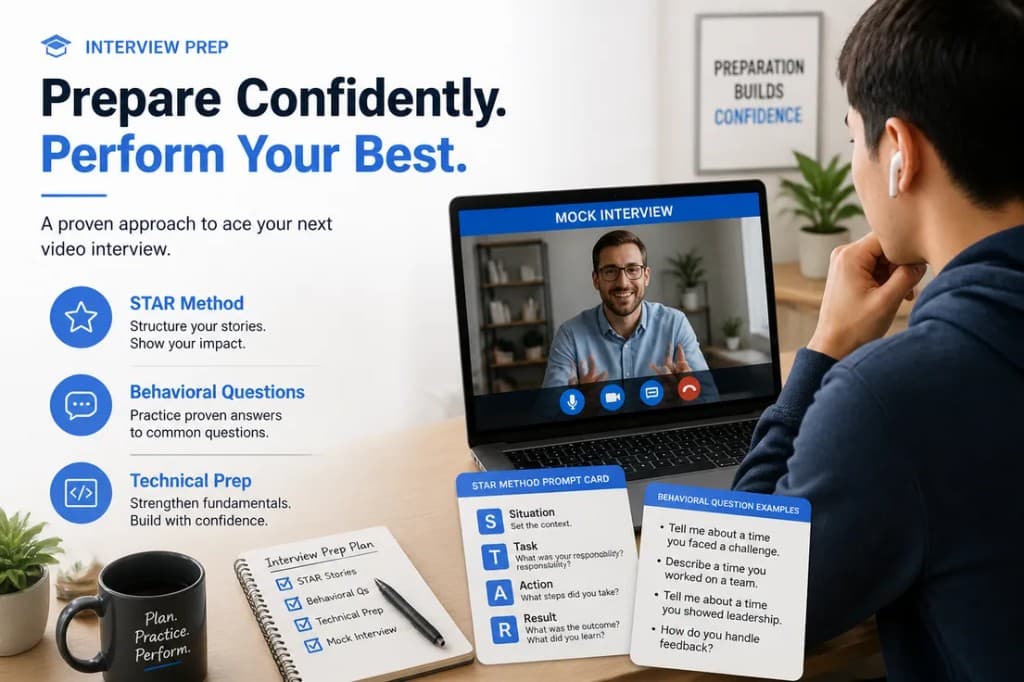
Common internship interview questions
Practice answers to:
- Tell me about yourself.
- Why are you interested in this internship?
- Why this company?
- Tell me about a time you solved a problem.
- Tell me about a time you worked on a team.
- Tell me about a time you failed or made a mistake.
- What project are you most proud of?
- How do you manage deadlines?
- What are your strengths and weaknesses?
- What questions do you have for us?
Use the STAR method
- Situation: What was happening?
- Task: What were you responsible for?
- Action: What did you do?
- Result: What changed or what did you learn?
Example: In my marketing class, my team had one week to create a campaign proposal after our original topic was rejected. I organized a quick meeting, divided research tasks, built a shared timeline, and created the final slide deck. We submitted on time and earned an A-minus. I learned that clear ownership and early check-ins prevent last-minute confusion.
Technical and case interview prep
- Software engineering: data structures, algorithms, debugging, project walkthroughs
- Data roles: SQL, Python, Excel, statistics, dashboards
- Finance: accounting basics, valuation, Excel, behavioral fit
- Consulting: case interviews, mental math, structured problem solving
- Engineering: fundamentals, CAD, lab experience, design tradeoffs
- Design: portfolio reviews, design process, user research
Run mock interviews on SuperInterns interview prep and practice out loud with a friend, mentor, career coach, or your phone camera. Record yourself once. You may notice filler words, rushed answers, or unclear examples.
Step 9: Use campus recruiting to your advantage
Campus recruiting is one of the biggest advantages you have as a student. Employers come to campus because they want student applicants. Show up prepared.
Campus recruiting checklist
- Update your resume.
- Research the companies attending.
- Pick 8 to 12 priority employers.
- Prepare a 30-second introduction.
- Print resumes if the event is in person.
- Prepare two questions for each target company.
- Apply online before or shortly after the event.
- Follow up within 24 to 48 hours.
30-second introduction example: Hi, I am Jordan, a junior at the University of Texas studying mechanical engineering. I am interested in summer 2027 manufacturing or product design internships. I recently worked on a team project designing a low-cost water filtration prototype, and I am looking for a role where I can apply CAD, testing, and problem-solving skills.
Step 10: Verify student status and use student discounts
Internship searching can involve paid tools, travel, interview clothes, software, test prep, and portfolio hosting. Before you pay full price, check whether student discounts are available.
Many companies offer student pricing for productivity tools, design software, coding platforms, interview prep, online courses, portfolio websites, and cloud tools.
Browse curated deals on SuperInterns Resources and verify your student status early so you can access discounts before recruiting gets busy.
Create a folder for internship documents: resume, unofficial transcript, writing samples, portfolio links, and verification documents. Never upload sensitive information unless you trust the site and understand why it is required.
Step 11: Balance quality and volume
A strong internship search needs both quality and volume. Applying to only five dream companies is risky. Applying to 200 random roles without customization is also risky.
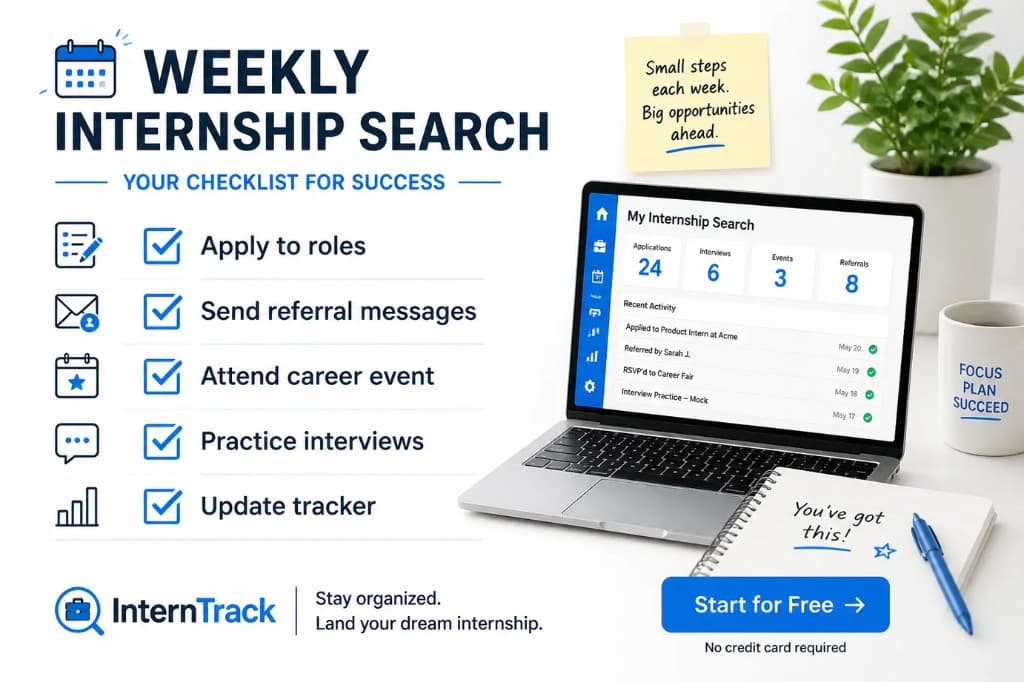
A healthy weekly goal during peak season might be:
- 5 to 10 customized applications
- 3 referral or networking messages
- 1 career event or employer session
- 1 interview practice session
- 1 tracker cleanup session
What if you have no experience?
You can still be competitive. Build evidence through class projects, personal projects, volunteer work, student clubs, campus jobs, certifications, research assistant roles, and hackathons or case competitions.
Step 12: Know what to do after you apply
- Update your tracker.
- Save the job description as a PDF because postings can disappear.
- Add a follow-up reminder.
- Find a recruiter, alumni contact, or employee connection.
- Prepare for possible interview questions based on the job description.
- Keep applying elsewhere.
Summer 2027 internship timeline by semester
Spring 2026
- Meet with your career center.
- Draft your resume and update LinkedIn.
- Start a project or join a club related to your target field.
- Build your company list.
Summer 2026
- Check company career pages weekly.
- Set up job alerts and Gmail labels.
- Practice interview answers and reach out to alumni.
- Prepare portfolio pieces or GitHub projects.
Fall 2026
- Apply early to major programs.
- Attend career fairs and employer sessions.
- Ask for referrals before submitting when possible.
- Track deadlines closely and follow up with contacts.
Winter 2026 to 2027
- Continue applying and rework your resume based on response rates.
- Add new projects from fall classes.
- Use winter break for networking and interview prep.
Spring 2027
- Expand to smaller companies, startups, labs, and nonprofits.
- Ask professors and departments about openings.
- Attend spring career fairs and compare offers carefully.
Early summer 2027
- Complete onboarding forms and confirm pay, schedule, and location.
- Ask about equipment and first-day logistics.
- Set learning goals for the internship.
How to compare internship offers
If you receive multiple offers, compare more than the hourly rate. Consider:
- Role responsibilities and project quality
- Manager support, training, and mentorship
- Return offer potential and company reputation
- Location, cost of living, and housing support
- Remote or hybrid expectations and schedule flexibility
- Pay, overtime rules, and networking opportunities
Common mistakes to avoid
- Waiting until March 2027 to start everything
- Applying without tracking applications
- Using one generic resume for every role
- Ignoring company career pages
- Forgetting to follow up after career fairs
- Asking for referrals with no context
- Not practicing interviews out loud
- Missing deadlines because emails are disorganized
- Applying only to famous companies
- Underestimating local employers, campus roles, and smaller organizations
The students who win internships are not always the ones with perfect resumes. They are often the ones who stay organized and keep taking action.
Your next steps
- Pick 1 to 3 internship categories to target.
- Create a company list with at least 40 organizations.
- Update your resume and LinkedIn.
- Set up Gmail labels and job alerts.
- Build an application tracker on SuperInterns.
- Browse internship postings and save roles that match your goals.
- Send three networking messages to alumni or former interns.
- Practice your answer to “Tell me about yourself.”
- Verify student status for tools or discounts you plan to use.
- Schedule one weekly internship search block on your calendar.
Summer 2027 may feel far away, but early preparation gives you more choices. Start small, stay consistent, and treat the search like a project you can manage one step at a time.