
Summer 2027 Internships: A Practical Search Timeline for Students
When to apply for summer 2027 internships, where to find U.S. roles, build a resume, track applications with Gmail, get referrals, and prep for interviews.
If you are thinking about summer 2027 internships, you are not too early. For many U.S. internship programs, especially in tech, finance, consulting, engineering, healthcare, media, government, and competitive nonprofit roles, recruiting can start 8 to 14 months before the internship begins.
That does not mean you need to panic. It means you need a simple system: know when roles open, apply early, track everything, follow up without feeling awkward, and prepare before interviews arrive.
This guide walks you through how to find summer 2027 internships, when to apply, how to use a Gmail-based workflow, how to get referrals, and how to stay organized until you land an offer.
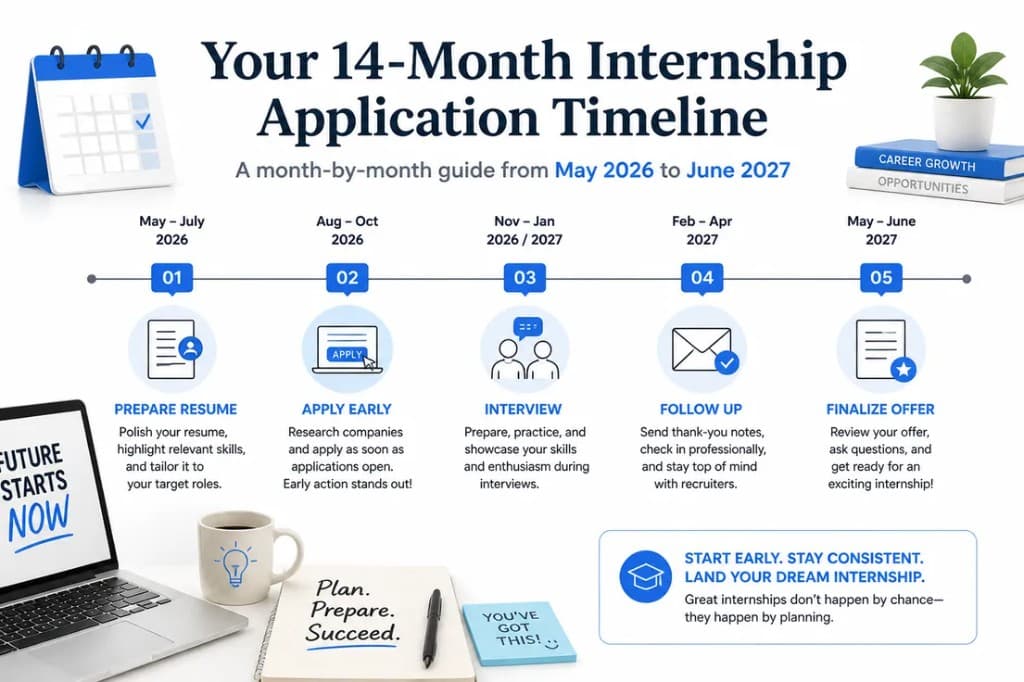
Quick answer: When should you apply for summer 2027 internships?
For most students, the best time to start searching for summer 2027 internships is late spring or summer 2026, with serious applications beginning in August through October 2026.
Here is the general timeline:
- May to July 2026: Build your resume, update LinkedIn, make a target company list, and start browsing early openings.
- August to October 2026: Apply heavily. Many large companies post summer 2027 internships during this window.
- November 2026 to January 2027: Continue applying, interview, follow up, and target mid-size companies.
- February to April 2027: Focus on smaller companies, startups, local employers, labs, nonprofits, and late postings.
- May to June 2027: Finalize paperwork, housing, relocation, start dates, and onboarding.
Some industries move earlier than others. Investment banking, consulting, quantitative finance, and some big tech programs can open very early. Local organizations, startups, research labs, and smaller businesses often hire later.
Why summer 2027 internship recruiting starts so early
Internship recruiting has become more competitive because companies use internships as a pipeline for full-time jobs. They want time to screen candidates, run interviews, make offers, and plan intern projects before summer starts.
Early recruiting is also common because students are applying in huge numbers. A role may stay open for only a few weeks, or it may close once enough strong applicants apply. That is why being prepared matters more than being perfect.
You do not need every credential before you apply. You need a clear resume, a focused search plan, and enough organization to avoid missing deadlines.
Step 1: Decide what kind of internship you want
Before applying everywhere, narrow your search enough to save time. You can still explore, but you need categories.
Start with these questions:
- What field do I want experience in?
- Do I care more about brand name, learning, pay, location, or return offer potential?
- Am I open to remote, hybrid, or in-person roles?
- What skills do I already have that match internship descriptions?
- What skills can I build before fall 2026 recruiting picks up?
Common summer 2027 internship categories
Use these categories to search faster:
- Software engineering internships
- Data science and analytics internships
- Product management internships
- Marketing internships
- Finance and accounting internships
- Investment banking internships
- Consulting internships
- Mechanical, electrical, civil, or chemical engineering internships
- UX design internships
- Research internships
- Healthcare administration internships
- Public policy and government internships
- Nonprofit and social impact internships
- Communications, journalism, and media internships
You do not have to choose only one path. A student interested in business could apply to marketing, operations, strategy, and business analyst internships. A computer science student could apply to software engineering, data engineering, QA, IT, and technical product roles.
Step 2: Build your summer 2027 internship target list
A strong internship search is not just applying to whatever appears first. Build a list of companies, organizations, and programs you want to monitor.
Create a target list with three groups:
Reach roles
These are highly competitive internships at well-known employers or selective programs. Apply, but do not rely only on them.
Examples: major tech companies, large banks and consulting firms, national labs, Fortune 500 rotational programs, top media companies, prestigious research programs.
Match roles
These roles fit your background well. You meet many requirements and can clearly explain why you are a good candidate.
Examples: regional companies in your field, mid-size employers, university-affiliated programs, industry-specific internships aligned with your major.
Momentum roles
These roles help you get interviews, practice, and build experience. They may be local, part-time, remote, or less famous, but they can still be valuable.
Examples: local startups, small businesses, campus departments, nonprofits, city or county offices, professors or research centers.
Aim for 50 to 100 total organizations on your list. That may sound like a lot, but you will not apply to all of them in one week. You are building a search map for the year.
Step 3: Prepare your resume before applications open
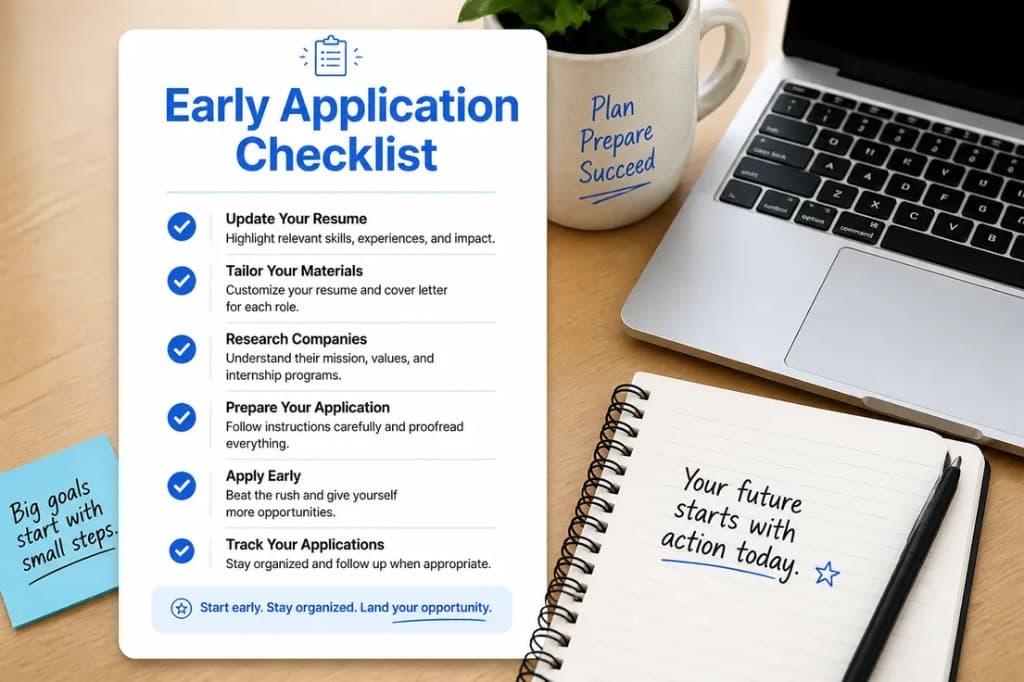
Your resume should be ready before summer 2027 internships start appearing. If a role opens and closes quickly, you do not want to spend three days rebuilding your resume from scratch.
What your internship resume should include
For most U.S. undergraduate students, a one-page resume works best. Include:
- Name, email, phone, LinkedIn, portfolio, GitHub, or personal website
- Education, graduation date, major, GPA if strong or required
- Relevant coursework if you lack experience
- Projects, leadership, research, part-time jobs, or volunteer work
- Skills that match your target roles
- Clear bullet points with outcomes and tools used
Resume bullet formula
Use this structure:
Action verb + what you did + tools or methods + measurable result
Examples:
- Built a Python dashboard to analyze 10,000+ survey responses and identify trends for a campus research team.
- Managed weekly social media content for a student organization, increasing event sign-ups by 35% over one semester.
- Designed CAD models for a prototype device and presented recommendations to a team of five engineering students.
If you do not have formal experience, use projects. Class projects, personal projects, club work, and campus leadership can all count if they show useful skills.
Step 4: Know where to find summer 2027 internships
Do not rely on one job board. The best internship search uses several sources.
Best places to search
- Internship search platforms with filters for major, location, remote work, and year
- Company career pages , browse USA internships synced daily on SuperInterns
- University career center job boards
- Handshake if your school uses it
- Professional associations
- Alumni networks
- Career fairs and employer info sessions
- Government job portals and agency websites
- Professor, lab, and department newsletters
Search terms to use
Try combinations like:
- summer 2027 internship
- 2027 summer analyst
- summer 2027 software engineering intern
- 2027 finance internship
- 2027 engineering internship
- undergraduate summer internship 2027
- summer associate internship 2027
- sophomore internship summer 2027
- junior internship summer 2027
Some employers will label roles as Summer Intern 2027, 2027 Summer Analyst, Intern - Summer 2027, or University Internship 2027. Search variations so you do not miss postings.
Step 5: Apply early, but apply well
Applying early can help because some employers review applications on a rolling basis. But speed alone is not enough. A rushed application with a generic resume is easy to ignore.
Use this simple process for each application:
- Read the internship description.
- Highlight the top 5 skills or responsibilities.
- Adjust your resume bullets to match honestly.
- Use the same language the employer uses when accurate.
- Save the job description before it disappears.
- Submit the application.
- Add it to your tracker immediately.
How many internships should you apply to?
There is no perfect number, but many students underestimate how many applications it takes. For competitive fields, 30 applications may not be enough.
A realistic target:
- Light search: 20 to 40 applications
- Moderate search: 50 to 80 applications
- Competitive search: 100+ applications over several months
The goal is not to spam. The goal is to build a strong pipeline with reach, match, and momentum roles.
Step 6: Track every application from day one
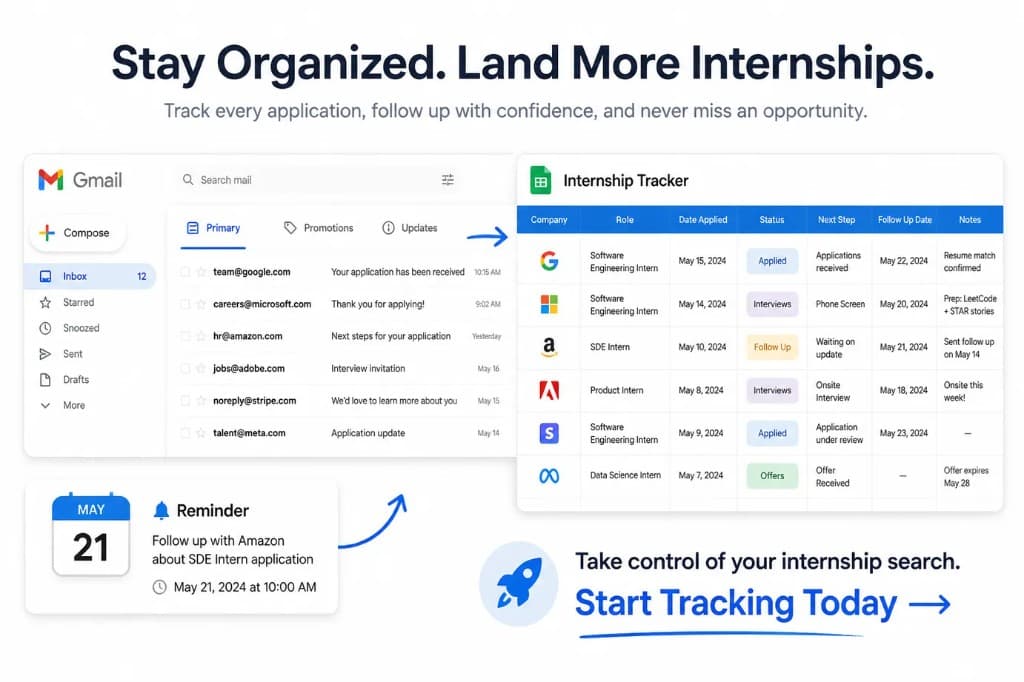
If you apply to more than 10 internships, you need a tracker. Otherwise, you will forget where you applied, miss follow-ups, lose job descriptions, and feel more stressed than necessary.
Your tracker can be a spreadsheet, Notion board, Airtable, or an internship platform with a built-in tracker. If you use Gmail, you can make the workflow even easier , SuperInterns Track Applications builds your pipeline from Gmail automatically.
What to include in your internship tracker
Add these columns:
- Company
- Role title
- Location or remote status
- Application link
- Date applied
- Deadline
- Status
- Referral contact
- Recruiter contact
- Interview dates
- Follow-up date
- Notes
- Saved job description link
Suggested statuses
Use simple labels:
- Interested
- Applied
- Referral requested
- Assessment received
- Interviewing
- Followed up
- Offer
- Rejected
- No response
- Closed
Gmail workflow for internship applications
If Gmail is your main inbox, create a system before applications get busy.
- Create labels: Internships, Interviews, Assessments, Referrals, Offers, Rejections.
- Use filters: Filter emails with words like application, interview, assessment, recruiter, internship, offer, and action required.
- Star urgent messages: Star interview invites, deadlines, and assessments.
- Create a follow-up folder: Keep messages that need a reply.
- Use calendar reminders: Add deadlines, interviews, and follow-up dates right away.
- Save templates: Keep reusable email drafts for referrals, thank-yous, and recruiter follow-ups.
This is not about being extra. It is about protecting your future self from chaos during midterms, interviews, and deadlines.
Step 7: Get referrals without being awkward
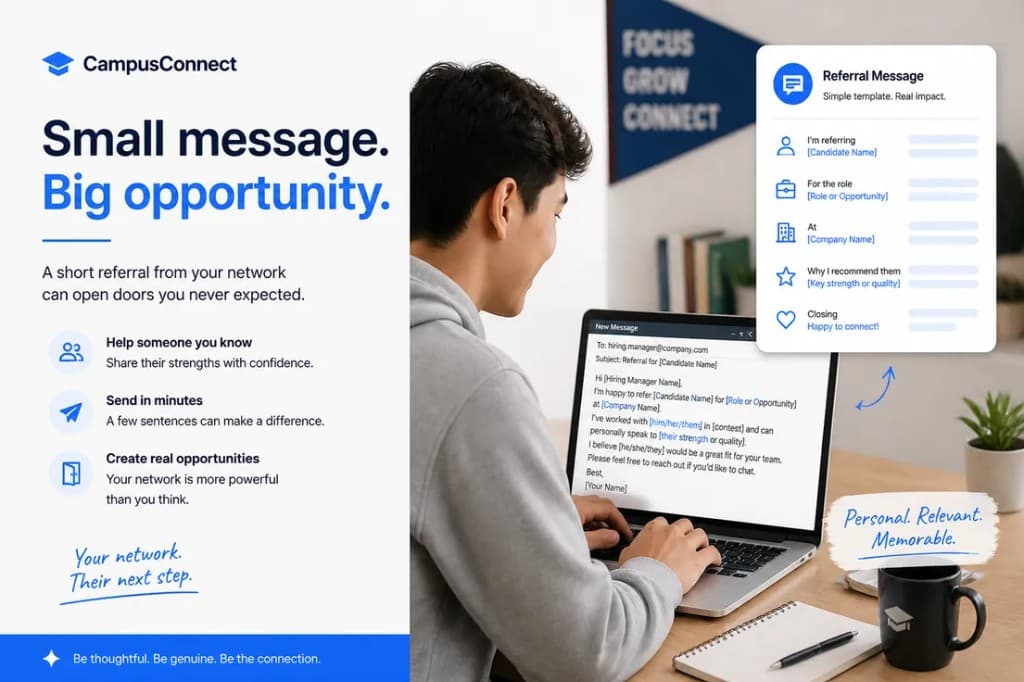
A referral does not guarantee an interview, but it can help your application get seen. The key is to ask politely and make it easy for the person to help.
Start with people who have some connection to you:
- Alumni from your school
- Former interns
- Club speakers
- Family friends
- Professors or staff
- Mentors
- People you met at career fairs
- Employees who post helpful career content
Referral request template
Subject: Quick question about a summer 2027 internship
Hi [Name],
I hope you are doing well. I am a [year] studying [major] at [school], and I am interested in the [role name] internship at [company] for summer 2027. I noticed your experience in [team, function, or area], and I would be grateful for any advice on applying.
If you feel comfortable after seeing my resume, would you be open to referring me? Either way, I appreciate your time and would value any tips you are willing to share.
Thank you,
[Your Name]
Attach your resume if the platform allows it, or offer to send it. Do not pressure someone. If they say no or do not respond, move on politely.
Step 8: Contact mentors, alumni, and recruiters
Mentors and recruiters can help you understand what employers actually want. You do not need to ask for a job immediately. Start with short, specific questions. Find Mentors on SuperInterns surfaces recruiters and campus hiring contacts at any company.
Good questions to ask mentors or alumni
- What made your internship application stand out?
- What skills should I build before summer 2027 recruiting?
- What does your team look for in interns?
- Are there common mistakes students make in interviews?
- Do you know other roles or teams I should consider?
How to message a recruiter
Keep recruiter messages short and clear.
Hi [Name], I am a [major] student at [school] graduating in [year]. I am interested in summer 2027 internships at [company], especially [role or team]. I applied to [role title] on [date] and wanted to express my interest. I would appreciate any advice on the process or timeline. Thank you.
Recruiters receive many messages, so do not take silence personally. Your job is to be professional, organized, and consistent.
Step 9: Prepare for interviews before you get them
A common mistake is waiting until an interview invite arrives to start preparing. By then, you may have only a few days.
Start interview prep in small weekly blocks. Practice interviews with AI mock sessions tailored to the company and role you want.
For behavioral interviews
Prepare stories using the STAR method:
- Situation: What was happening?
- Task: What were you responsible for?
- Action: What did you do?
- Result: What changed because of your work?
Prepare stories for leadership, conflict, failure, teamwork, problem solving, learning quickly, handling pressure, and showing initiative.
For technical interviews
Your prep depends on your field:
- Software: data structures, algorithms, debugging, projects, system basics
- Data: SQL, Python or R, statistics, dashboards, case questions
- Finance: accounting basics, valuation, market awareness, technical finance questions
- Consulting: case interviews, mental math, structured thinking
- Engineering: fundamentals, design projects, lab experience, problem solving
- Marketing: campaign analysis, audience research, portfolio examples
- UX: portfolio walkthroughs, design decisions, user research
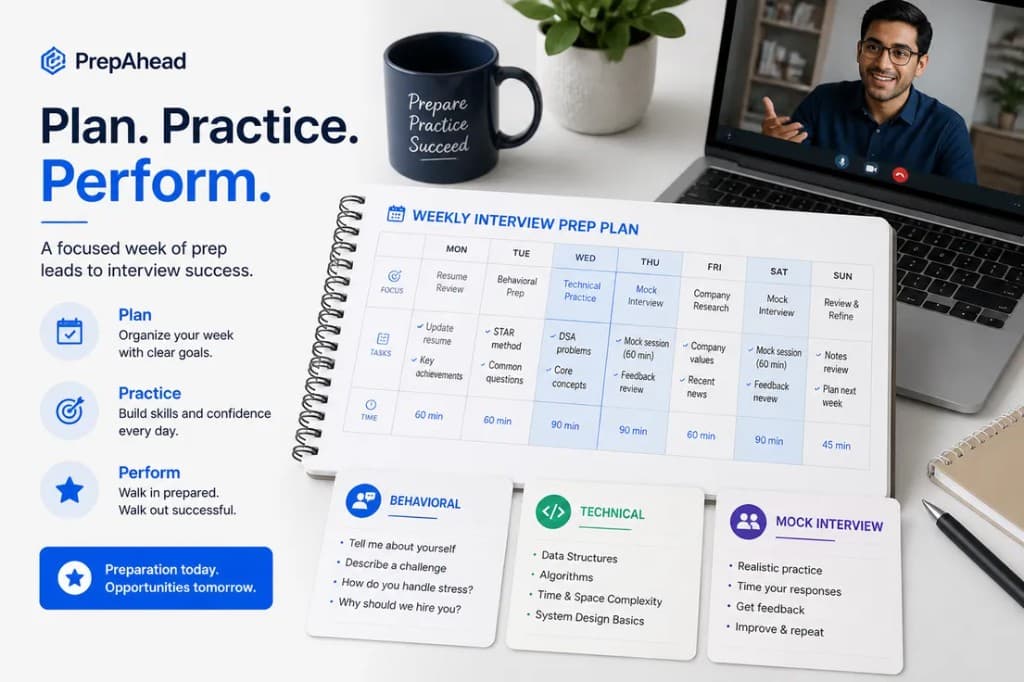
Weekly interview prep plan
Try this if you are busy with school:
- Monday: Review one company and role.
- Tuesday: Practice two behavioral questions.
- Wednesday: Do one technical, case, or portfolio drill.
- Thursday: Update your tracker and follow-ups.
- Friday: Do one mock interview or record yourself.
- Weekend: Improve one resume bullet or project explanation.
Small practice adds up. You will sound calmer and more specific when real interviews arrive.
Step 10: Use student discounts and career resources
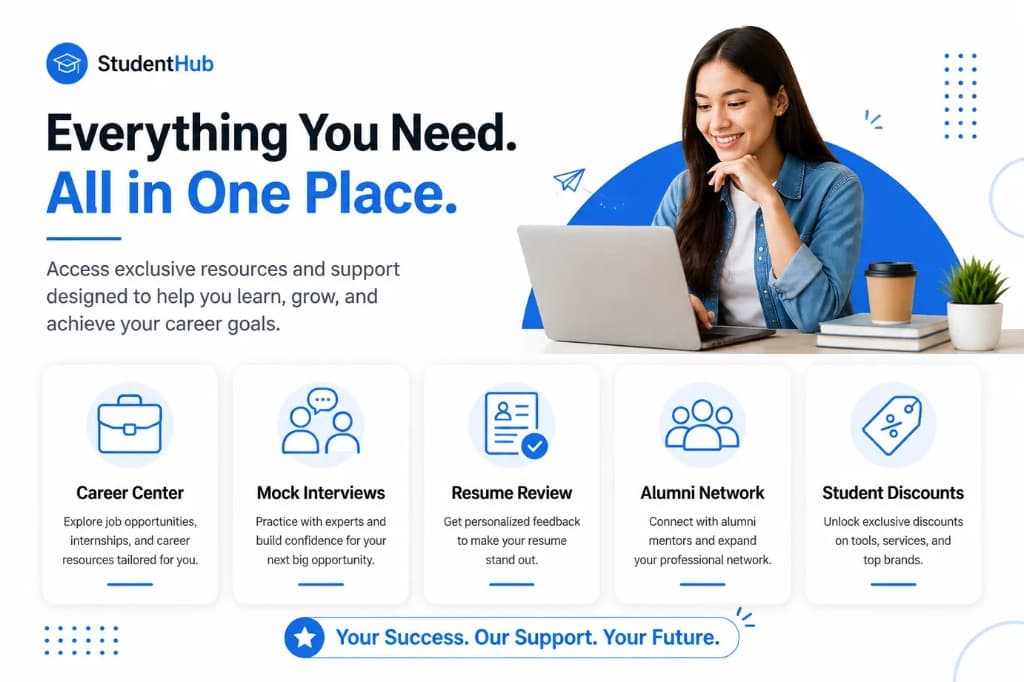
Internship searching can get expensive if you pay for every tool, course, resume review, or travel cost. Use free and discounted resources first.
Free or low-cost resources to check
- Your university career center
- Resume reviews from peer advisors
- Mock interviews through your school
- Alumni databases
- Library access to career platforms
- Student discounts for productivity tools, see Student Resources on SuperInterns
- Free GitHub, design, or cloud credits for students
- Campus career fairs
- Club interview prep groups
- Professor office hours
- Public webinars from employers
If you use a paid tool, make sure it solves a real problem. A good tracker, interview practice tool, or mentorship resource can be worth it if it keeps you consistent. But you do not need to buy your way into an internship.
Step 11: Follow up the right way
Following up is normal when done respectfully. It shows you are organized, not annoying.
After applying
If you have a recruiter or referral contact, follow up after 7 to 14 days.
Hi [Name], I wanted to follow up on my application for the [role title] summer 2027 internship. I applied on [date] and remain very interested in the opportunity. Please let me know if there is any additional information I can provide. Thank you.
After an interview
Send a thank-you email within 24 hours. Include thanks for their time, one specific topic you discussed, why you are still interested, and a short closing.
Step 12: Avoid common internship search mistakes
- Waiting until spring 2027: Many competitive programs will already be full. Start early so you have more choices.
- Applying without tracking: If you cannot remember where you applied, you cannot follow up well or prepare for interviews.
- Using one generic resume: Adjust skills, project order, and bullet wording for different internship types.
- Ignoring smaller employers: A well-run internship at a smaller company can give you more responsibility than a famous program.
- Not practicing out loud: Thinking through answers is not the same as saying them.
- Taking rejection personally: Track the result, learn what you can, and keep going.
Summer 2027 internship application checklist
- ✓Create or update your resume.
- ✓Build a target list of 50 to 100 organizations.
- ✓Set up Gmail labels and filters.
- ✓Create an internship application tracker.
- ✓Save links to company career pages.
- ✓Set weekly application goals.
- ✓Prepare referral and recruiter message templates.
- ✓Practice behavioral interview stories.
- ✓Start technical, case, or portfolio prep.
- ✓Attend career fairs and employer events.
- ✓Use free school career resources.
- ✓Follow up after applications and interviews.
- ✓Review offers carefully before accepting.
What to do if you do not have experience yet
You can still apply for summer 2027 internships even if your resume feels light. The key is to create evidence that you can learn and contribute.
Try one or two of these before recruiting gets busy:
- Build a small project related to your field.
- Join a club and take on a real responsibility.
- Volunteer for a nonprofit or campus office.
- Ask a professor about research help.
- Complete a short course and apply it in a project.
- Create a portfolio with classwork and independent work.
- Work a part-time job and translate the skills clearly.
How to evaluate a summer 2027 internship offer
When you get an offer, celebrate first. Then review the details.
Consider pay or stipend, location and housing costs, remote/hybrid/in-person expectations, start and end dates, team support, type of work, training, return offer potential, brand value, and fit with your school schedule.
If you need more time, ask professionally. Do not ghost employers. If you accept an offer, keep records of your offer letter, onboarding forms, and important dates.
Final advice: Build a system, not just a wish list
Landing a summer 2027 internship is not about finding one perfect posting. It is about building a repeatable system: search, apply, track, follow up, practice, and improve.
Start with one action today:
- Browse summer 2027 internships
- Create a free account on SuperInterns.
- Set up your application tracker.
- Add 20 companies to your target list.
- Write one referral message.
- Schedule one mock interview.
- Contact one mentor or alum.
You do not need to do everything at once. You just need to keep moving. The students who stay organized, apply early, and prepare consistently give themselves the best shot at a strong summer 2027 internship.