
Summer Internships: A Student's Guide to Landing One
When to apply for summer internships, where to find U.S. roles, build a resume, track applications with Gmail, get referrals, and prep for interviews.
Summer internships can change the direction of your college experience. A good internship helps you test a career path, build real skills, meet people in your field, and make your resume much stronger before graduation. It can also lead to a return offer, a part-time role during the school year, or a full-time job after senior year.
But the search can feel confusing. Some companies recruit almost a year early. Others post roles in the spring. Application portals are different everywhere. You may wonder whether you need a referral, how many internships to apply to, what to write in a cover letter, or how to keep track of every deadline.
This guide breaks the process into clear steps you can follow today. It focuses on U.S. summer internships, campus recruiting timelines, company career pages, Gmail-based tracking, interview prep, referrals, student discounts, and practical habits that help students stay organized.
What are summer internships?
Summer internships are short-term work experiences that usually happen between May and August. They can be paid or unpaid, part-time or full-time, remote or in person. Many are designed for college students, recent graduates, or students in specific majors.
A strong summer internship should help you do at least three things:
- Learn what a real job in the field looks like
- Build skills you can explain on your resume
- Meet professionals who can give advice or referrals later
- Complete projects with clear outcomes
- Decide whether you want to keep pursuing that career path
Internships are common in business, engineering, finance, marketing, software, healthcare administration, media, public policy, research, nonprofits, and many other fields. Some industries, like investment banking, consulting, and big tech, recruit early. Others hire closer to summer.
When to apply for summer internships
For U.S. students, the biggest mistake is waiting until spring to start. Spring applications can still work, but many competitive programs open much earlier.
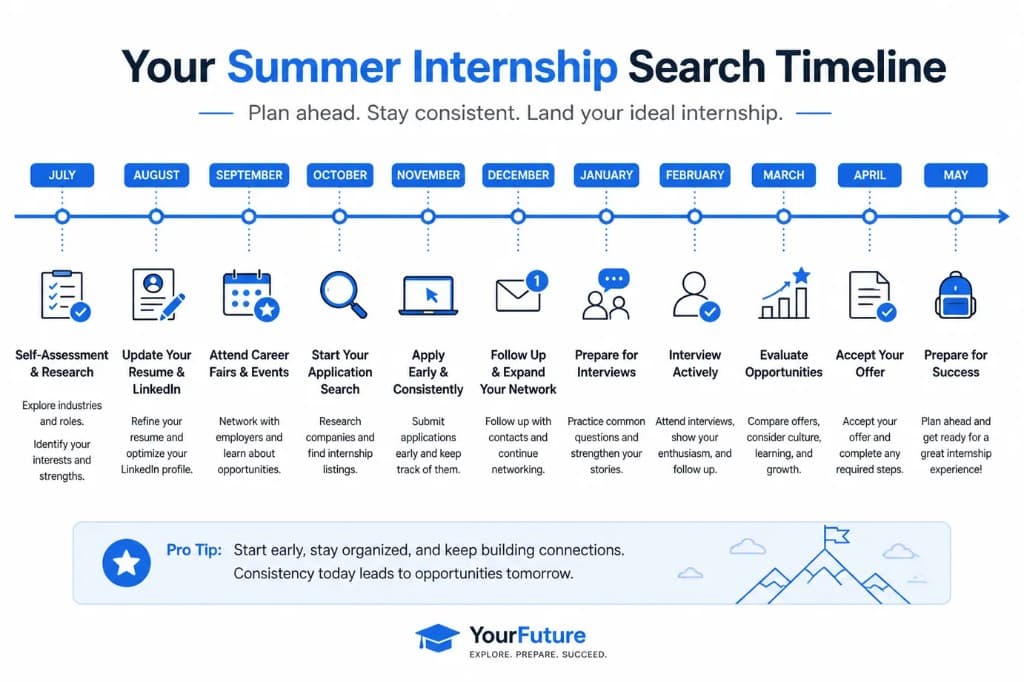
General recruiting timeline
Use this timeline as a planning guide:
| Timeframe | What to do |
|---|---|
| July to August | Update your resume, LinkedIn, portfolio, and project list. Research companies. |
| September to October | Apply to early programs, attend career fairs, contact alumni, and practice interviews. |
| November to December | Follow up, complete assessments, interview, and apply to new postings before winter break. |
| January to February | Apply broadly to roles posted after the holidays. Use referrals where possible. |
| March to April | Focus on smaller companies, startups, local employers, nonprofits, and school job boards. |
| May | Look for last-minute openings, research assistant roles, campus jobs, and micro-internships. |
Industry timing examples
- Finance and consulting: Many large firms recruit in late summer and early fall.
- Software engineering and product roles: Large tech companies often open roles in late summer or fall, while smaller companies may post through spring.
- Marketing, communications, and media: Many roles open from January through April.
- Government and public policy: Deadlines vary widely and may require extra paperwork.
- Research internships: Faculty labs, hospitals, and research programs may have winter deadlines.
- Local businesses and nonprofits: Many hire in spring when they know their summer budgets.
If you are reading this late, do not panic. The best time to start is now. There are always employers who hire later, especially smaller organizations.
Start with a simple internship search plan
A strong search does not require perfect connections or a fancy spreadsheet. It requires consistency.
Step 1: Pick 2 to 3 target role types
Do not apply to everything with the word internship in the title. Choose a few role categories so your resume, search terms, and interview answers stay focused.
Examples:
- Marketing intern, social media intern, content intern
- Software engineering intern, data analyst intern, product intern
- Finance intern, accounting intern, business analyst intern
- Public policy intern, nonprofit program intern, research intern
If you are unsure, choose one practical role, one stretch role, and one exploration role.
Step 2: Build a target company list
Create a list of 30 to 50 organizations. Include a mix of dream companies, realistic matches, local employers, startups, nonprofits, and companies that have hired from your school before.
Step 3: Set a weekly application goal
For many students, a realistic goal is 5 to 10 quality applications per week. The key is to avoid random mass applications. Each application should be targeted enough that your resume matches the role.
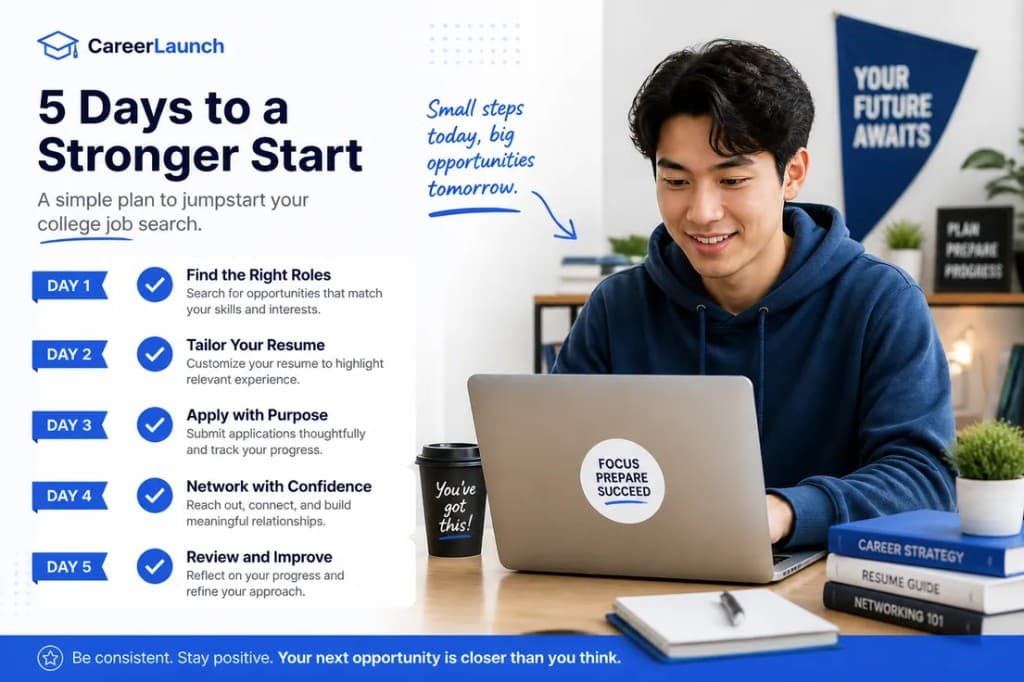
A practical weekly routine:
- Monday: Find 10 roles and save links
- Tuesday: Tailor resumes for 3 to 5 roles
- Wednesday: Apply and log each application
- Thursday: Reach out to 2 alumni or employees
- Friday: Practice one interview story and review your tracker
Where to find summer internships
The best internship searches use several sources. Do not rely on one job board.
Company career pages
Company career pages are often the most reliable source because they show current postings directly from the employer. Browse summer internships synced from employer career sites, or check each target company weekly.
Search terms to try: summer intern, internship, university internship, early careers, campus recruiting, student programs, co-op, analyst intern, associate intern.
Campus career centers
Your campus career center may have listings that are not heavily advertised elsewhere. Employers that post through your school often want students from your campus, which can improve your odds.
LinkedIn and alumni search
LinkedIn is useful for finding people, not just postings. Search for alumni who work in your target role or company. Keep first messages short and ask for advice, not a job. Find mentors and alumni at target companies.
Job boards and internship platforms
Job boards can help you discover opportunities quickly. Use filters for internship, summer, remote, location, and major. Always double-check the company career page before applying if possible.
Professors, clubs, and local networks
Faculty, student organizations, and local networks can lead to opportunities that never get thousands of online applicants. Ask your department about research roles, club alumni leads, and local employer connections.
Build a resume that gets interviews
Your resume does not need to be perfect, but it must be clear, targeted, and easy to scan.
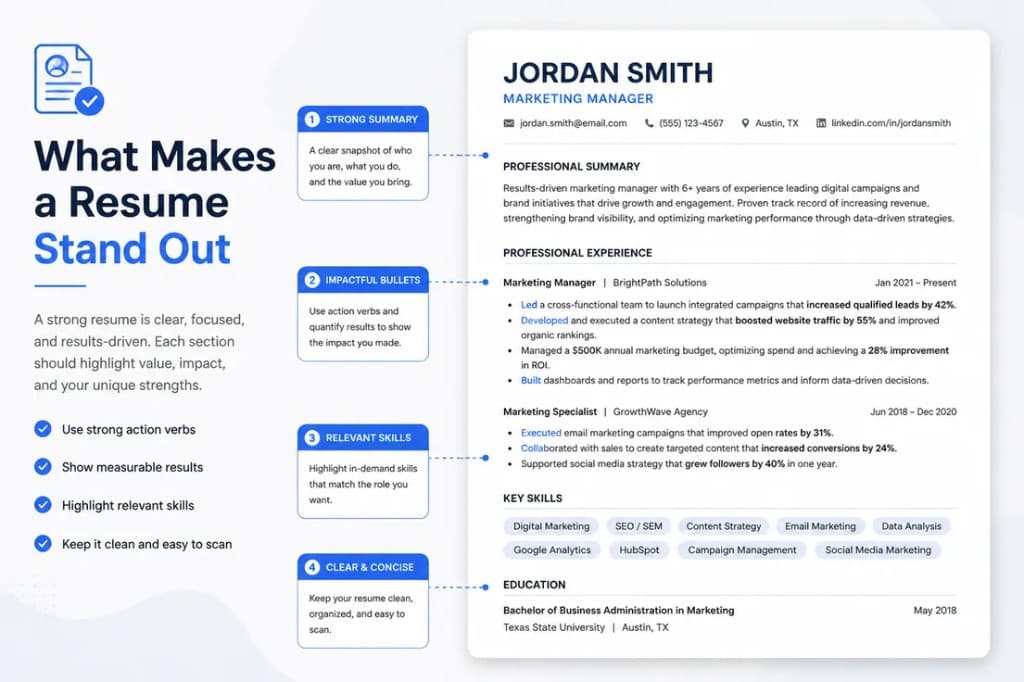
For most students, a one-page resume is enough with education, relevant experience, skills, and leadership. Use this formula for bullet points: action verb + task + tool or method + result.
If you do not have formal experience, use class projects, part-time jobs, volunteer work, or personal projects. Employers know you are a student. They want evidence that you can learn, communicate, and follow through.
Track applications so nothing slips
Once you apply to more than 10 roles, tracking becomes essential. You need to know where you applied, when to follow up, which resume version you used, and what interview steps are next.
Use a spreadsheet, Notion board, Airtable, or Track Applications to log company, role, status, referral contact, deadlines, and next actions.
Gmail-based workflow automation
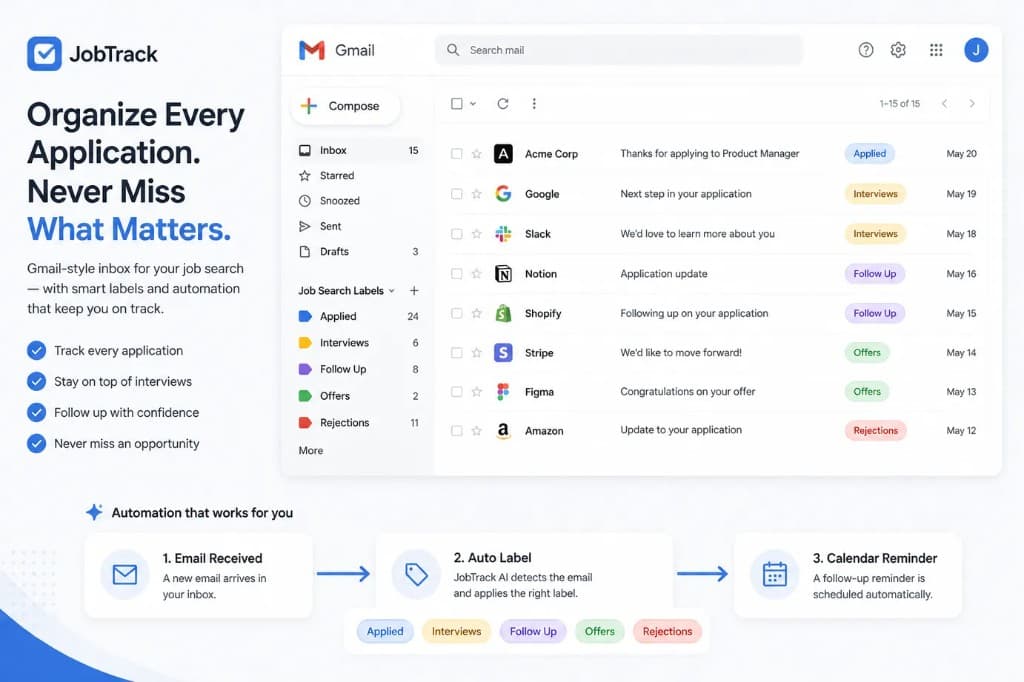
If you use Gmail for internship applications, create labels like Internships - Applied, Internships - Interviews, Internships - Follow Up, Internships - Offers, and Internships - Rejections. Create filters for common phrases like application received, schedule your interview, and complete your assessment.
Use reminders in Google Calendar for application deadlines, interview times, and follow-up dates. This simple automation can prevent missed assessments and buried recruiter emails.
Use referrals the right way
A referral can help your application get noticed, but it is not a shortcut around being prepared. Start with warm connections: alumni, former managers, professors, club alumni, and students who interned at the company last summer.
Before asking, do your homework. Read the job description, prepare your resume, and explain why the role fits. Make it easy for them with your resume, the job link, a short reason you are a fit, and any deadline.
Prepare for internship interviews
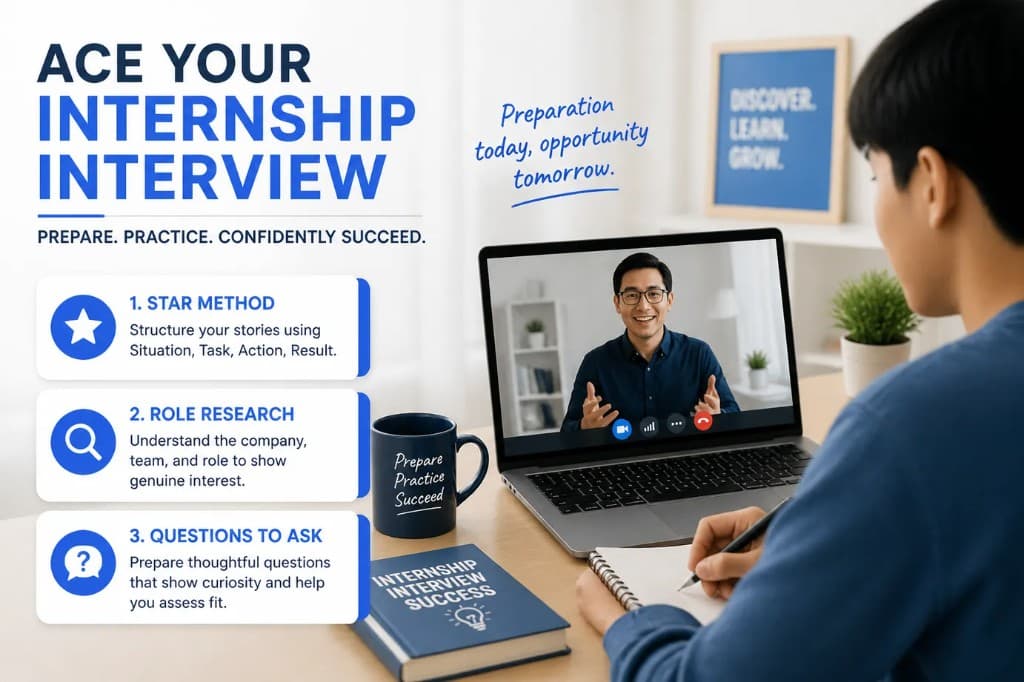
Interview preparation is where many students can stand out quickly. Prepare answers for tell me about yourself, why this company, teamwork stories, problem-solving examples, and questions for the interviewer.
Use the STAR method: Situation, Task, Action, Result. Practice role-specific skills for software, data, finance, marketing, consulting, or research roles. Practice interviews out loud with a friend, mentor, or mock interview tool.
Make the most of career fairs and campus recruiting
Before the fair, review the employer list, pick 8 to 12 priority companies, research each in 5 minutes, and prepare a short introduction. During the fair, ask specific questions about skills, rolling applications, and interview process. After the fair, send a short follow-up within 24 to 48 hours.
Evaluate offers carefully
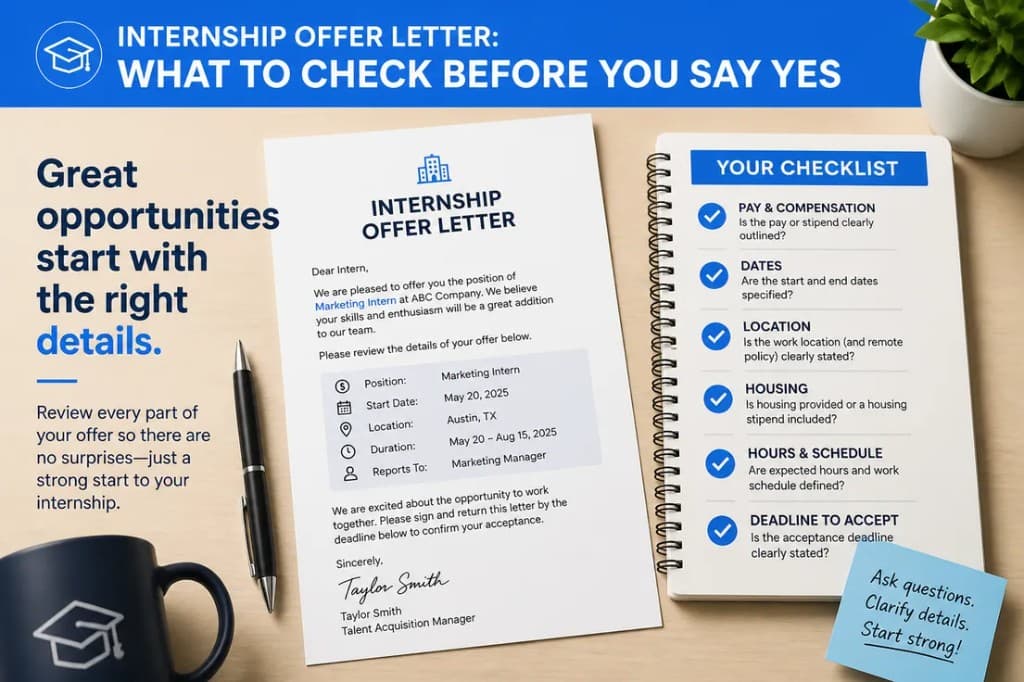
When you receive an offer, celebrate. Then review start and end dates, pay rate, expected hours, location requirements, housing support, deadline to accept, and any academic credit requirements before accepting.
Internships can come with extra costs: transportation, housing, professional clothes, and software. Look for discounts through your university, student resources, and student verification before paying full price.
What if you do not have experience yet?
You can create proof of ability before anyone hires you. Build a small project related to your target role: a sample marketing campaign, a data analysis, a web app, a company analysis, or a design portfolio piece. Put it on your resume and be ready to discuss what you learned.
Part-time jobs, clubs, tutoring, athletics, and volunteer work count when you describe them well. Translate what you did into skills employers understand.
Common mistakes to avoid
- Waiting until April to start looking
- Using the same resume for every role
- Applying only to famous companies
- Ignoring company career pages
- Forgetting to track applications
- Missing recruiter emails or assessments
- Asking for referrals without building context
- Going into interviews without practice
- Not asking about pay, dates, or location
- Giving up after a few rejections
Rejection is part of the process. Keep improving the parts you can control.
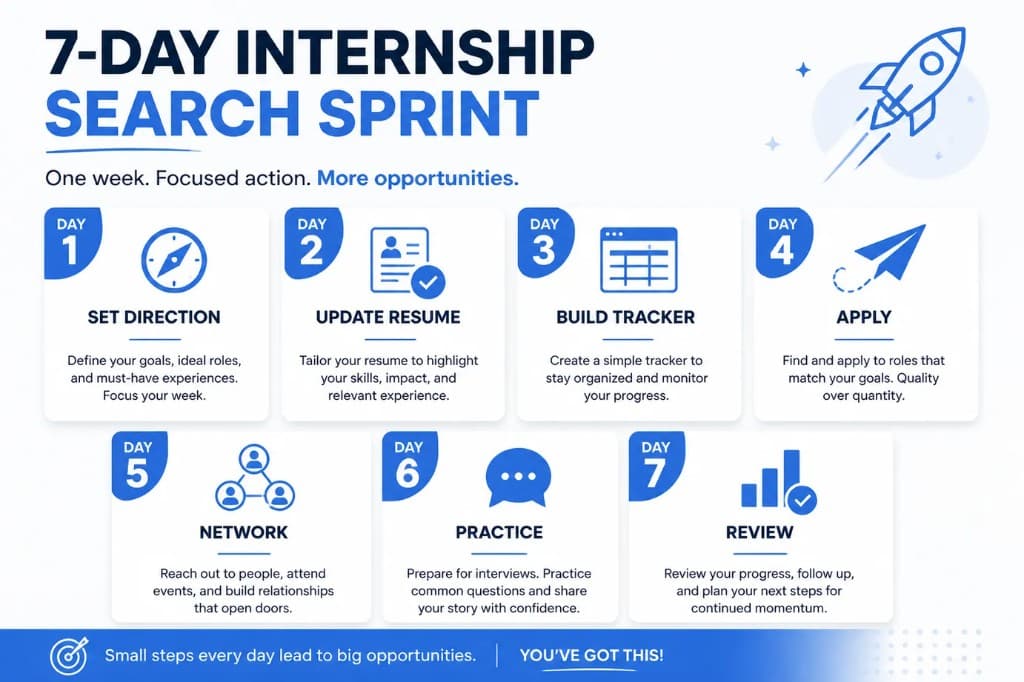
A 7-day action plan to start now
- Day 1: Choose 2 to 3 internship role types and write down target locations and deal-breakers.
- Day 2: Create one base resume and one tailored version. Add projects, skills, and measurable bullet points.
- Day 3: Set up your application tracker and Gmail labels. Add at least 10 saved roles.
- Day 4: Submit three strong applications. Save job descriptions for interview prep.
- Day 5: Send three networking messages to alumni or former interns. Ask for advice, not a job.
- Day 6: Prepare your tell-me-about-yourself answer and three STAR stories. Practice out loud.
- Day 7: Review what worked, update your tracker, and plan next week. Browse internships again and add fresh postings.
Final thoughts: make the search consistent, not perfect
Landing summer internships is not about being perfect. It is about building a repeatable system: find roles, tailor your materials, apply early, track everything, follow up, ask for advice, and practice interviews before you need them.
Start with one small action today. Browse internships in your target field. Create your tracker. Label your Gmail inbox. Message one alum. Practice one interview answer. The students who succeed are often the ones who start early, stay organized, learn from each application, and keep going.
For Summer 2027 specifically, see our 2027 summer internships USA guide and programs open now.